
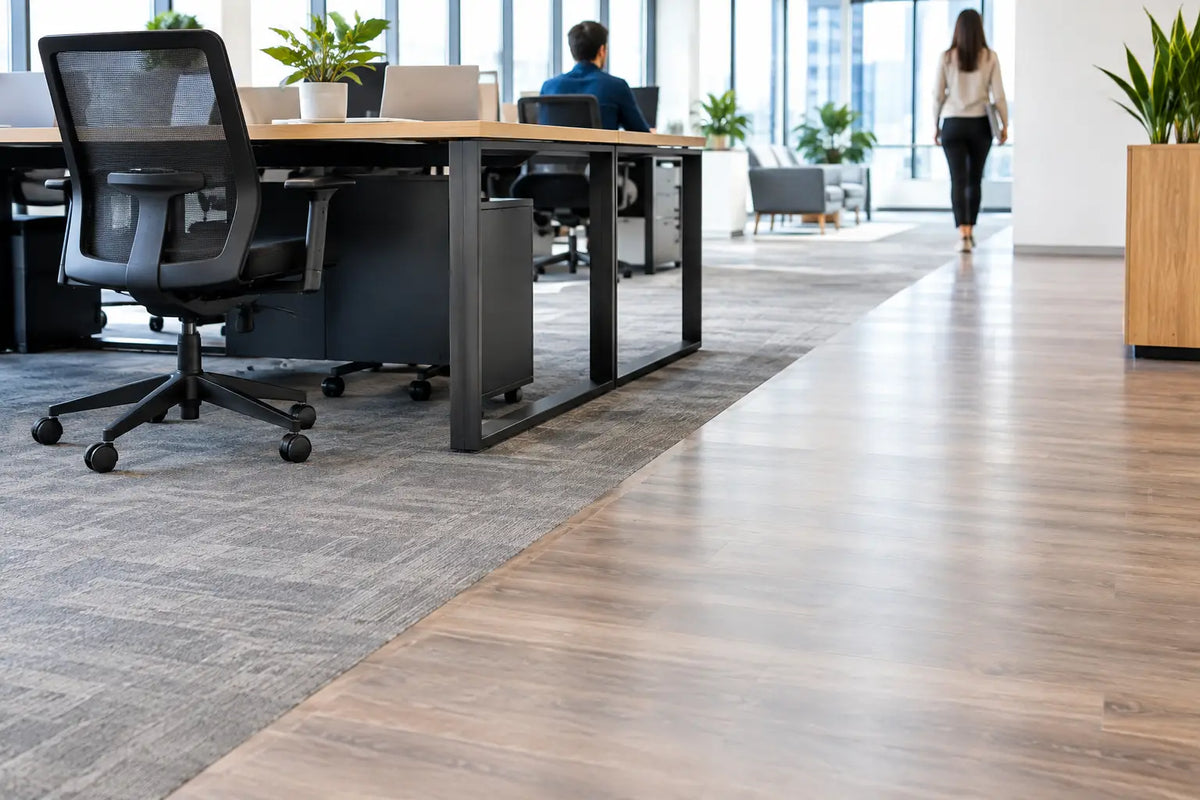
A worn office floor shows up quickly. It catches rolling chair traffic, tracks in dirt from entrances, amplifies noise, and can make an otherwise well-planned space feel dated. The best office flooring balances appearance with the daily realities of the people using it, whether you are updating a home office, leasing a rental, renovating a small business, or fitting out a larger commercial workspace.
The right choice is rarely about selecting the toughest product on paper. It is about matching the floor to traffic, moisture exposure, maintenance expectations, design goals, installation conditions, and budget. First-quality closeout and special-buy flooring can make that decision more rewarding, giving buyers access to premium looks and dependable performance at exceptional value when the available style and quantity fit the project.
What Makes the Best Office Flooring?
Office flooring needs to work hard without looking overly industrial. Employees, clients, tenants, deliveries, desk chairs, coffee spills, and frequent cleaning all influence how a floor performs. Before comparing colors or plank widths, consider how the space will actually be used.
A private home office may only need a comfortable, attractive floor that coordinates with the rest of the home. A reception area or shared workplace needs more resistance to scratches, scuffs, and constant foot traffic. For a rental, investment property, or office suite, easy maintenance and straightforward replacement planning can matter just as much as the initial purchase price.
The strongest flooring decision accounts for these practical questions:
- How many people will use the space each day, and will visitors enter from outdoors?
- Will rolling office chairs be used regularly in the same areas?
- Is the office near an entry, break area, restroom, or other location where moisture may occur?
- Does the floor need to continue into hallways, conference rooms, or adjacent residential rooms?
- Is the goal a long-term owner-occupied space, a rental refresh, or a commercial renovation with a defined budget?
Luxury Vinyl: A Practical Choice for Active Offices
Luxury vinyl flooring is often one of the best options for offices that need a durable, low-maintenance surface with a realistic wood or stone-inspired look. Many luxury vinyl products are waterproof, making them especially useful for offices near entrances, break areas, or spaces where spills and wet shoes are likely.
For busy workspaces, luxury vinyl offers everyday advantages. It is generally comfortable underfoot, easy to clean, and less likely than natural wood to show minor changes caused by routine moisture exposure. It also gives renovators a broad range of colors and visual styles, from clean contemporary tones to warmer designs that make an office feel less formal.
Not every luxury vinyl product has the same wear layer, construction, or installation method, so compare specifications rather than assuming all options perform alike. A higher-traffic office deserves a product selected for the expected use, especially where desk chairs roll repeatedly across the same path. Protective chair mats can still be a sensible addition for any hard-surface floor.
For property managers, flippers, and commercial buyers, luxury vinyl can provide a strong mix of durability, design flexibility, and project value. It is also a practical choice when matching a polished appearance with quick, manageable day-to-day care is a priority.
Hardwood Flooring: Professional Style With More Care
Hardwood flooring brings a level of warmth and permanence that works beautifully in executive offices, client-facing spaces, home offices, and professional studios. Its natural grain and character can elevate a room in a way few materials can match. When the office is part of a broader home renovation, hardwood can also create visual continuity between work areas and living spaces.
The trade-off is maintenance awareness. Hardwood is not the automatic choice for an office with frequent wet-weather entry traffic, heavy rolling loads, or an environment where spills may sit unnoticed. Area rugs at entrances, chair mats, felt pads, and prompt cleanup help protect the investment.
Hardwood makes the most sense when appearance is a central part of the project and the office has reasonably controlled conditions. It can be an excellent value when a first-quality factory closeout offers the species, color, and square footage your project requires. Because closeout inventory can change, buyers should confirm available quantity early, particularly for a large office or a project that may require additional material later.
Laminate Flooring: Value for Dry, High-Use Spaces
Laminate flooring remains a smart office option when buyers want the visual impact of wood at a value-focused price point. Today’s laminate designs can provide convincing texture and attractive color variation, making them well suited to home offices, private suites, and dry commercial settings.
A quality laminate floor can stand up well to routine foot traffic and daily use, but moisture conditions deserve attention. Offices located near exterior doors, break rooms, or areas prone to wet cleanup may be better suited to a waterproof flooring option. Product construction varies, so the specific floor should guide the decision rather than the category name alone.
Laminate can be particularly appealing for rental-property owners and renovators who want a clean, current look without overbuilding the budget. The key is selecting a first-quality product that fits the space and following the manufacturer’s installation and care requirements.
Choose Flooring by Office Type
The best office flooring can change from one setting to another. A thoughtful choice starts with the room’s role, not just its square footage.
Home office
A home office allows more freedom to prioritize style. Hardwood can create a refined extension of the home, while luxury vinyl and laminate offer attractive, practical alternatives. If the room opens to a hallway or living area, consider whether continuing the same flooring will make the layout feel more connected.
Reception areas and client-facing offices
These spaces need a floor that makes a strong first impression while handling concentrated traffic. Luxury vinyl is often a reliable fit because it offers strong visual versatility and easier cleanup. Hardwood can also work when the environment is controlled and the desired look calls for natural material.
Shared offices and open workspaces
For open layouts with lots of chair movement, durability and maintenance should lead the decision. Luxury vinyl is commonly the most balanced option, particularly in spaces where wet shoes, beverage spills, and frequent cleaning are part of normal operations. Plan for chair mats in high-use desk stations to reduce concentrated wear.
Rentals, flips, and investment properties
For investment projects, flooring should appeal to the next occupant while keeping replacement and maintenance practical. Luxury vinyl and laminate can both offer strong value depending on moisture exposure and expected use. Selecting a versatile neutral color can help a space work for more tenants, buyers, and furniture styles.
Design Details That Make an Office Feel Finished
Color affects how an office works visually. Light flooring can make a compact room feel more open, but very pale colors may show dirt more readily near entrances. Medium tones often hide everyday dust and minor marks well, while deeper floors can create a more formal setting but may reveal light debris depending on the finish.
Plank width and pattern matter too. Wider planks can give a private office or conference room a more expansive look. In a long, narrow office, running planks in the direction of the room’s length can reinforce the sense of space. For multi-room projects, use transitions thoughtfully so the floor changes feel intentional rather than improvised.
Do not choose solely from a screen. Product images are useful for narrowing options, but actual color can shift with lighting, wall paint, windows, and surrounding finishes. Viewing products in person at a DFW showroom can be helpful for local buyers, while requesting shipped samples gives nationwide customers a better way to compare color and texture in their own office lighting.
How to Buy Office Flooring With Confidence
Start by measuring the office and adjoining areas where flooring may continue. Add a reasonable allowance for cuts and layout, then verify the product’s available inventory before finalizing the design. This is especially relevant when shopping factory closeouts, discontinued collections, overstock, or special buys. The value comes from smart sourcing of first-quality flooring, while the available colors, styles, and quantities may change.
Next, compare the full project cost, not just the per-square-foot figure. Underlayment, transitions, trim, delivery, installation materials, and waste allowance can influence the final budget. A lower-priced product is not automatically the better value if it is unsuitable for the room’s moisture conditions or expected traffic.
Finally, use flooring expertise as part of the buying process. Bring the office dimensions, photos, traffic expectations, and a few preferred colors to the conversation. That information makes it easier to identify first-quality hardwood, luxury vinyl, waterproof flooring, or laminate that fits the project without paying for features the space does not need.
A well-chosen office floor should support the way people work while helping the room look intentional from the first day. Focus on the demands of the space, shop available first-quality opportunities carefully, and choose the product that gives your office the right balance of performance, appearance, and long-term value.