
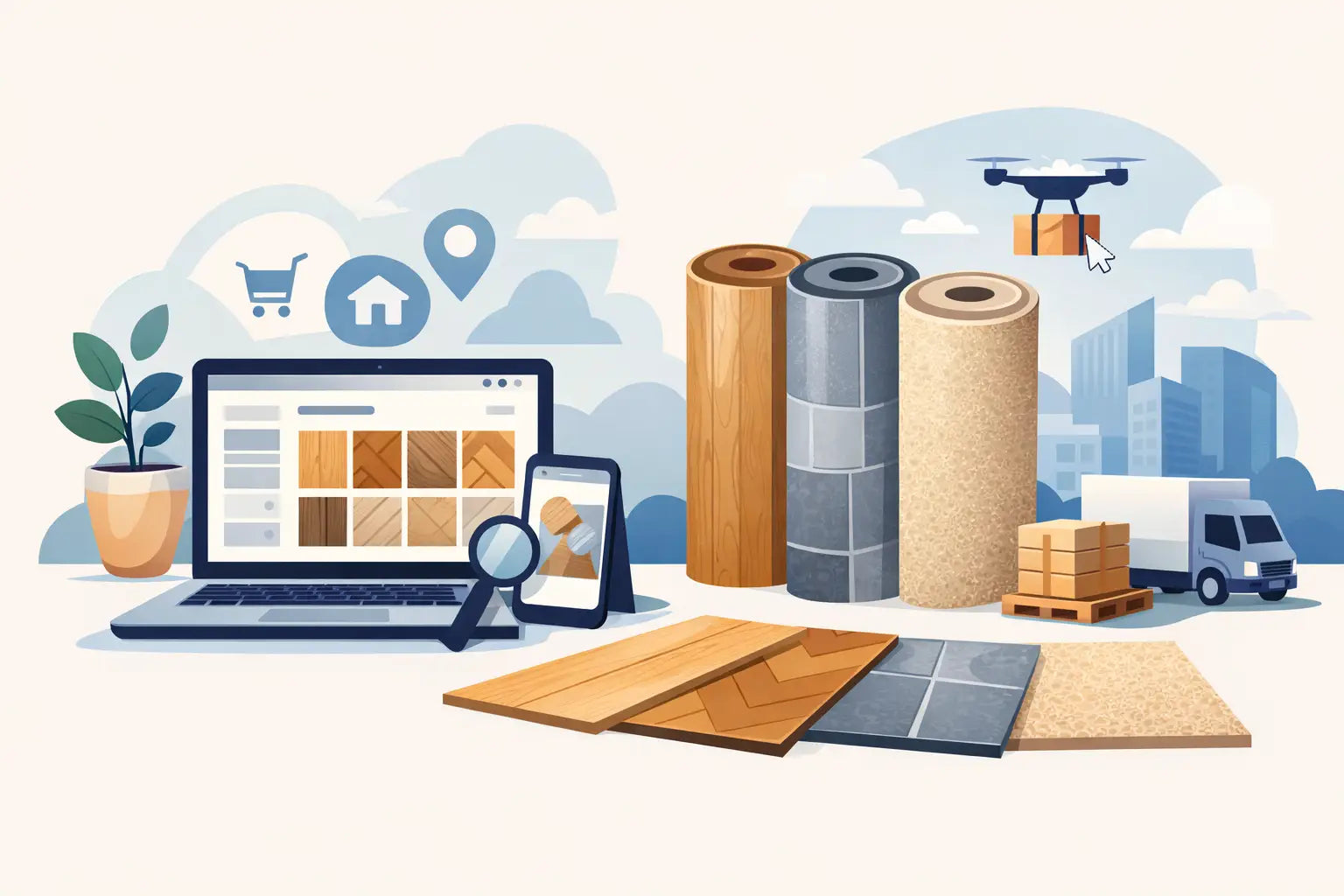
If you are comparing the best places to buy flooring online (2026), you are probably trying to avoid two expensive mistakes at once - overpaying for decent-looking floors and gambling on low-grade material that will not hold up. Online flooring can absolutely save you money, but only if you know what separates a real value from a flashy product page.
That is the key difference in 2026. The best online flooring sellers are not just posting pretty photos and discount tags. They are giving buyers enough information, support, and pricing transparency to make a confident decision on hardwood, vinyl, or laminate without the old showroom markup.
What makes the best places to buy flooring online in 2026
A good online flooring store does four things well. First, it offers first-quality products, not just cheap inventory dressed up as a deal. Second, it makes pricing clear enough that you can compare total value, not just price per square foot. Third, it helps you reduce risk with samples, visual tools, and real product guidance. Fourth, it can actually get the flooring to your jobsite or home without turning delivery into a guessing game.
That last point matters more than many buyers expect. Flooring is heavy, it is ordered in volume, and it has to arrive in good condition and in the right amount. A low sticker price means less if shipping is inflated, lead times are vague, or support disappears once you check out.
The 10 best places to buy flooring online in 2026
1. Direct-to-consumer flooring liquidators
For value-focused buyers, this is often the strongest place to start. A direct-to-consumer flooring liquidator can offer premium first-quality hardwood, vinyl, and laminate at liquidation pricing because it cuts out layers of retail markup. That changes the math fast, especially on whole-home remodels, rental updates, flips, and larger project purchases.
The biggest advantage here is not just lower pricing. It is getting better-grade flooring for the money you were already prepared to spend. Instead of settling for entry-level material from a big retail chain, buyers can often move into a more attractive, more durable product category without blowing the budget.
The trade-off is that inventory may move quickly. If you are shopping liquidation opportunities, waiting too long can mean losing a style or color you liked. For decisive buyers, that is a strength. For shoppers who want months to think, it may feel less comfortable.
2. Specialty online flooring retailers
These stores focus almost entirely on flooring, which usually means deeper category knowledge than general home improvement websites. They tend to carry broad assortments across hardwood, luxury vinyl plank, and laminate, and they often do a better job with product specs than mass retailers.
This option makes sense if you want more selection and category-specific support. The downside is that specialty retailers are not always the best on price. Some are competitive, some are not, and some sit surprisingly close to showroom pricing once shipping is factored in.
3. Big-box home improvement websites
Big-box retailers remain popular because they feel familiar. If you already buy tools, paint, and building materials from them, flooring can seem like the easiest add-on purchase. Their websites are usually easy to browse, and they often offer decent return structures and broad availability.
Still, convenience is not the same as value. Big-box flooring can be hit or miss on quality for the price, and support is often more general than expert. If you know exactly what you need, they can work. If you need real guidance on wear layers, core construction, moisture resistance, or matching a space to the right material, they may not be the strongest option.
4. Manufacturer-direct flooring websites
Some brands now sell directly online, which gives shoppers confidence that they are getting authentic product and current collections. This route can be appealing if you already trust a specific manufacturer or want the latest product line without relying on third-party inventory.
The trade-off is simple: manufacturer-direct does not always mean bargain pricing. In many cases, you are paying closer to full retail. That can be fine if your priority is brand loyalty, but it is not always ideal for buyers trying to stretch renovation dollars.
5. Local flooring stores with online ordering
A growing number of local dealers now offer online browsing, quote requests, and digital consultations. This can be a strong middle ground for shoppers who want local accountability but still want to compare products online before visiting a store or placing an order.
The upside is personal service. The downside is pricing. Local showrooms often carry overhead that gets built into the quote, so the experience may feel more hands-on but less aggressive on savings.
6. Design-focused premium retailers
These retailers are built around trend-forward visuals, curated collections, and elevated branding. If you are after a very specific aesthetic and budget is secondary, they can be worth a look.
For most practical buyers, though, this is where markup becomes hard to ignore. You may be paying more for presentation than performance. A stylish website does not automatically mean better flooring.
7. Wholesale and contractor supply platforms
These platforms can offer strong pricing, especially for project buyers ordering larger quantities. Investors, contractors, and multi-unit property owners may find real savings here when they already know product specs and installation requirements.
The catch is that these sites are not always beginner-friendly. Product pages may assume trade knowledge, support can be limited, and minimums may apply. If you are a homeowner buying flooring for the first time, this route can feel more complicated than it needs to be.
8. Online marketplaces
Marketplaces can surface a huge range of flooring products in one search. That can seem efficient, especially if you are comparing prices quickly.
But flooring is not a category where lowest-click convenience should be the deciding factor. Seller quality varies, listings can be inconsistent, and support after purchase is often less reliable than buying from a focused flooring source. For a major material purchase, that uncertainty is a real risk.
9. Overstock and closeout sites
Overstock sellers attract buyers looking for deals, and sometimes the deals are real. If you are flexible on style, timing, and inventory continuity, this can be a way to score attractive pricing.
Still, closeout buying takes a careful eye. You need to confirm condition, grade, available quantities, and whether matching product will exist later if you need extra cartons. Cheap flooring is only a bargain when it works for the full project.
10. Hybrid flooring retailers with visual tools and support
This is one of the most practical models for 2026. A hybrid retailer combines strong online pricing with buyer support features that reduce second-guessing, such as room visualizers, sample ordering, and expert guidance. That matters because flooring is not bought on price alone. It has to look right in your space, perform under your traffic, and fit the installation plan.
When a retailer can help you compare premium products, estimate confidently, and visualize the finished result, the online process becomes a lot less risky. That is where digital flooring retail is getting smarter.
How to choose the right online flooring seller
The smartest buyers do not ask only, "Who has the cheapest floor?" They ask, "Who gives me the best total deal on the right floor?" That means looking at material quality, price per square foot, shipping cost, sample access, support, and whether the product actually fits the room.
For example, luxury vinyl plank can be the best buy for busy households, rentals, and moisture-prone areas, but not every vinyl product is built the same. Wear layer, core stability, and locking system all matter. Hardwood can deliver premium long-term value and resale appeal, but it may not be ideal for every basement or splash-prone space. Laminate can be a smart budget-conscious choice when you want a strong look and everyday durability, but the water-resistance story depends heavily on the product.
That is why product guidance matters. A retailer that can explain those trade-offs clearly is more useful than one with a giant catalog and no real help.
Where value shoppers usually win
If your goal is premium flooring without inflated showroom pricing, direct-to-consumer sellers and liquidation-focused flooring retailers often provide the strongest value in 2026. They hit the sweet spot between quality and savings, especially when they back up the pricing with nationwide delivery, product expertise, and tools that help you picture the floor before you commit.
That combination is what serious buyers want. Not just a lower number on a screen, but a better product at a sharper price with enough support to buy confidently. Factory Flooring Liquidators fits that model by focusing on first-quality hard surface flooring at liquidation pricing, backed by expert guidance and room visualization that helps narrow choices before you place the order.
A better way to shop the best places to buy flooring online (2026)
The online flooring market is better than it used to be, but it still rewards buyers who slow down long enough to compare the right details. Price matters. So do grade, construction, shipping, support, and whether the seller is set up to help you make a smart purchase instead of just pushing a quick one.
The best deal is not the floor with the loudest discount. It is the one that gives you premium looks, dependable performance, and real savings without leaving you to figure out the hard part alone.