
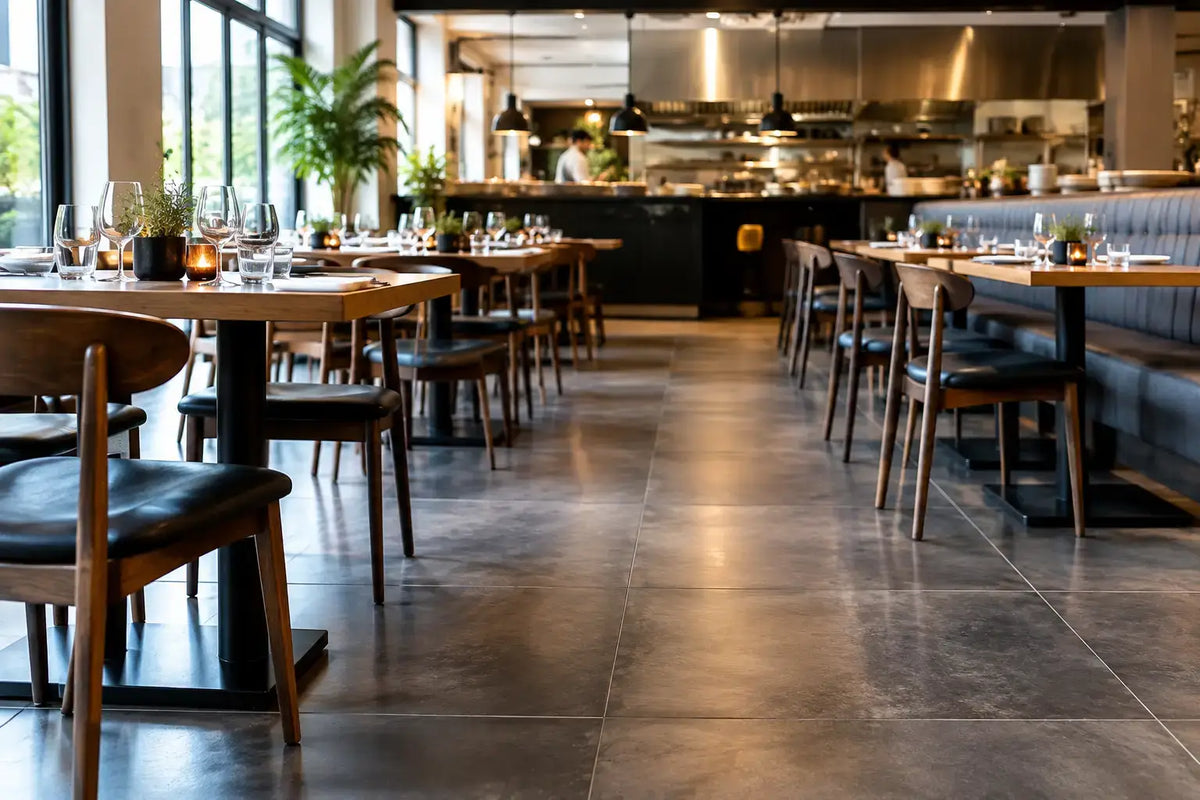
A restaurant floor has to make a strong first impression while standing up to chair movement, dropped drinks, heavy foot traffic, and constant cleaning. The best restaurant flooring is not simply the toughest product on the shelf. It is the flooring that fits the specific space, the level of moisture exposure, the desired look, and the realities of your maintenance routine.
For a dining room, a polished hardwood look may help define the experience. For an entryway, bar-adjacent area, or busy service space, waterproof protection and easy cleanup can matter more. The right decision comes from matching the product to the job instead of asking one floor to do everything.
What the Best Restaurant Flooring Must Do
Restaurant flooring works harder than most residential floors. Guests track in rain, dirt, and grit. Tables and chairs shift all day. Staff move quickly between dining areas, service stations, and entrances. Even a small spill can become a bigger problem when it is left sitting through a busy rush.
Start with traffic. A compact coffee shop, an upscale dining room open only for dinner, and a fast-casual restaurant with steady lunch traffic have very different demands. In high-use spaces, look closely at wear-layer details on luxury vinyl, surface durability on laminate, and the manufacturer’s intended application for every product under consideration.
Moisture is the next major factor. A floor near exterior doors, beverage stations, or frequently cleaned areas should be selected with water exposure in mind. Waterproof flooring does not mean every installation condition is the same, but it gives owners a more forgiving surface for everyday spills and wet shoes.
Appearance still matters. Flooring covers a large visual area and can influence whether a restaurant feels warm, modern, casual, refined, or intentionally rustic. A good choice should support the brand experience without becoming difficult or expensive to maintain.
Luxury Vinyl Plank: A Practical Choice for Active Areas
For many restaurant dining spaces, luxury vinyl plank is the strongest all-around contender. It offers the visual range of wood-inspired floors while providing a surface designed for real life: spills, regular cleaning, guests in heels or boots, and frequent chair movement.
Waterproof luxury vinyl is especially worth considering for entrance areas, host stands, beverage zones, and dining rooms where drinks are regularly served. Its layered construction can provide dimensional wood visuals without the same moisture concerns associated with natural hardwood. Many styles also offer a quieter, more comfortable feel underfoot than harder flooring surfaces, which can be a meaningful benefit for staff who spend long shifts standing.
The trade-off is that not every luxury vinyl product is built for the same level of traffic. Wear-layer thickness, installation system, backing, and product specifications matter. A low-cost product chosen strictly by color can become a false economy in a high-traffic restaurant. Instead, compare first-quality options that fit the expected use and ask for help evaluating the product details before ordering.
Luxury vinyl also gives restaurants design flexibility. Wider planks can create a cleaner, more contemporary look, while shorter or more character-driven visuals can suit casual concepts and renovation projects. Because factory-closeout inventory changes, a restaurant owner may find premium-looking, first-quality luxury vinyl at exceptional value when a manufacturer overstock, end-of-run, or discontinued collection becomes available.
Hardwood Flooring: Best for Atmosphere, Not Every Zone
Hardwood flooring can give a restaurant a warmth and authenticity that is difficult to duplicate. It is a smart consideration for dining rooms, private event areas, tasting spaces, and hospitality concepts where natural material is part of the overall design.
But hardwood requires an honest assessment of the environment. It is generally better suited to controlled dining areas than locations exposed to frequent moisture, tracked-in weather, or continual spill risk. A floor near an exterior entrance or beverage-heavy service area may need a more water-tolerant option, even if hardwood is used elsewhere in the restaurant.
The benefit of hardwood is its long-term visual appeal and natural variation. The responsibility is maintenance. Restaurant operators should plan for protective pads beneath furniture, regular cleaning practices appropriate for wood, and prompt attention to liquid spills. Selecting the right finish and species can help, but it does not remove the need for care.
For restaurants renovating an existing building, closeout hardwood can offer a particularly strong value opportunity. First-quality discontinued colors or factory overstock can make a more elevated wood floor achievable without compromising on product quality. Availability can be limited by the nature of closeout inventory, so it is wise to confirm that enough material is available for the full project, plus a reasonable amount for future repairs.
Laminate Flooring: Value for Lower-Risk Dining Areas
Modern laminate flooring can be an attractive, budget-conscious option for restaurant spaces with lower moisture exposure. It offers realistic wood visuals, a durable surface, and the kind of value that can help stretch a renovation budget across a larger footprint.
Laminate is often worth a look for dry dining rooms, offices, private meeting areas, or light-commercial spaces where wet mopping and repeated liquid exposure are not central concerns. It can make sense for an investor updating a café or a property owner refreshing a leased restaurant space, particularly when the project needs a polished appearance at a disciplined cost.
The limitation is straightforward: laminate should not be treated like waterproof luxury vinyl. Even water-resistant options have product-specific requirements, and standing water is not something to ignore. If your operation includes frequent spills, wet entry conditions, or aggressive cleaning routines, waterproof luxury vinyl is typically the safer direction.
Plan by Zone Instead of Choosing One Floor Blindly
A restaurant does not have to use one flooring type throughout every room. In fact, choosing by zone can improve performance and preserve the look you want where it matters most.
A warm hardwood or wood-look floor may be ideal for the main dining experience, while waterproof luxury vinyl makes more sense near an entrance, beverage counter, or flexible event area. This approach can also help a remodel stay on budget by placing premium material where guests will notice it most and selecting a practical, compatible product for higher-risk spaces.
Consistency matters when mixing materials. Keep undertones aligned. If the dining room has a warm oak visual, a nearby waterproof floor should not introduce a cool gray tone that clashes. Pay attention to plank width, texture, and transition details so the floor feels intentional rather than pieced together.
Details That Protect Your Flooring Investment
The floor itself is only part of the decision. Restaurant owners should account for the operating habits that will affect performance over time.
Use entry mats in appropriate locations to reduce grit and moisture brought in from outdoors. Add suitable protectors to table and chair legs, especially in spaces where furniture is moved frequently. Establish a cleaning routine that follows the flooring manufacturer’s guidance rather than relying on harsh products that can dull or damage the finish.
Before purchasing, measure carefully and include an allowance for cuts, layout, and future repairs. Large commercial rooms may require more planning than a typical home project, particularly when rooms are irregular or when multiple flooring zones meet. Confirm installation requirements, subfloor conditions, and product specifications with the installer or project professional responsible for the work.
For owners shopping online, product information should be clear enough to compare construction, water resistance, visual style, and intended application. A showroom visit can also be useful for Dallas-Fort Worth projects when you want to see plank color and texture in person before making a larger purchase. For projects elsewhere in the United States, knowledgeable product guidance and nationwide delivery make it easier to source flooring beyond the local market.
How to Buy Restaurant Flooring at Better Value
Restaurant renovations can consume a budget quickly, particularly when flooring is only one part of a larger update. Factory-closeout sourcing gives buyers an opportunity to access first-quality hardwood, luxury vinyl, waterproof flooring, and laminate at compelling values because of how the inventory is acquired, not because the product is inferior.
Overstock, special-buy, end-of-run, and discontinued inventory can be ideal when the available quantity matches your project needs. The key is planning ahead. If you find a first-quality floor that fits your restaurant’s traffic, moisture conditions, and design direction, verify the available footage before finalizing the rest of the project palette.
The best restaurant flooring should support the way your business actually operates. Choose a product that looks right on opening day, remains practical during the busiest service, and gives your budget room to work harder where customers will notice it most.