
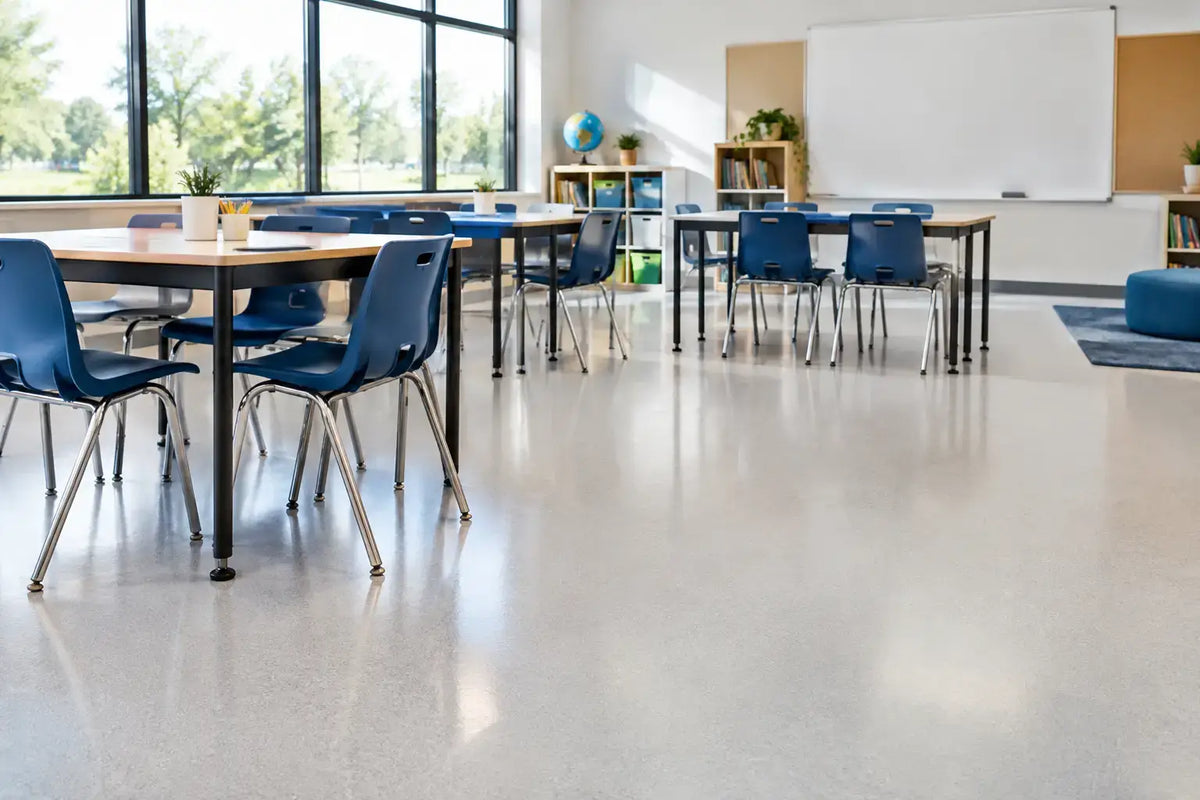
A school floor has to handle far more than foot traffic. It sees rolling carts, chair legs, dropped water bottles, muddy entrances, cafeteria spills, cleaning crews, assemblies, and daily movement between classes. The best school flooring is not simply the toughest product on paper. It is the material that fits the room, cleaning routine, budget, installation schedule, and expected lifespan of the project.
For school administrators, contractors, property managers, and commercial buyers, the smartest purchase starts with the use of the space. A quiet library has different needs than a busy hallway. A faculty office can support a more design-forward look than a cafeteria line. Choosing one floor for every area can simplify purchasing, but it may also mean compromising where performance matters most.
What Makes the Best School Flooring?
The right flooring for a school should be durable, easy to maintain, attractive enough to support the environment you want to create, and practical to replace or expand later. Budget matters, but initial material cost is only one part of the decision. A lower-cost floor that shows wear quickly, is difficult to clean, or creates frequent repair needs can become expensive over time.
Water resistance is a major consideration. Entrances, classrooms used by younger students, break areas, and restrooms-adjacent corridors are all exposed to spills and tracked-in moisture. Scratch and scuff resistance matter just as much in high-traffic areas, particularly where desks, carts, and furniture move often.
Appearance also has a role in performance. Mid-tone and textured visuals can be more forgiving than very dark, very light, or high-gloss floors that reveal dust and marks. Wood-look planks can bring warmth to classrooms and administrative areas, while stone- or concrete-inspired styles can suit contemporary common spaces. The goal is a floor that still looks intentional after a busy week, not only on installation day.
Luxury Vinyl Flooring for Classrooms and Hallways
Luxury vinyl flooring is often one of the strongest all-around choices for school projects. Luxury vinyl plank and tile are available in wood and stone visuals, offer a comfortable underfoot feel compared with many hard surfaces, and are generally straightforward to maintain. Waterproof flooring options are especially useful in spaces where spills, wet shoes, and routine cleaning are part of the day.
For classrooms, luxury vinyl can provide a polished appearance without the maintenance demands of natural wood. In hallways and multipurpose spaces, a commercial-appropriate wear layer and a textured finish can help the floor stand up to constant movement while disguising everyday scuffs.
Not all luxury vinyl products are built for the same level of traffic. A product suited to a guest room or low-traffic home area may not be the right choice for a school corridor. Review the product specifications, installation method, wear layer, and stated application before ordering. Glue-down vinyl can be a practical option for certain commercial environments because it creates a stable, repairable surface. Click-lock waterproof flooring may be a better fit where installation speed and subfloor conditions support a floating floor system.
The trade-off is that luxury vinyl still needs proper floor preparation. Uneven subfloors can telegraph through some products or affect the performance of a floating installation. Planning for surface preparation is essential, especially in older facilities.
Where Luxury Vinyl Works Best
Luxury vinyl is a strong candidate for classrooms, hallways, offices, libraries, break rooms, and many multipurpose spaces. It is particularly practical when a project needs a consistent design across several rooms while maintaining water resistance and easy cleaning.
Laminate Flooring for Value-Focused School Projects
Laminate flooring can offer an appealing wood-look floor at a budget-conscious price point, making it worth considering for lower-risk areas. Modern laminate designs can deliver convincing texture, broad plank visuals, and everyday scratch resistance that works well in offices, meeting rooms, staff areas, and certain classroom settings.
The key question is moisture exposure. While waterproof laminate options are available, laminate is generally less forgiving of standing water and prolonged moisture than waterproof luxury vinyl. That makes it a less natural choice for entrances, cafeterias, or spaces where spills are frequent and response times may vary.
Laminate can make sense when design impact and value are priorities, the room is dry, and the maintenance team can manage spills promptly. It is also useful for a school renovation that needs a coordinated wood visual without moving into the cost range of hardwood. For large projects, choosing first-quality closeout or special-buy laminate can create meaningful material value, provided the available quantity covers the project needs and future repair planning.
Hardwood Flooring for Selective School Spaces
Hardwood flooring brings character and long-term appeal that few other materials can match. In the right setting, it can elevate a private school lobby, administrative suite, library, donor space, or historic renovation. It also offers the advantage of refinishing potential, which can extend its usable life when the product and installation are suited to that approach.
That said, hardwood is rarely the default answer for the busiest, wettest areas of a school. It can scratch, reacts to changing moisture conditions, and requires a consistent maintenance plan. Its higher upfront investment also deserves careful consideration when the same project could use a durable wood-look alternative in high-traffic zones.
A blended approach often works better. Hardwood can define a reception area or leadership office, while waterproof luxury vinyl carries the performance load in corridors and active classrooms. This allows a facility to use premium materials where they will be appreciated without asking them to do a job better handled by a more resilient surface.
Match the Floor to the Room, Not Just the Budget
A school flooring plan should begin with a room-by-room review. Entrances need moisture management and a finish that can hide dirt. Hallways need exceptional wear resistance and a visual that will not show every scuff. Classrooms need comfort, cleanability, and dependable daily performance. Administrative offices may allow more flexibility for laminate or hardwood, depending on the desired look.
Consider these practical questions before narrowing the product selection:
- How much daily foot traffic and rolling traffic will the space receive?
- Is the area exposed to spills, wet shoes, or frequent mopping?
- Will desks, chairs, carts, or equipment move across the surface regularly?
- Does the project need matching material for future phases or repairs?
- Is the installation happening during a short school break or a longer renovation window?
Plan for Quantity, Availability, and Future Repairs
School projects often involve substantial square footage, multiple rooms, and tight timelines. Before committing to a closeout or discontinued style, confirm that the available inventory is sufficient for the full project, including a reasonable overage for cuts, layout adjustments, and future repairs. Factory-closeout flooring can be an excellent value opportunity because it is sourced from first-quality overstock, end-of-run, discontinued, and special-buy inventory. However, changing inventory also means a favorite style may not be available indefinitely.
For a phased project, it may be wise to purchase extra cartons if budget and storage allow. Keeping material from the same production run can simplify future repairs and help maintain a consistent appearance. This is especially useful in hallways, classrooms, and common areas where an isolated damaged plank may eventually need replacement.
Commercial buyers should also verify the product's suitability for the intended application and follow manufacturer installation requirements. The right adhesive, underlayment, expansion allowance, and subfloor preparation can be just as important as the flooring itself.
Get Better Value Without Settling for Lower Quality
A school flooring budget should not force a choice between appearance and dependable performance. Factory-closeout sourcing gives buyers access to first-quality flooring at exceptional value when inventory aligns with their project needs. The opportunity is in the sourcing and pricing, not in accepting inferior material.
For DFW-area buyers, reviewing options in a showroom can make it easier to compare texture, color variation, plank size, and finish in person. For projects across the country, detailed product information and nationwide delivery make it possible to plan confidently from a distance. Either way, start with the demands of the space, then choose the product that meets them at the best available value.
The floor beneath a school day may not get much attention when it is doing its job well. That is exactly the point: choose a surface that supports learning, holds up to activity, and keeps the facility looking prepared for whatever comes through the doors next.