
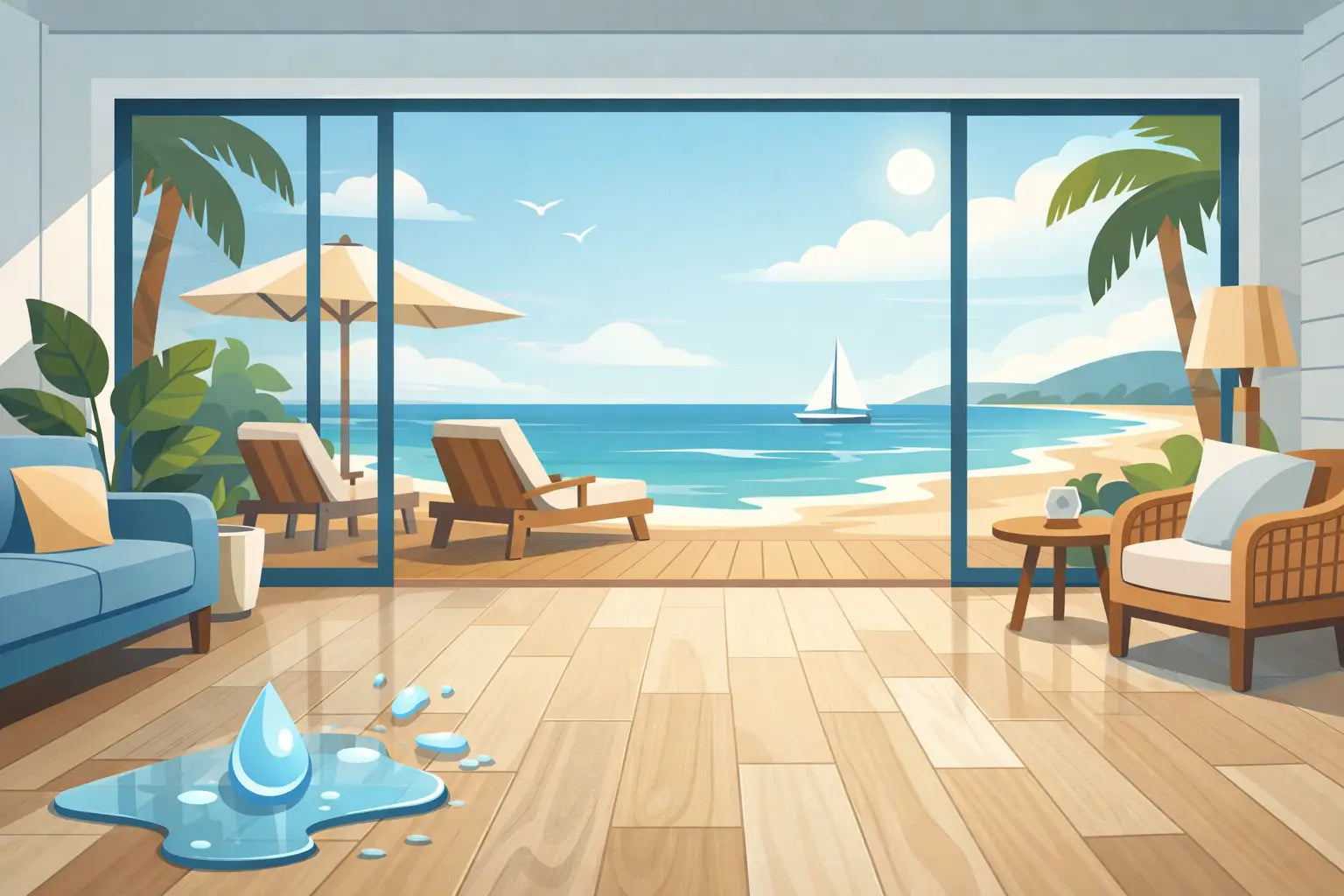
Salt crusts on the entry floor. Wet swimsuits cross the hallway. Fine sand works its way into every joint, corner, and grout line. The best waterproof flooring for beach homes has to do more than survive an occasional spill. It needs to handle daily moisture, gritty foot traffic, high humidity, and the relaxed look that makes a coastal property feel worth coming back to.
For most beach houses, luxury vinyl flooring is the strongest all-around answer. It offers true waterproof performance, a comfortable feel underfoot, and convincing wood or stone visuals without the cost and maintenance demands of many natural materials. But the right choice still depends on the room, subfloor, expected rental traffic, and whether you want a warm wood-look floor or the cooler feel of tile.
What Beach Homes Demand From a Floor
A coastal location creates a tougher environment than a typical inland home. Humid air can affect materials that expand, contract, cup, or gap. Sand acts like sandpaper under shoes, chair legs, and rolling luggage. Water is rarely limited to a single room when people are moving between the beach, pool, kitchen, and bedrooms.
That is why a floor labeled water-resistant is not always enough. Water-resistant products can withstand a small spill when it is cleaned quickly. Waterproof flooring is built with a core and construction that will not absorb water from surface exposure. For a busy vacation home, rental, or family beach house, that distinction can save you from premature replacement.
You also need a finish that stands up to abrasion. A waterproof floor that scratches easily will not look premium for long, especially near exterior doors. Look for durable wear layers, realistic textured finishes that help disguise minor debris, and colors that do not show every grain of sand.
Best Waterproof Flooring for Beach Homes: Luxury Vinyl
Luxury vinyl plank and luxury vinyl tile are the practical front-runners for most coastal projects. They are fully waterproof, easy to clean, and available in looks ranging from sun-washed oak to modern concrete and natural stone. Better yet, they deliver a high-end visual at a price that leaves more room in the budget for furnishings, appliances, or a larger renovation.
Luxury vinyl comes in two common core types: SPC and WPC. Both are waterproof, but they perform a little differently.
SPC vinyl for rentals, entrances, and high traffic
SPC, or stone plastic composite, has a dense, rigid core. It is especially well suited to beach-home entryways, kitchens, living areas, and rental properties where foot traffic is constant. Its rigid construction handles temperature swings well and creates a firm, stable floor.
The trade-off is comfort. SPC can feel harder underfoot than WPC, particularly if it is installed over concrete. Choosing a product with an attached pad or using an approved underlayment can soften the feel and improve sound control in upstairs rooms.
WPC vinyl for bedrooms and comfort-first spaces
WPC, or wood plastic composite, has a more cushioned core. It is still waterproof, yet it feels warmer and quieter underfoot. That makes it an appealing option for bedrooms, upstairs spaces, and owner-occupied beach homes where comfort matters as much as durability.
Because WPC is typically softer than SPC, it may show dents more easily under very heavy furniture or sharp point loads. Use furniture pads and avoid dragging loaded items across the floor. For a rental with frequent luggage, coolers, and furniture movement, SPC may be the safer long-term pick.
Porcelain Tile: The Premium Wet-Area Choice
Porcelain tile remains one of the best flooring options for bathrooms, laundry rooms, and homes where owners want a classic coastal tile look. It is waterproof, highly scratch-resistant, and naturally well suited to sand and moisture. Large-format porcelain can also create a clean, upscale visual with fewer grout lines.
The downside is cost and comfort. Tile installation is more labor-intensive, and the floor can feel cold and hard. Grout needs sealing or a stain-resistant grout choice, depending on the product. In a cold-weather coastal market, tile may not be the first choice for an entire home. In a warm climate or a poolside area, however, it is hard to beat.
For better slip resistance, choose a tile with an appropriate textured finish. Highly polished tile may look dramatic in a showroom, but it is not the smart choice for a wet barefoot environment.
Waterproof Laminate: A Value Option With Limits
Waterproof laminate has improved significantly and can deliver an attractive wood look at an aggressive price point. Many newer products use tight locking systems and treated edges to resist water exposure. For a low-traffic second home, bedroom, or dry living space, it can be a smart value purchase.
Still, laminate is not the first recommendation for areas where wet towels, dripping swimsuits, or open doors are routine. Its core is generally wood-based, and prolonged water exposure at seams can create problems even when the surface is protected. If your beach home will be used as a short-term rental or sees heavy pool and beach traffic, spend a little more for waterproof luxury vinyl in the main living areas.
Why Natural Hardwood Usually Is Not the Easy Answer
Hardwood brings undeniable character, but a beach home asks a lot from it. Changes in humidity can cause movement, while sand can wear down the finish. Water tracked in from the outdoors can stain or damage boards if it is not handled quickly.
Engineered hardwood is more stable than solid hardwood, and it can work in a carefully managed coastal home with consistent climate control. It is a design-driven choice, not the low-maintenance choice. If you love genuine wood, reserve it for protected bedrooms or a formal living space, then use waterproof vinyl or tile near doors, kitchens, baths, and utility areas.
How to Choose the Right Color and Finish
The best coastal floors tend to be forgiving. Mid-tone oak looks, warm greige, soft taupe, light natural wood, and muted stone visuals hide sand and everyday dust better than solid white, very dark brown, or high-gloss finishes. A low-sheen or matte surface also feels more relaxed and is less likely to reveal small scratches.
Wide planks can make a compact beach cottage feel more open, while a tile-look luxury vinyl can give a kitchen or bath a clean, tailored finish without cold grout lines. If the home is a rental, avoid overly trend-specific colors that may limit broad appeal. A timeless natural oak or light stone look gives future owners, guests, and buyers more flexibility.
Before committing, use a room visualizer to see how the floor works with your wall color, cabinetry, and natural light. Beach homes often receive intense sunlight, and a sample that looks perfect in a store can read much lighter or warmer inside the property.
Installation Details Matter as Much as the Material
A waterproof plank is only as dependable as the installation beneath it. Moisture testing is essential over concrete slabs, especially in coastal regions where ground moisture can be a concern. Follow the flooring manufacturer's requirements for vapor barriers, underlayment, expansion gaps, and acclimation.
Click-lock floating vinyl is popular because it installs efficiently and makes future repairs more manageable. Glue-down vinyl can be an excellent choice for commercial-level traffic and large spaces, but it requires careful subfloor preparation. Tile demands the most installation expertise, yet rewards that investment with long service life.
Do not skip the entry strategy. Use durable mats inside and outside exterior doors, and make sure they do not trap moisture against the flooring. Encourage guests to leave sandy shoes at the door. These small habits protect any floor, even one built for water.
Get First-Quality Performance Without the Showroom Price
Beach-home flooring should look expensive, perform under pressure, and make practical financial sense. That is where premium luxury vinyl stands out: it offers the waterproof protection and easy maintenance coastal homes need while delivering the wood and stone visuals buyers want.
Factory Flooring Liquidators helps homeowners, investors, and contractors access first-quality hard-surface flooring at unbeatable liquidation prices, with nationwide delivery and expert support when product details matter. The goal is not to buy the cheapest floor. It is to buy the right floor at a smarter price.
Choose a waterproof floor that lets guests come in from the water without making you worry about the next wet towel, sandy shoe, or surprise rainstorm. That peace of mind is part of what makes a beach home easy to enjoy.