
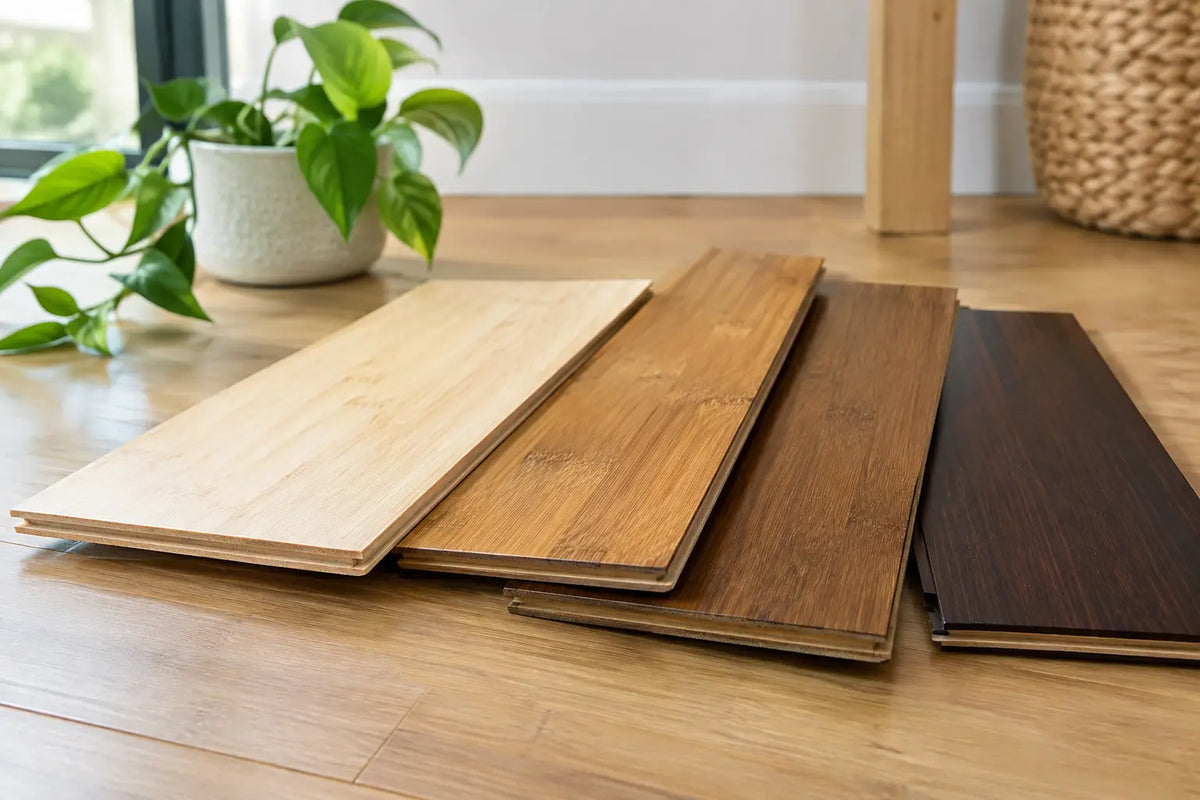
A bamboo floor can look clean and contemporary, richly traditional, or surprisingly similar to hardwood. That range is why understanding the different types of bamboo flooring matters before you compare colors or chase a closeout opportunity. The way bamboo is cut, pressed, stained, and constructed affects its appearance, day-to-day durability, installation method, and where it makes sense in your home or investment property.
For value-focused buyers, bamboo can be especially appealing when first-quality overstock, discontinued, or factory-closeout inventory becomes available. The smart purchase is not simply the lowest upfront cost. It is choosing a construction and style that suit the room, your household, and the amount of flooring you need while the product is available.
The Main Types of Bamboo Flooring
Bamboo flooring is commonly grouped by the orientation of the bamboo strips or fibers: horizontal, vertical, and strand-woven. These categories create very different visuals, even when the boards share a similar color.
Horizontal bamboo flooring
Horizontal bamboo, sometimes called flat-grain bamboo, displays the natural growth nodes of the bamboo strips. The strips are laid flat and laminated together, creating a broad, distinctive pattern that makes the material immediately recognizable.
This is a strong choice for homeowners who want bamboo to look like bamboo rather than imitate oak or maple. The look has warmth and character, with visible variation from board to board. It can work beautifully in living rooms, bedrooms, home offices, and design-forward spaces where the floor should make a statement.
The trade-off is visual. Because the nodes are noticeable, horizontal bamboo may feel busier than a traditional wood floor. Review a full product image, inspect a sample when available, and consider how the pattern will read across an entire room rather than on one plank.
Vertical bamboo flooring
Vertical bamboo is made by turning the bamboo strips on edge before they are pressed together. This produces a finer, more linear grain with a cleaner and more uniform appearance than horizontal bamboo.
If you prefer a streamlined floor that works with modern cabinetry, simple trim, or a minimal interior, vertical bamboo deserves a close look. Its narrow visual lines can also help a smaller room feel orderly without making the floor the center of attention.
Vertical bamboo is not automatically better or worse than horizontal bamboo. It is largely an appearance decision, assuming you are comparing products of similar quality and construction. Color, finish quality, board dimensions, and the installation system still deserve equal attention.
Strand-woven bamboo flooring
Strand-woven bamboo has a different look and manufacturing approach. Instead of arranging larger bamboo strips in a set direction, manufacturers shred bamboo fibers, blend them with adhesives, and compress them under high pressure. The result is a dense material with a more blended, wood-like grain pattern.
Many shoppers start their bamboo search here because strand-woven options often offer the most familiar hardwood-style appearance. You may see long planks in natural, brown, gray, or darker tones, making strand-woven bamboo easier to coordinate with a wide range of interiors.
Density can be an advantage in active households, rentals, and busy common areas, but no floor is immune to damage. Grit, pet nails, furniture legs, dropped objects, and excess moisture can still leave marks or create problems. A quality finish, routine cleaning, and felt protection under furniture matter as much as the flooring category.
Solid vs. Engineered Bamboo Construction
The bamboo style is only half the decision. Construction determines how the floor is installed and how it may perform over different subfloors.
Solid bamboo flooring
Solid bamboo flooring is made from bamboo throughout the board. It is often installed as a nail-down or glue-down floor, depending on the specific product and subfloor requirements. This construction can provide a substantial, traditional feel underfoot and is a natural fit for many above-grade living spaces.
Before buying, verify the installation instructions for the exact flooring you select. Subfloor condition, moisture levels, acclimation requirements, adhesive compatibility, and fastener guidance can vary by product. These details are particularly important for contractors and remodelers working to a schedule.
Solid bamboo may be a good fit when you want a more traditional wood-floor installation and your space meets the manufacturer’s requirements. It may be less practical when installation flexibility is the priority or when the project has challenging moisture conditions.
Engineered bamboo flooring
Engineered bamboo flooring uses a bamboo wear layer over a stable core. Depending on the product, it may be designed for glue-down, nail-down, or floating installation. That flexibility can make engineered construction attractive for remodels, condos, and projects with concrete subfloors.
A floating floor can help simplify certain installations, but it is not a shortcut around preparation. The subfloor still needs to be clean, flat, dry, and suitable for the installation method. Expansion space around walls and fixed objects also matters. Always use the instructions supplied with the flooring, not assumptions based on another product.
For homeowners comparing the different types of bamboo flooring, engineered options can offer a practical balance of appearance and installation versatility. For an investor or property manager, they may also make sense when a project needs a coordinated look across several rooms with varying subfloor conditions.
Natural, Carbonized, and Stained Bamboo Colors
Color changes the personality of bamboo flooring as much as construction does. Natural bamboo usually ranges from pale blond to warm honey tones. It keeps the material bright and works well in spaces with white cabinets, warm neutrals, or plenty of natural light.
Carbonized bamboo is heat-treated to create a deeper caramel or amber-brown color. The color runs through the material rather than sitting only on the surface, which gives it a warmer, more uniform appearance. The process can affect material characteristics, so compare the actual product specifications instead of assuming every carbonized floor will perform the same way.
Stained bamboo broadens the design options further. Gray, espresso, weathered brown, and other finish colors can help bamboo coordinate with current interiors or a specific renovation plan. Darker finishes can look dramatic, but they may reveal dust, footprints, or surface scratches differently than a lighter floor. A medium tone often offers a forgiving middle ground for active homes.
What to Compare Before You Buy
A good bamboo floor is more than a color and a price tag. Compare the board dimensions, finish, edge profile, locking or installation system, approved installation locations, and care instructions. If you are buying for a rental or flip, think beyond the initial purchase: select a look that is broadly appealing and realistic to maintain between occupants.
For a whole-home remodel, order enough material for the project based on the product’s coverage details and your installer’s waste allowance. Matching a discontinued color later may not be possible, particularly with first-quality closeout inventory. That limited availability can create exceptional value, but it also makes accurate planning essential.
Ask practical questions before placing an order. Is the flooring suited to your subfloor? Does the room receive strong sunlight? Are you coordinating with existing cabinets or wall colors? Will pets, children, tenants, or heavy foot traffic change your finish preference? Clear answers will narrow the selection faster than browsing color names alone.
Choosing Bamboo for Your Project
Choose horizontal bamboo when you want a recognizable, character-rich bamboo pattern. Choose vertical bamboo for a refined, linear appearance. Consider strand-woven bamboo when you prefer a denser, more wood-like visual with broad style flexibility. Then decide whether solid or engineered construction best suits the installation conditions.
For shoppers in the Dallas-Fort Worth area, seeing boards in person can make color and grain differences much easier to judge. For nationwide buyers, detailed product information and knowledgeable support can provide the same decision-making confidence before delivery is arranged. At Factory Flooring Liquidators, changing first-quality inventory can create worthwhile opportunities for homeowners, contractors, and property buyers who know what construction and look they need.
The best bamboo floor is the one that fits the room, installation plan, and realistic maintenance expectations. Start with the style you want to live with, confirm the construction works for the project, and take advantage of value when the right first-quality floor becomes available.