
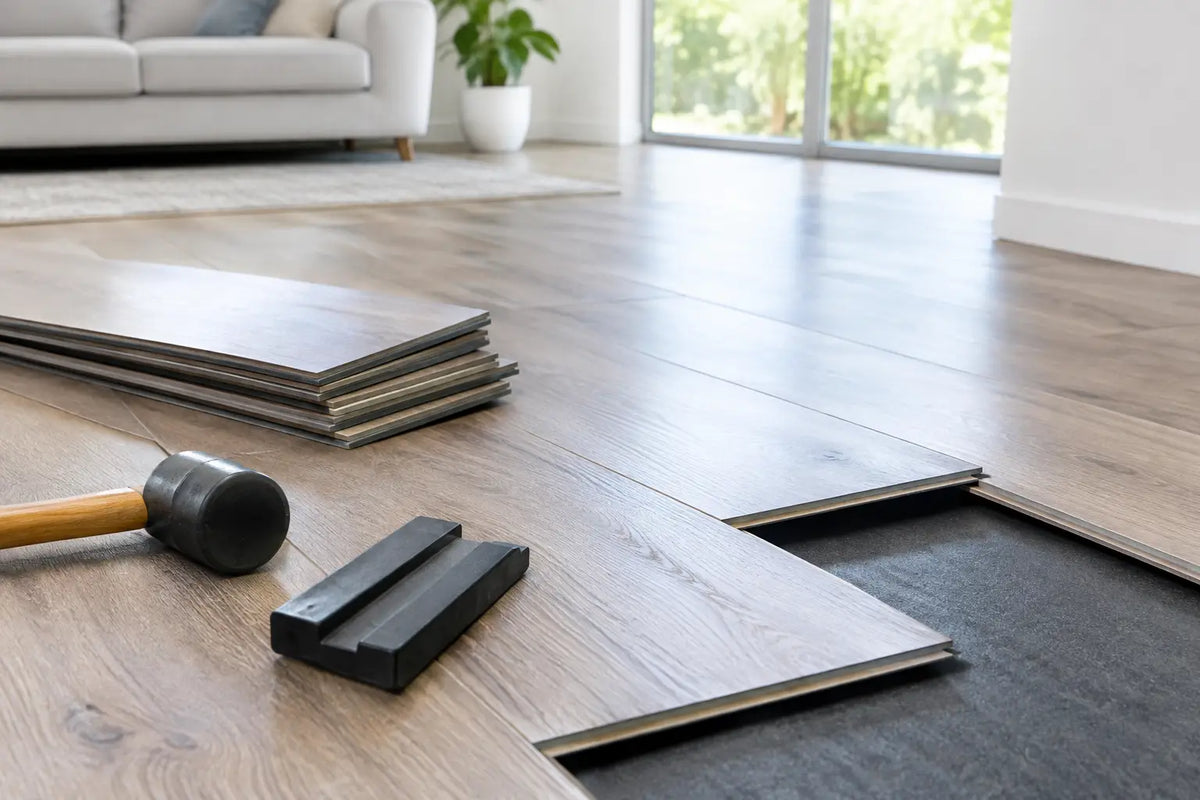
A floor can look like a major renovation without requiring a complicated attachment method. That is the appeal of floating install floors: the planks or tiles lock together over the subfloor instead of being nailed or glued directly to it. For homeowners replacing worn flooring, investors refreshing a rental, or remodelers working on a tight timeline, this installation style can offer an efficient path to a polished result.
The method is not automatically right for every product or room. The best choice depends on moisture exposure, subfloor condition, the flooring material, and how the space will be used. Understanding those details before you buy helps protect the value of your project.
What Are Floating Install Floors?
A floating floor is installed as one connected surface that rests over an approved underlayment or subfloor. Individual boards or tiles connect through a click-lock, fold-lock, or similar edge system. The finished floor is not fastened to the subfloor across its entire surface, which allows it to move slightly as temperatures and humidity change.
This does not mean the floor is loose. Once installed correctly, the connected system creates a stable, continuous surface. Perimeter expansion space is essential, and baseboards or matching trim cover that space after installation. Those small details are what allow the floor to perform as designed.
Floating installation is common with laminate flooring, many luxury vinyl plank and luxury vinyl tile products, and selected engineered hardwood floors. Each material has different strengths, so the installation method should be only one part of the buying decision.
Why Homeowners Choose a Floating Installation
The practical advantage is speed and simplicity. A compatible click-lock floor can often be installed without adhesives, nails, or long drying times. That can make it especially appealing for occupied homes, room-by-room updates, and properties where reducing downtime matters.
It can also help when the existing subfloor is structurally sound but not suitable for a nail-down installation. Floating products are often installed over properly prepared concrete slabs, plywood subfloors, and, in some cases, existing hard-surface floors if the manufacturer permits it. For Dallas-Fort Worth homes with concrete foundations, that flexibility is worth considering.
For budget-conscious projects, the value comes from more than installation convenience. Factory closeout, overstock, discontinued, and special-buy inventory can give shoppers access to first-quality flooring at exceptional liquidation value. A closeout price does not mean the product is lower grade. It means the sourcing opportunity can be different from standard retail inventory.
That said, a floating floor is not a shortcut around preparation. The subfloor still needs to meet the product’s flatness, moisture, and cleanliness requirements. A floor installed over an uneven or damp surface may develop movement, joint stress, or visible imperfections regardless of how attractive the planks looked in the box.
Comparing Floating Floor Materials
Laminate Flooring
Laminate remains a strong choice for busy living rooms, bedrooms, hallways, and rental-property updates. It offers convincing wood visuals, scratch resistance, and a comfortable balance of appearance and value. Modern laminate collections can deliver a more natural plank format and textured finish than many shoppers expect.
Water resistance varies by collection. Some laminate floors are built to handle everyday spills for a defined period, while others are better reserved for dry spaces. Check the product specifications rather than assuming every laminate floor is appropriate for kitchens, entryways, or other areas with frequent moisture.
Luxury Vinyl Plank and Tile
Luxury vinyl is a popular floating-floor option where water resistance and low-maintenance performance are priorities. Waterproof flooring can be an excellent fit for kitchens, bathrooms, laundry rooms, basements, and active households, provided the product and installation instructions support that application.
Vinyl also tends to feel quieter and more forgiving underfoot than some hard-surface alternatives. It is not indestructible, however. Heavy furniture, sharp objects, and an unprepared subfloor can still affect its appearance and performance. The wear layer, core construction, and locking system all matter when comparing products.
Engineered Hardwood
Certain engineered hardwood floors are designed for floating installation, combining a real-wood surface with a layered core intended for greater dimensional stability than solid hardwood. This gives homeowners an opportunity to bring authentic wood character into rooms where a nail-down installation may not be practical.
Engineered hardwood needs more care around moisture than waterproof vinyl. It also deserves close attention to veneer thickness, finish, and approved installation methods. If real wood is the priority, it can be an outstanding long-term design choice. If maximum water resistance is the priority, luxury vinyl may be the more practical match.
What to Check Before Buying Floating Install Floors
Start with the room, not the color. A beautiful floor that is mismatched to the space can create costly frustration later. Consider daily traffic, pets, moisture, sunlight, furniture, and whether the room connects to other areas that need a coordinated look.
Then review the product’s installation requirements. Some floating floors require an attached pad, while others require a separate underlayment. On concrete, a moisture barrier may be required. Underlayment is not a one-size-fits-all add-on, and using the wrong type can interfere with the locking system or create performance issues.
Measure carefully and include a reasonable overage for cuts, room shape, and future repairs. Wide-open rectangular rooms generally create less waste than closets, angles, islands, and stair-adjacent spaces. If you are buying a closeout or discontinued style, ordering enough for the full project matters because replenishment may not be available after the remaining inventory is sold.
Also inspect the transition plan. Doorways, fireplaces, cabinets, stairs, and connections to other flooring surfaces may require reducers, T-moldings, stair noses, or other coordinating pieces. These finishing materials affect both appearance and function, so they should be part of the plan from the beginning.
Common Mistakes That Cost More Later
The most common error is skipping subfloor preparation. Floating floors can bridge minor variations, but they cannot correct a subfloor that is outside the manufacturer’s flatness tolerance. High spots, low areas, debris, and moisture problems should be addressed before installation begins.
Another mistake is failing to leave the required expansion gap. Floors naturally respond to seasonal conditions. When planks are installed too tightly against walls, cabinets, or fixed objects, the floor may bind or lift. Proper spacing and appropriate transitions give the floor room to perform.
Finally, do not select a product based on a single feature. A waterproof claim may be meaningful, but it does not replace a review of wear performance, installation location, subfloor requirements, and maintenance expectations. The best floor is the one that fits the entire project, not simply the one with the loudest label.
Finding First-Quality Value for Your Project
A smart flooring purchase balances product quality, project requirements, and available inventory. Factory closeout flooring can be particularly valuable when you have identified a style you like and can purchase the quantity you need while it is available. These opportunities often include first-quality products from well-known flooring categories, with pricing shaped by sourcing rather than inferior materials.
For online shoppers nationwide, product details, installation documents, and available quantity deserve a close look before placing an order. For customers near Carrollton and the broader DFW area, seeing flooring in person can help confirm color, texture, plank size, and overall feel. Whether you shop online or visit a showroom, expert guidance can help you narrow choices without overbuying features you do not need.
Floating installation gives many homeowners a flexible, attractive way to update a space. Choose the material that fits the room, prepare the surface correctly, and buy enough first-quality flooring to complete the project with confidence.