
A few clicks can save you thousands on premium flooring, but most shoppers still pause at the same question: how flooring is shipped to your home without damage, delays, or confusion. That hesitation makes sense. Flooring is heavy, often long in length, and not something a standard parcel carrier drops on the porch. Once you know how the process works, online buying feels a lot more straightforward.
How flooring is shipped to your home starts with palletized freight
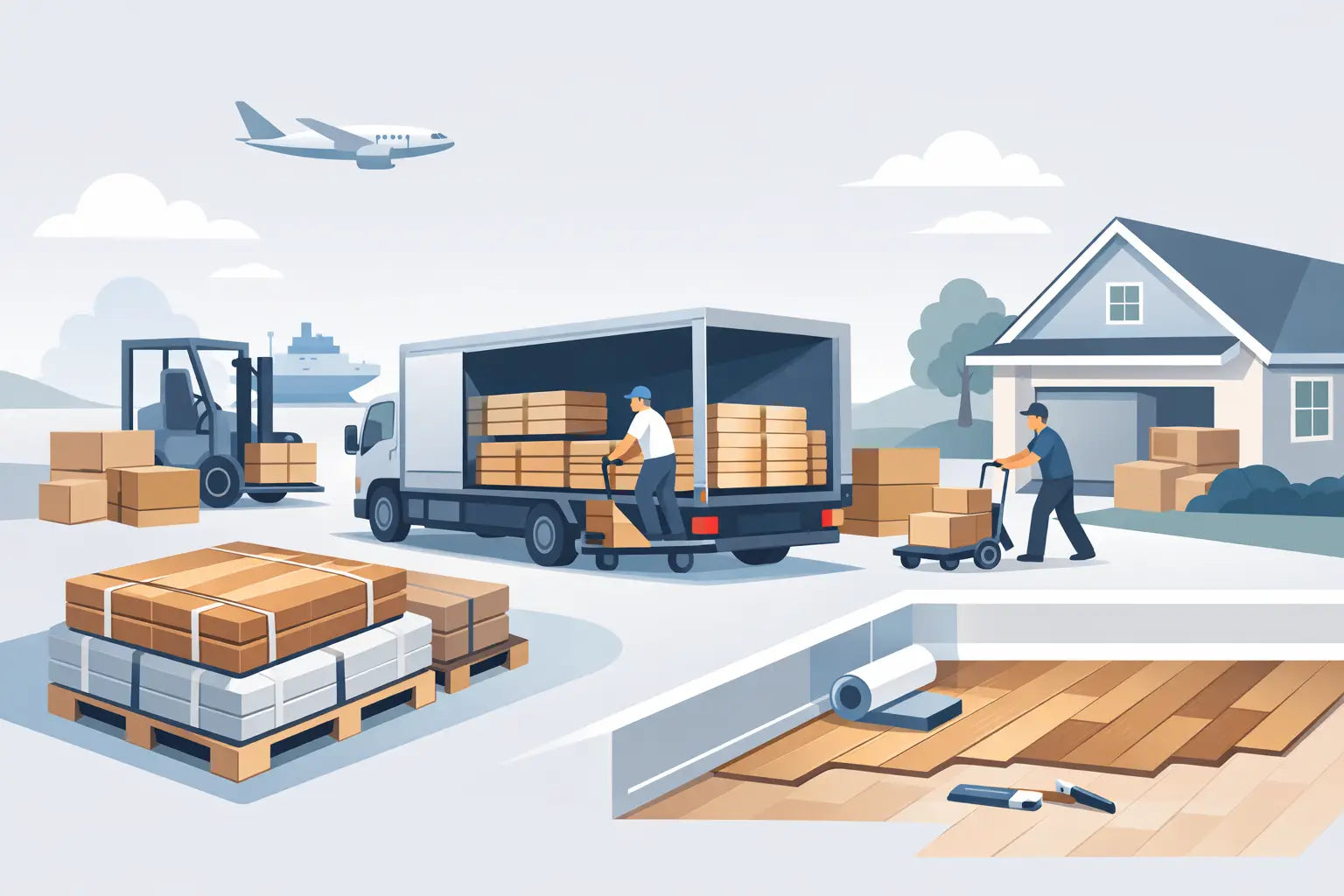
Hardwood, vinyl, and laminate flooring are usually shipped by freight, not standard package delivery. The reason is simple - flooring comes in dense cartons that add up fast, and many products include long planks that need stable support in transit. To protect the material, boxes are stacked on pallets, wrapped tightly, and secured so the load stays square from the warehouse to your address.
This palletized setup matters because it reduces shifting, corner damage, and moisture exposure during handling. A single room order may ship on one pallet, while a whole-home order can require multiple pallets depending on the product, plank length, and total square footage. The goal is not just to move boxes cheaply. It is to get first-quality flooring to you in sellable, install-ready condition.
Freight also works differently than parcel shipping. Instead of moving through a small-package network, your order is booked with a freight carrier that handles larger residential deliveries. That means scheduling, access planning, and delivery coordination are part of the process.
What happens before your order leaves the warehouse
Before shipment, flooring is typically checked against the order for product type, color, lot information where applicable, and quantity. This is especially important with hard surface flooring because consistency matters. Buyers want the right material, the right finish, and the right amount, especially when they are trying to hit a project timeline without expensive reorders.
After verification, the cartons are arranged on a pallet in a way that supports the product. Heavier boxes go where the load stays stable, edges are protected, and the full pallet is wrapped for transit. Some shipments include extra protection depending on the carrier, the distance, and the product category.
This stage is easy to overlook, but it affects everything that comes next. Good prep lowers the chance of damage claims, partial loss, and preventable delivery headaches. It is one of the reasons experienced flooring sellers can ship nationwide with more confidence than a seller treating flooring like ordinary e-commerce merchandise.
Different flooring types can ship a little differently
The basic freight model is similar across categories, but the product still matters. Hardwood flooring tends to be especially dense, and the weight adds up quickly. It may require tighter pallet planning and careful storage after delivery because wood reacts to temperature and humidity.
Luxury vinyl plank and laminate are also commonly palletized, but they can differ in carton count, pallet height, and total shipment weight. A vinyl order for a large project may still be extremely heavy even if the material is thinner than hardwood. Laminate can be bulky as well, particularly when buyers order enough for several rooms.
The practical takeaway is that shipping is not one-size-fits-all. The carrier, packaging, and unloading expectations can vary based on what you bought and how much of it is headed to your home.
Residential freight delivery is usually curbside
When customers ask how flooring is shipped to your home, the biggest surprise is often the final step. In most cases, flooring arrives as a residential curbside delivery. That means the truck brings the pallet to your address, and delivery is made to the curb, driveway, or another accessible ground-level spot, depending on conditions and carrier policy.
This is not the same as white-glove room placement. Freight drivers are delivering large, heavy loads on tight schedules, and most are not set up to carry flooring into a garage, basement, or upstairs living area. If you are ordering for a remodel, flip, or rental turnover, plan ahead for help moving the cartons from the drop point to the storage area.
Driveway slope, gate width, soft ground, apartment access, and cul-de-sacs can all affect the handoff. A carrier may call ahead to schedule a delivery window, and that call matters. It is your chance to flag access issues before the truck arrives.
What you should expect before delivery day
Once your order ships, you will typically receive shipment details and then hear from the carrier to arrange delivery. Freight companies usually want someone available to receive the order, especially for residential stops. If nobody is there, redelivery can mean added delay and sometimes extra fees.
This is also when you should think through unloading and staging. Flooring is heavy enough that moving it alone is rarely the smart play. Even smaller orders can involve dozens of cartons, and larger orders may require a plan for where each pallet will sit temporarily.
If weather is a factor, have a dry indoor space ready. Flooring should not be left exposed to rain or sitting outside longer than necessary. Premium flooring at liquidation pricing is still a serious material purchase, and protecting it after arrival is part of getting full value from the deal.
Inspect the shipment before you sign for it
The most important thing you can do at delivery is inspect before signing. Look at the stretch wrap, pallet condition, and visible cartons. If you see crushed corners, broken boards, punctures, water exposure, or signs the load shifted in transit, note it on the delivery receipt.
This step protects you if a freight claim is needed. Signing clean without checking can make damage issues harder to sort out later. You do not need to open every carton at the curb, but you should do a practical visible inspection and document anything questionable with photos.
A reputable flooring seller wants this done correctly because fast, accurate documentation makes problem-solving easier. It is part of protecting the customer and the order, not creating friction.
After delivery, storage matters more than most buyers think
Once the flooring is inside, do not rush to stack cartons anywhere convenient and forget about them. Store the material flat, dry, and in a climate-appropriate space until installation. For hardwood in particular, proper acclimation can matter depending on the product and site conditions.
Avoid garages with extreme temperature swings unless the product guidelines allow it. Avoid damp basements, uncovered patios, or areas where cartons can absorb moisture. Even when the shipment arrived perfectly, bad storage can create avoidable problems before the first plank is installed.
If your installer has specific timing or acclimation requirements, coordinate that before delivery day. A good shipment can still turn into a project delay if the material shows up before the site is ready.
Why buying flooring online is more practical than many shoppers assume
There is still a lingering belief that flooring should only be bought locally because shipping is too risky or too complicated. In reality, specialized freight shipping has made direct-to-consumer flooring much more practical than many buyers expect. When the order is packed correctly, scheduled properly, and inspected on arrival, the process is straightforward.
That matters because buying online opens access to premium first-quality flooring at pricing local showrooms often cannot touch. For homeowners and project buyers comparing hardwood, vinyl, and laminate, nationwide delivery removes a major barrier. You are no longer limited to what is stocked nearby or marked up for a retail floor.
It also helps that experienced sellers build support around the purchase, not just the checkout page. Product guidance, quantity support, and planning tools reduce the guesswork that used to make remote flooring purchases feel risky.
The trade-off is convenience versus involvement
The honest answer is that freight delivery is not effortless in the way a small parcel order is effortless. You will need to coordinate timing, be present or have someone present, inspect the order, and move the cartons inside. That is the trade-off.
For many buyers, it is a very fair one. Saving on premium flooring while getting access to better inventory often outweighs the added delivery involvement. That is especially true for larger remodels, investment properties, and full-room upgrades where material cost matters.
Factory Flooring Liquidators serves customers who want that equation to work in their favor - premium flooring, first-quality materials, aggressive pricing, and delivery support that makes nationwide ordering feel manageable instead of complicated.
If you are planning a flooring purchase, the smartest move is not to worry whether shipping is possible. It is to prepare for delivery like a buyer who knows exactly what is coming, how it will arrive, and how to protect the value of every box once it gets there.