
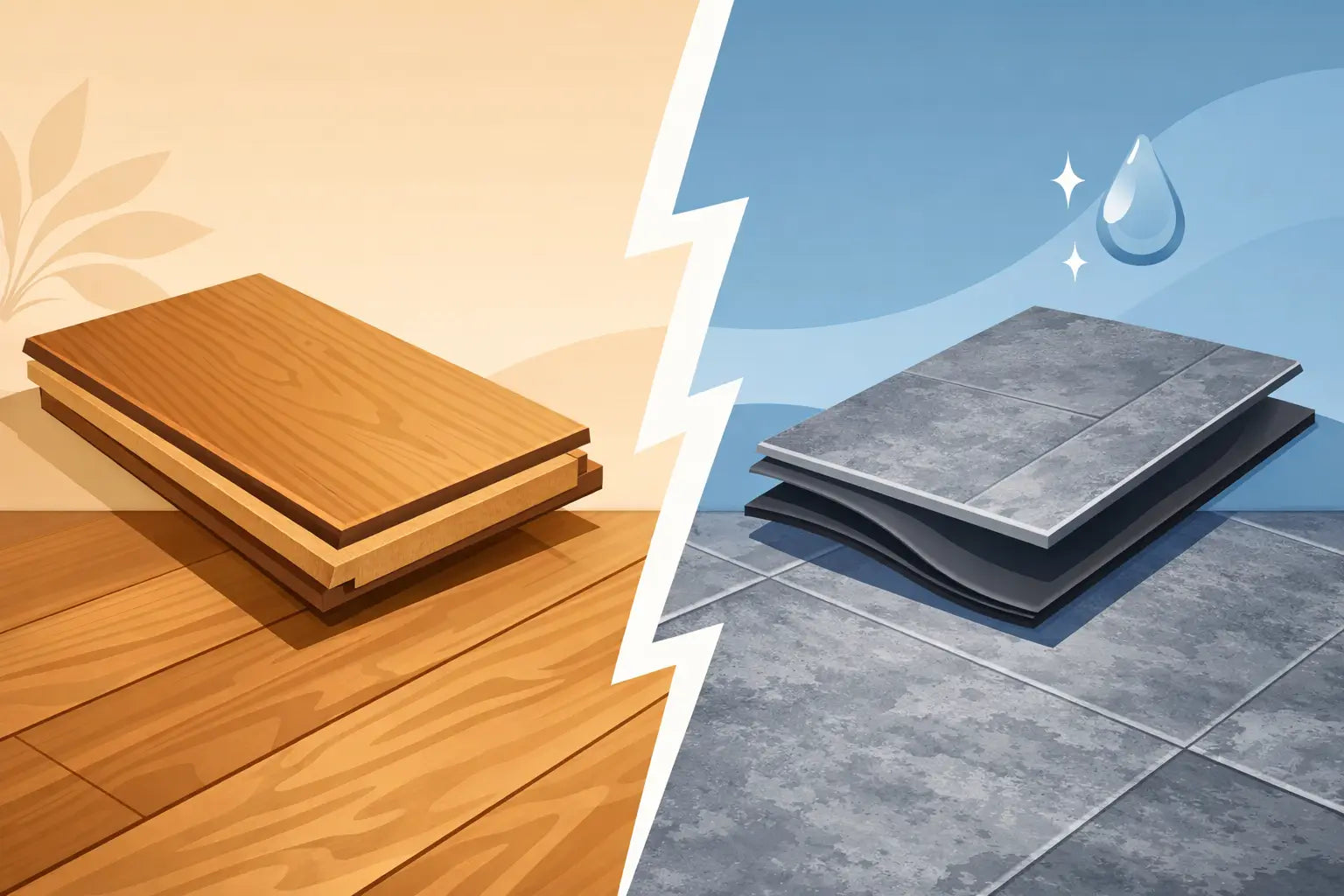
You can save hundreds on a floor and still regret it if you pick the wrong material for the room. That is why laminate vs vinyl flooring is not just a style question - it is a performance decision that affects wear, moisture, comfort, and long-term value.
Both options are popular for a reason. They give homeowners, landlords, renovators, and contractors a hard-surface look without the price of traditional hardwood. But they do not behave the same way once they are in your house. If you are comparing rooms, budget, and durability side by side, here is what actually matters.
Laminate vs Vinyl Flooring: The Real Difference
At a glance, laminate and vinyl can look surprisingly similar. Both are available in wood-look planks, both can install as floating floors, and both can cost far less than solid hardwood. The difference is in what they are made of.
Laminate flooring usually has a fiberboard core with a printed design layer and a tough wear layer on top. It is built for scratch resistance, visual realism, and everyday foot traffic, but the core is more sensitive to moisture.
Vinyl flooring, especially luxury vinyl plank or tile, is made with synthetic materials that handle water much better. It is often the safer pick in spaces where spills, humidity, or wet shoes are part of daily life.
That basic material difference shapes nearly every buying decision.
Where Laminate Flooring Has the Edge
Laminate has come a long way from the hollow, artificial-looking floors people remember from years ago. Better laminate products now offer impressive texture, cleaner embossing, and a more realistic wood appearance. If your top priority is getting the look of hardwood at a lower price, laminate deserves a serious look.
It also tends to feel firmer underfoot, which some buyers prefer. In living rooms, bedrooms, hallways, and home offices, that solid feel can make the floor seem more substantial. Laminate also performs well against scratches from daily use, which matters in active households with kids, pets, or frequent furniture movement.
Another advantage is value. When you find first-quality laminate at liquidation pricing, the price-to-look ratio can be hard to beat. For large remodels or rental upgrades, that can make a major difference without forcing you into lower-grade material.
That said, laminate works best when the room stays relatively dry. A small spill is one thing. Ongoing moisture exposure is another.
Where Vinyl Flooring Pulls Ahead
Vinyl flooring wins on water resistance, plain and simple. In many cases, it is fully waterproof, which makes it a strong choice for kitchens, bathrooms, laundry rooms, mudrooms, basements, and entry areas.
That protection is not just about catastrophic leaks. It is also about ordinary life. Wet dog paws, splashes near the dishwasher, spilled drinks, and tracked-in rain are easier to live with when the floor is built to handle them.
Vinyl is also softer and quieter underfoot than many laminate products. That can be a selling point in households where comfort matters, especially in lower-level rooms, condos, or investment properties where sound control is a consideration.
For many buyers, vinyl is the lower-risk option. It gives you flexibility across more rooms, which is useful when you want one flooring type to carry through much of the house without worrying about moisture trouble later.
Cost: Which One Gives Better Value?
If you are strictly comparing sticker price, laminate and vinyl can overlap quite a bit. Sometimes laminate comes in lower. Sometimes premium vinyl is the smarter spend because it avoids replacement costs in moisture-prone areas.
The better question is not just which one is cheaper. It is which one gives better value for the room. A bargain laminate floor in a basement is not really a bargain if moisture causes damage. A premium vinyl floor in a dry guest room may be more performance than you actually need.
This is where smart buying matters. First-quality flooring at liquidation prices changes the math. Instead of choosing between cheap and expensive, you may be able to move into a better product tier for less. That is often where long-term value shows up - better wear layers, stronger locking systems, better visuals, and fewer compromises.
Durability in Real Homes
Durability depends on what your home throws at the floor.
Laminate is often excellent for scratch resistance. Chairs, pet claws, and everyday foot traffic are less likely to leave visible wear if you choose a quality product. That makes it attractive for busy family rooms and high-traffic common areas.
Vinyl handles impact and moisture better. If something drops, vinyl often has more give. If a mess sits for a while, vinyl is generally more forgiving. For households where life gets messy fast, that matters more than lab specs.
Neither floor is indestructible. Heavy furniture can dent vinyl. Standing water can damage many laminate products. Poor installation can shorten the life of either one. The winning choice depends less on marketing claims and more on matching the product to the room.
Style and Appearance
If your goal is a convincing wood look, both categories offer strong options. Laminate often stands out for texture and plank visuals, especially in premium lines. Some buyers feel it delivers a more natural hardwood look, particularly in living spaces where design matters most.
Vinyl has improved fast, though, and many luxury vinyl products now offer highly attractive wood and stone looks with realistic color variation. If you want a wider room-to-room application, vinyl can be easier to use consistently throughout the home.
Color also matters in the decision. Light oak visuals can open up smaller rooms. Mid-tone browns hide dust better. Gray tones can work in modern interiors but may feel cold if the rest of the room lacks warmth. The right flooring is not just about material - it is about whether the color and plank style fit your space.
Tools like a room visualizer can make this much easier. Seeing the floor in a photo of your own room removes a lot of guesswork before you buy.
Best Rooms for Laminate vs Vinyl Flooring
Laminate is usually a strong fit for bedrooms, living rooms, dining rooms, upstairs hallways, and home offices. These are spaces where comfort, looks, and scratch resistance matter, but standing water is less of a daily concern.
Vinyl is usually the safer choice for bathrooms, kitchens, laundry rooms, basements, and entry points. These rooms ask more from a floor, and moisture tolerance becomes a major advantage.
If you are updating a rental, flip, or full-home renovation, mixed use matters too. Some buyers want one flooring category across most of the house for a consistent look. In that case, vinyl often gives you more flexibility. But if your priority is maximizing appearance in dry living spaces while controlling cost, laminate may be the stronger value play.
Installation and Project Planning
Both laminate and vinyl are widely available in click-lock formats, which can help reduce labor time compared with more complicated flooring installs. That is good news whether you are a DIY homeowner or a contractor trying to keep a job moving.
Subfloor condition still matters. A smoother, properly prepared surface leads to a better result, especially with vinyl. Skipping prep to save money can create telegraphing, movement, or premature wear.
It is also worth thinking beyond the planks themselves. Underlayment, trim pieces, transitions, delivery timing, and room measurements all affect the final cost and experience. Buyers who plan the full project, not just the product price, usually make better flooring decisions.
So, Which One Should You Choose?
If the room is dry, appearance is a top priority, and you want strong value with a hardwood-style feel, laminate can be the right buy. If moisture resistance, versatility, and lower-risk performance matter more, vinyl is usually the smarter choice.
That is the real answer to laminate vs vinyl flooring - not one winner for everyone, but a better fit based on where the floor is going and what you expect from it. The smartest shoppers do not just chase the lowest price. They look for first-quality flooring that matches the room, the traffic, and the budget.
At Factory Flooring Liquidators, that is exactly where the advantage can show up. You are not forced into showroom markups to get a premium product, and you do not have to settle for cheap-looking material just to stay on budget.
A floor should make the room look better on day one and still make sense after years of real use. Pick the product that fits your space honestly, and the savings will feel a lot better.