
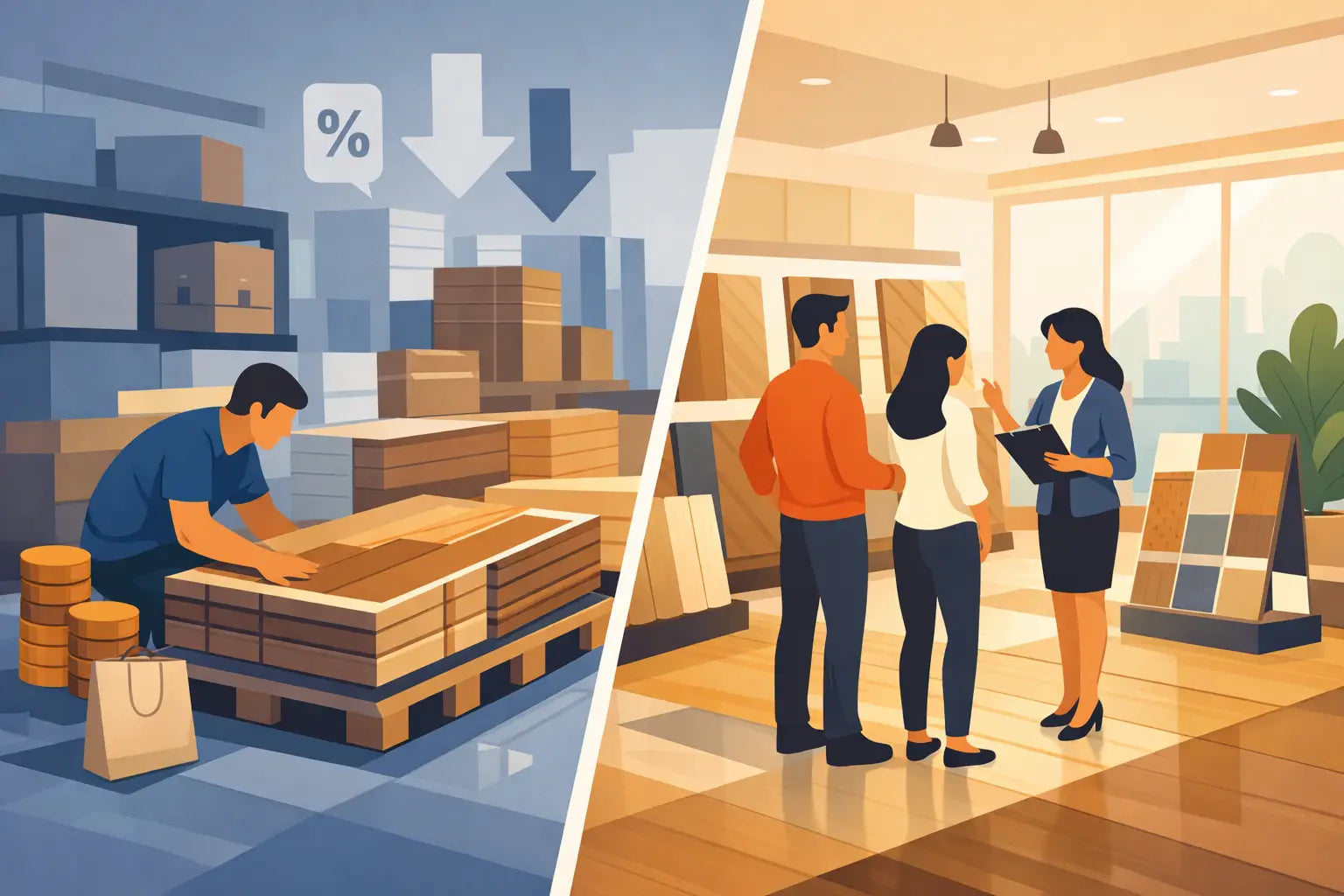
Sticker shock usually happens fast. You walk into a showroom, find a floor you love, and then the quote lands a lot higher than expected. That is exactly why so many buyers start comparing liquidation flooring vs showroom pricing - not just to spend less, but to see whether a lower price still gets them the quality, style, and confidence they want.
For homeowners, renovators, landlords, and contractors, flooring is one of the biggest line items in a project. A price gap of even a few dollars per square foot can turn into hundreds or thousands of dollars across a full home, a rental refresh, or a multi-unit job. The real question is not whether showroom floors can look good. It is whether the showroom model is giving you enough extra value to justify the markup.
Liquidation flooring vs showroom pricing: what changes the number?
At first glance, flooring seems simple. It is a plank, tile, or board with a listed price. But the number you see is shaped by more than the product itself. Pricing reflects overhead, sourcing, display costs, staffing, local retail margins, and how the inventory is sold.
A showroom typically builds its pricing around a traditional retail model. That includes a physical display environment, commissioned sales staff in some cases, merchandising costs, samples, and the cost of carrying broad inventory for a walk-in shopping experience. Those expenses do not disappear. They are usually built into the final price.
Liquidation flooring follows a different model. Instead of pricing around a premium retail setting, it focuses on moving high-value inventory at aggressive rates. That can include overstock, closeout opportunities, inventory realignment, and other deal-driven sourcing channels. When the seller is focused on direct pricing rather than showroom markups, the customer often gets access to premium first-quality flooring for less.
That is the part many buyers miss. Lower pricing does not automatically mean lower-grade material. In a strong liquidation model, the value comes from how the inventory was acquired and sold - not from cutting corners on quality.
Why showroom pricing tends to run higher
Showroom pricing can make sense for some buyers, especially those who want an in-person design experience and are comfortable paying more for it. But the markup is rarely about the flooring alone.
Part of the premium comes from presentation. Showrooms are built to inspire. They invest in displays, lighting, curated setups, and a consultative sales environment. That experience can feel helpful, especially early in the shopping process, but it often adds cost before the product ever reaches your home.
Another factor is how inventory is positioned. In many showrooms, flooring is framed as a premium design purchase, which supports premium pricing. That does not mean the product is better than what is available through liquidation channels. It means the buying environment is designed to support a higher perceived value.
There is also less pricing transparency in some showroom settings. A floor might look competitive at first, but once underlayment, trim, delivery, or installation-related add-ons enter the conversation, the final total can climb quickly. Buyers comparing quotes often find that the showroom base price was only part of the story.
Where liquidation flooring wins on value
The advantage of liquidation flooring is straightforward: you can often buy more floor for the same budget, or better floor for less money. That matters whether you are remodeling your forever home or trying to protect margins on an investment property.
With liquidation pricing, the budget stretches further. Instead of settling for an entry-level look, buyers can often move into premium hardwood, luxury vinyl, or laminate options that would feel out of reach in a showroom. That changes the decision in a meaningful way. It is not just about saving money. It is about buying up in quality and style without paying retail markup.
This is especially useful when square footage gets large. A small difference per square foot becomes a major project cost on whole-home renovations, open-concept layouts, rental turnovers, or builder-grade upgrades. In those cases, liquidation pricing can create room in the budget for better padding, stair parts, trim, or other finishing details that improve the final result.
For practical buyers, there is another benefit: speed. Deal-driven inventory often appeals to customers who are ready to move, not browse for weeks. If you know your style, your measurements, and your performance needs, a liquidation source can be a much more efficient way to buy.
The trade-off buyers should understand
There is a reason smart shoppers compare, rather than assume one option always wins. Liquidation flooring can deliver major value, but it works best when the seller is transparent and the customer has real buying support.
Inventory can be more dynamic. A particular style or color may not sit around forever. That can be a positive if you want strong deals, but it also means hesitation can cost you the product you wanted. Buyers who need months of lead time or repeated in-person visits may feel more comfortable in a conventional showroom environment.
Selection is another it-depends category. A showroom may present more brands in a single physical space, while a liquidation seller may focus on high-value inventory with faster turnover. That is not automatically a drawback. In fact, many buyers prefer a tighter, better-priced assortment over paying extra to browse endless displays.
The key is support. If you are buying online or through a direct retailer, you still need confidence in the product, the specifications, and the final look. That is where expert guidance and tools like room visualization become more than nice extras. They reduce guesswork and help shoppers buy decisively.
Quality concerns: is liquidation flooring actually first quality?
This is one of the biggest questions in the liquidation flooring vs showroom pricing conversation, and it is a fair one. Buyers hear the word liquidation and sometimes assume damaged, second-quality, or leftover material with hidden problems.
That is not always the case. A reliable liquidation retailer can offer first-quality flooring at lower prices because the savings come from sourcing and distribution efficiency, not because the product is defective. Premium hard surface flooring in hardwood, vinyl, and laminate can enter liquidation channels for many reasons that have nothing to do with performance.
What matters is how the seller presents the product. Buyers should expect clear specifications, honest product information, and practical help choosing the right floor for traffic, moisture exposure, room type, and design goals. If a seller cannot explain the product clearly, low pricing alone is not enough.
On the other hand, if the retailer combines aggressive pricing with product knowledge, transparent details, and purchase support, liquidation becomes a smart buying strategy rather than a gamble.
Who benefits most from liquidation flooring?
Not every buyer shops the same way. But certain customers gain the most from a liquidation-first approach.
Homeowners updating a main living area or replacing worn floors across several rooms usually see immediate savings because the square footage is substantial. Property investors and landlords benefit because better-looking floors help improve appeal without crushing budget. Contractors gain pricing flexibility that can help them stay competitive while still delivering attractive results to clients.
It also works well for shoppers who are quality-sensitive but markup-averse. These are the people who want premium visuals, durable wear layers, or a richer hardwood look, yet do not want to fund the showroom experience to get there.
If that sounds like your buying style, a value-led direct retailer may be the smarter fit. Factory Flooring Liquidators is built around exactly that advantage - premium first-quality hard surface flooring at liquidation pricing, backed by expert support, nationwide delivery, and tools that help customers picture the floor before they commit.
How to compare pricing without getting misled
The best way to compare is to look beyond the headline number. Ask what grade of product you are getting, how much material is available, and whether the quote reflects real project needs rather than just a sample-board price.
Pay attention to category as well. A liquidation hardwood floor should be compared with showroom hardwood of similar construction and finish, not a cheaper engineered alternative. The same goes for vinyl and laminate. Apples-to-apples comparisons matter.
It also helps to think in total project terms. If liquidation pricing lets you buy a better-performing product while staying on budget, that is a stronger win than simply finding the lowest sticker price. The cheapest option is not always the best value. The best value is the floor that gives you the look, durability, and budget control you actually need.
A smart flooring purchase is rarely about chasing the highest-end showroom display or the absolute lowest advertised number. It is about knowing when premium flooring can be bought more efficiently - and acting before the best value gets priced like everyone else’s.