
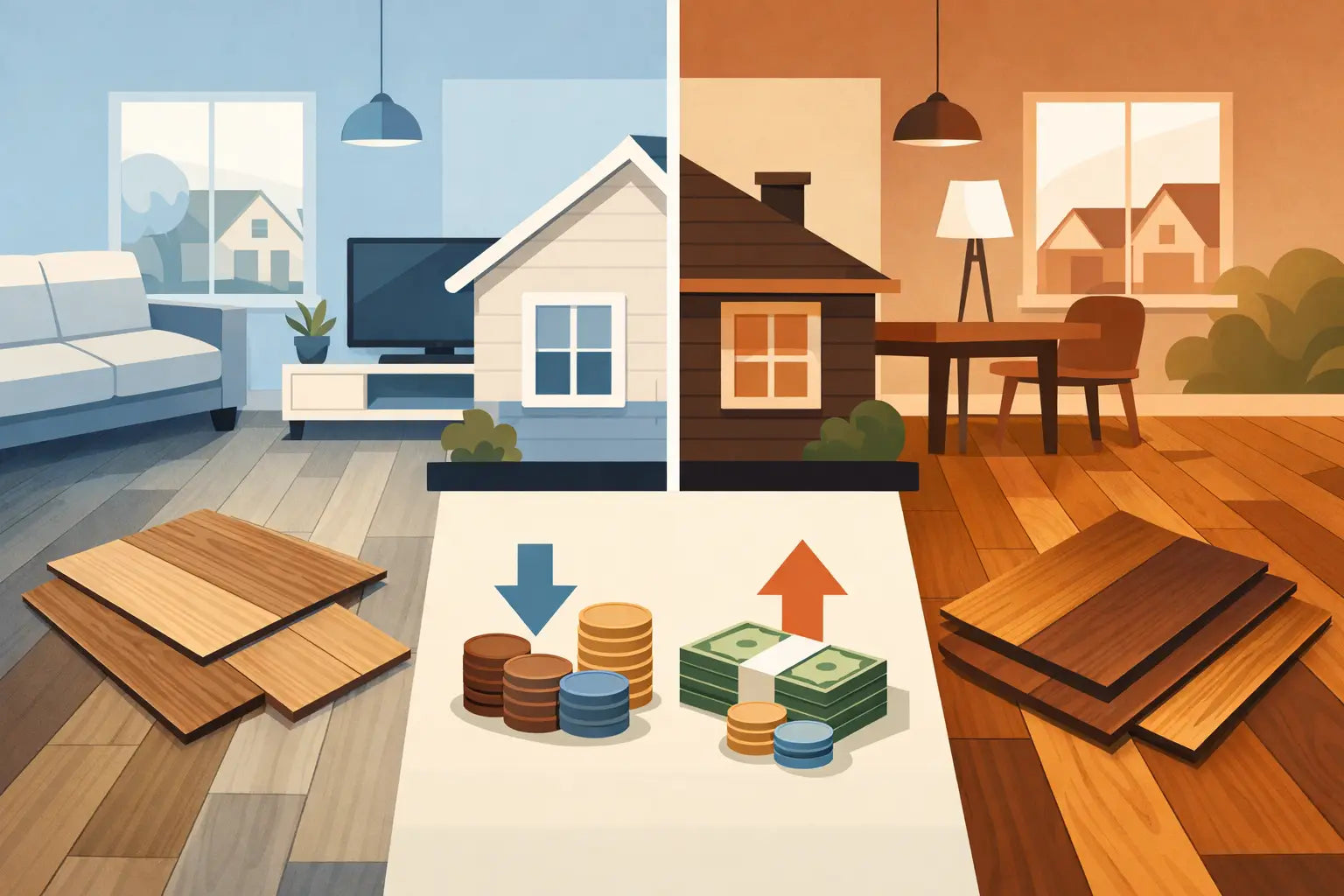
A whole-home flooring decision gets expensive fast. On a 1,500-square-foot home, even a $2 difference per square foot can create a $3,000 gap before installation, underlayment, trim, and floor prep enter the picture. This luxury vinyl plank vs hardwood flooring cost comparison for entire house breaks down where the money goes, what each option delivers, and how to avoid paying showroom-level prices for the look you want.
The short answer on whole-house cost
Luxury vinyl plank, commonly called LVP, is usually the lower upfront-cost choice. For many whole-home projects, material and installation together can land roughly in the $4 to $12 per square foot range, depending on product quality, installation method, subfloor condition, and local labor rates.
Hardwood typically costs more from the start. A whole-home hardwood project often falls around $8 to $20 or more per square foot installed. Entry-level domestic species and unfinished products can keep costs closer to the lower end, while wide planks, premium grades, engineered hardwood, specialty finishes, and complex installation details can push the final number much higher.
Those ranges are useful for early budgeting, not a substitute for a quote. The same 1,500-square-foot home might need only 1,350 square feet of flooring after accounting for cabinets and fixed areas. It may also require 5% to 12% extra material for cuts, waste, and future repairs. Room layout, stairs, demolition, moisture concerns, and the condition of the existing floor can matter as much as the flooring itself.
Luxury vinyl plank vs hardwood flooring cost comparison for an entire house
Here is what the math can look like for a home with 1,500 square feet of floor area. These examples assume a straightforward installation with normal material waste, but no major structural repairs.
A value-focused LVP project might use first-quality planks priced near $2.50 to $4.00 per square foot, plus installation and accessories. That can put the total in the neighborhood of $6,000 to $12,000 for much of the home, depending on labor and preparation.
A premium LVP selection with a thicker wear layer, realistic wood texture, upgraded underlayment, and more detailed installation may reach $12,000 to $18,000 or more. That is still often below the cost of a comparable hardwood project, especially when waterproof performance is a priority.
For hardwood, a practical engineered or domestic hardwood option may put a 1,500-square-foot project around $12,000 to $22,000 installed. Higher-end solid hardwood, wider boards, custom staining, site finishing, or premium species can move the investment to $25,000 and beyond.
The gap is meaningful, but it is not the only number that matters. A low-priced flooring product that scratches easily, looks flat, or fails in a busy household is not a bargain. The smarter target is premium, first-quality material at a price that fits the project - not the cheapest box on the shelf.
Where your flooring budget actually goes
The product price gets the attention, but the full installed cost has several parts. Ignoring the extras is the fastest way to underestimate a whole-house flooring budget.
Material and waste allowance
LVP generally has a lower material cost than hardwood, and its click-lock format can reduce waste in simple rooms. Hardwood prices vary more dramatically based on species, grade, plank width, construction, and finish. Natural variation is part of hardwood's appeal, but it can also affect the amount of material needed to achieve the look you want.
Plan to order extra material. Most projects need at least 5% additional flooring, while diagonal layouts, many closets, angled walls, and complicated transitions can require more. Keeping a few spare planks or boards is also wise for future repairs.
Installation labor
Floating LVP can be quicker to install than nail-down hardwood, which helps control labor costs. Glue-down LVP may cost more to install, but it can be a strong option for large open rooms or commercial-style traffic where a firmer feel is preferred.
Hardwood installation is more labor-intensive. Solid hardwood often requires nailing or stapling over a suitable wood subfloor. Engineered hardwood can be floated, glued, or nailed depending on the product and subfloor. Site-finished hardwood adds sanding, staining, and finishing time, which increases the labor portion of the budget.
Subfloor prep and removal
This is the budget category that surprises homeowners. LVP requires a clean, flat surface. It can handle slight imperfections better than some hard surfaces, but it will not hide major dips, raised seams, or moisture issues. Floor leveling, patching, old adhesive removal, and damaged subfloor repairs can add real cost.
Hardwood also needs a stable, level subfloor, plus moisture management that matches the product and installation method. If an installer has to remove tile, repair a subfloor, or address moisture before hardwood goes down, the total can change quickly.
Trim, transitions, and stairs
Baseboards, quarter round, reducers, T-moldings, stair noses, and transitions are easy to overlook in an online estimate. They are also necessary for a finished result. Hardwood stair treads and custom trim details usually cost more than LVP accessories, particularly when you want a continuous hardwood look across stairs and landings.
Why LVP can save more than the purchase price
LVP is not just a lower-cost alternative to wood. For families, pet owners, rental owners, and busy homes, its water resistance can reduce the risk of replacing flooring after everyday spills, wet shoes, or a minor appliance leak. Many premium LVP options also resist scratches and dents better than softer wood species.
That matters most in kitchens, laundry rooms, entryways, basements, and homes with active pets. If you are flooring every room and want one consistent surface without worrying about water-prone areas, LVP can prevent the expense and visual disruption of mixing several flooring types.
Maintenance is another advantage. LVP usually needs routine sweeping and damp mopping with product-safe cleaners. It does not need refinishing. When a plank is damaged, replacement can be possible, although the ease of repair depends on whether the floor is floating or glued down and whether spare material is available.
The trade-off is longevity. A quality LVP floor can perform well for years, but it cannot be sanded and refinished like real wood. Once the wear layer is worn through or the product is badly damaged, replacement is generally the answer.
When hardwood earns its higher price
Hardwood brings something LVP cannot fully duplicate: genuine natural material, depth, and the ability to age with the home. Each board has its own grain and variation, and many buyers see real wood as a premium feature when evaluating a property.
Its long-term value is strongest when you choose a product that fits the house and install it correctly. Solid hardwood can often be refinished multiple times. Engineered hardwood may also be refinished, depending on the thickness of its real-wood wear layer. That refinishing potential can extend its life well beyond a single finish cycle.
Hardwood makes particular sense in dry main living areas, dining rooms, bedrooms, and higher-end renovations where authenticity and resale appeal are central to the plan. It may be less practical in full bathrooms, below-grade basements, or households where standing water and heavy pet traffic are daily realities.
Do not assume hardwood automatically produces a dollar-for-dollar return at resale. Markets differ, buyers differ, and over-improving a modest property can limit the payoff. Still, in the right home, quality hardwood can help create the kind of finished impression that supports a premium listing price.
How to choose without overpaying
Start with how the house will be used, not just which sample looks best under store lighting. If you need dependable performance across kitchens, living spaces, bedrooms, and pet zones on a controlled budget, premium LVP is often the practical whole-home winner. If the renovation is centered on lasting natural character, high-end appeal, and refinishing potential, hardwood can justify the added investment.
Then compare equal-quality products. A thin, low-wear LVP plank should not be measured against a premium hardwood floor, just as entry-level hardwood should not be used to represent every wood option. Ask about plank thickness, wear layer, finish, warranty coverage, installation requirements, and the cost of matching moldings before making a decision.
Factory Flooring Liquidators helps buyers compare first-quality hardwood and luxury vinyl options at liquidation pricing, so the choice does not have to be between premium materials and a realistic project budget. Use a room visualizer to see the color and plank style in your space before ordering, then account for delivery, waste, and installation details in the final number.
The best whole-house flooring purchase is the one you will still feel good about after the furniture is back in place: a floor that fits your budget, handles your household, and delivers a finished look worth coming home to.