
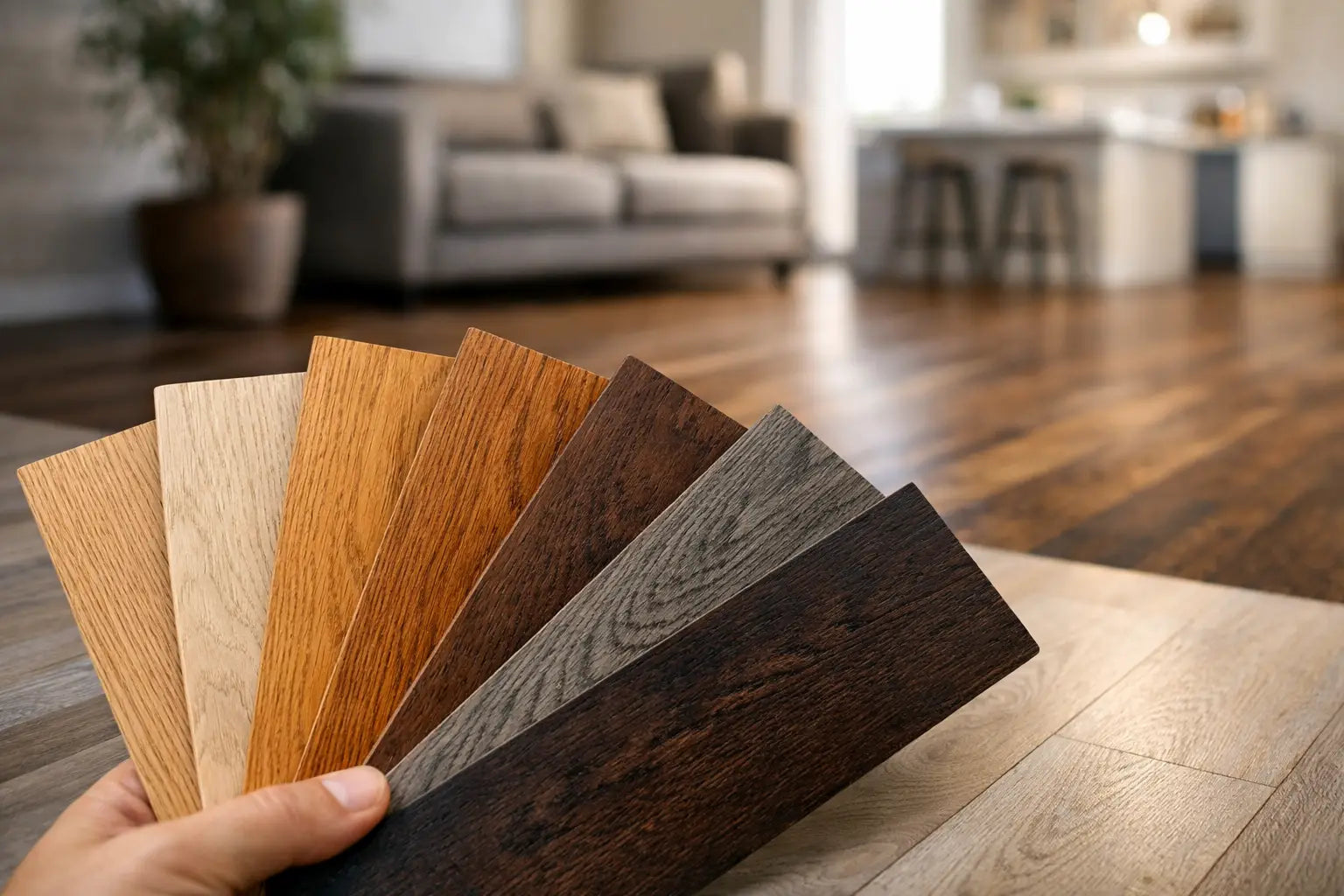
A flooring color can make a renovated room look expensive before a single piece of furniture arrives - or make a premium floor feel dated fast. The most popular flooring colors in America for 2026 point toward warmer, more natural-looking interiors, but the best choice still depends on your lighting, square footage, maintenance expectations, and resale plans.
For homeowners, landlords, flippers, and contractors, the smart move is not chasing a color just because it is trending. It is choosing a first-quality hardwood, vinyl, or laminate floor in a color that works hard for the property. That means broad appeal, everyday durability, and a look you will not regret after the project budget is closed.
The Most Popular Flooring Colors in America for 2026
The biggest shift is clear: cool gray is no longer the default. Gray floors still have a place in modern spaces, but America is moving toward colors with more warmth, depth, and believable wood character. Buyers want rooms that feel comfortable, clean, and finished without looking overly staged.
Warm natural oak
Warm natural oak is leading the market because it is easy to live with. Think light-to-medium brown with golden, honey, wheat, or subtle beige undertones. It brings warmth into white kitchens, balances black hardware, and works with the layered neutrals now common in American homes.
Natural oak is also one of the safest choices for resale. It feels current without being locked into one design trend, and it pairs well with everything from relaxed traditional furniture to contemporary cabinetry. In vinyl and laminate, look for realistic grain detail and varied plank visuals. In hardwood, a low-sheen finish keeps the floor feeling authentic rather than glossy.
Soft greige and beige-gray
Greige remains popular, but 2026 greige is noticeably warmer than the flat gray flooring seen a few years ago. The best versions sit between beige and gray, with taupe or mushroom undertones that adapt to different wall colors and lighting conditions.
This is an especially strong option for rentals, flips, and whole-home renovations where broad buyer appeal matters. A soft greige floor gives a space a neutral foundation while hiding more day-to-day dust than very dark or very pale finishes. The trade-off is undertone: a greige with too much gray can still read cold next to creamy cabinets or warm paint. Always check samples in the actual room before ordering.
Light blonde and Scandinavian-inspired wood
Light blonde flooring continues to win with homeowners who want open, airy rooms. These colors range from pale oak and raw wood to soft sand and washed wheat. They reflect light well, make smaller rooms feel less boxed in, and give new construction a clean, elevated look.
Blonde floors are a natural fit for wide-plank engineered hardwood, high-quality laminate, and luxury vinyl plank. They work particularly well in homes with strong daylight, white or natural wood cabinets, and simple, modern finishes. A floor that is too pale, however, can show dark debris, pet hair, and heavy traffic more clearly. For busy families, choose a blonde with visible grain variation rather than a uniform, nearly white surface.
Medium brown with visible grain
Medium brown is back in a big way, especially in flooring designed to look like real wood rather than a printed pattern. This category includes chestnut, toasted oak, caramel, and medium walnut tones. These floors add contrast without making a room feel dark, and they are forgiving in high-traffic households.
For property investors and practical remodelers, medium brown deserves serious attention. It is less likely than pale flooring to show scuffs and tracked-in dirt, while its warmth helps spaces photograph well for listings. Avoid orange-heavy finishes if you want a longer-lasting look. The strongest choices have balanced brown tones and natural variation from plank to plank.
Rich walnut and deep espresso accents
Darker floors are not disappearing. They are simply being used more selectively. Rich walnut, smoked brown, and deep espresso can make a dining room, office, or larger open-concept home feel polished and premium. They are a strong choice when there is enough natural light and contrast from light walls or cabinetry.
The downside is maintenance visibility. Dark floors tend to reveal dust, scratches, and pet hair faster than medium-toned options. They can also make a small or poorly lit room feel tighter. For that reason, deep flooring often performs best as a deliberate design choice rather than the automatic pick for every room in a house.
Natural variation and mixed wood tones
One of the most influential 2026 color trends is not a single color at all. It is variation. Shoppers are choosing floors with knots, mineral streaks, tonal shifts, and grain patterns that feel closer to genuine wood. This is helping vinyl and laminate buyers get a more premium appearance without paying traditional showroom pricing.
A floor with realistic variation also makes everyday life easier. Minor dust, scratches, and wear blend in better than they do on a flat, single-tone floor. The key is balance. Too much contrast can look busy across a large open floor plan, while too little can make even an expensive floor look manufactured.
Which 2026 flooring color fits your project?
Color should support how the property will be used. A homeowner updating a forever home can take more design risks than an investor preparing a rental. A family with two dogs needs a different finish strategy than a low-traffic guest suite.
For broad resale appeal, warm natural oak, light-medium greige, and balanced medium brown are the strongest bets. These colors appeal to the widest range of buyers and work with popular cabinet, countertop, and paint choices. They also offer flexibility if the next owner changes furniture or decor.
For rentals and high-traffic spaces, choose a medium tone with natural grain movement. Luxury vinyl plank and laminate in this range can offer strong value, easier upkeep, and convincing wood visuals. A premium first-quality product at liquidation pricing often gives you more room in the budget for better wear protection, underlayment, or a larger project scope.
For a design-forward remodel, blonde oak and warm light wood create the fresh, spacious look many buyers want. Pair them with warm white walls, natural textures, and matte black or brushed metal accents. If the room lacks daylight, move one step deeper into natural oak or soft greige so the floor does not feel washed out.
Hardwood, vinyl, and laminate change how color performs
The same color name can look completely different across flooring categories. Hardwood has depth and natural movement that develops character over time. Engineered hardwood offers that genuine wood look with useful stability for many residential applications. If your goal is an unmistakably premium finish, hardwood in warm oak, blonde oak, or walnut remains hard to beat.
Luxury vinyl plank gives buyers tremendous flexibility with color and texture. It is a practical choice for kitchens, basements, rentals, and homes where water resistance matters. Look closely at the embossed texture, plank width, repeat pattern, and color variation. Those details separate a floor that merely looks acceptable online from one that looks convincing once installed.
Laminate is another value-driven option for busy homes and large square-footage projects. Current laminate visuals can deliver warm oak, greige, and medium-brown looks at a cost that leaves more budget for installation and other upgrades. Select a product suited to the room's moisture exposure and traffic level rather than choosing on color alone.
Avoid the color mistakes that cost more later
The first mistake is buying from a tiny sample without seeing it under your home's lighting. Morning sun, warm bulbs, cool LEDs, and adjoining paint colors can all change what you see. A floor that appears neutral in a product image may read yellow, pink, gray, or green in your room.
The second is matching flooring too closely to cabinets. Coordinated does not mean identical. If cabinets and floors are nearly the same tone, the room can look flat. Create light-to-dark contrast or choose different undertones that still feel intentional.
Finally, do not sacrifice product quality for a trendy color. A better floor in a slightly safer shade usually delivers more value than a bargain-grade product in the latest look. Use a room visualizer to narrow the field, compare samples at home, and get expert guidance before committing to a full order.
The best 2026 flooring color is the one that makes your space feel more valuable on day one and still looks right after real life happens. Warm oak, flexible greige, balanced browns, and authentic variation give you that staying power - especially when you can buy premium flooring at unbeatable liquidation prices instead of paying for a showroom markup.