
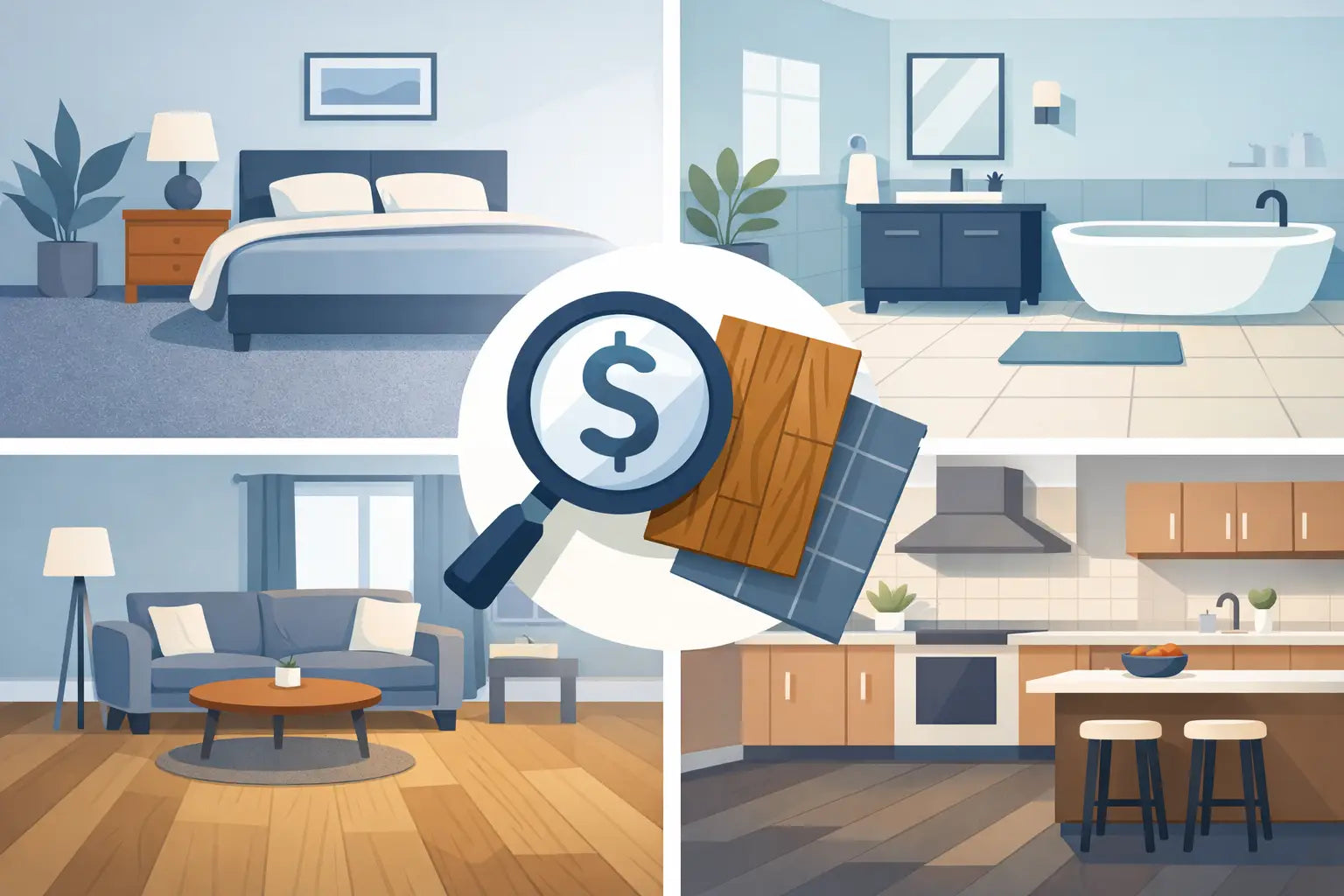
Choosing one floor for an entire house can look tidy on a sample board and become expensive fast when real life gets involved. A smart room by room flooring strategy puts the right material where it will perform best, so you are not paying hardwood prices for a laundry room or installing a pretty floor that cannot handle an active entryway.
The goal is not to make every room match perfectly. The goal is to create a home that feels connected, stands up to daily use, and gives every dollar in your flooring budget a job to do. With premium first-quality hardwood, vinyl, and laminate available at liquidation prices, you can make practical choices without settling for a low-grade look.
Start Your Room by Room Flooring Strategy With Real Life
Before comparing colors, consider what happens on each floor every day. The room with two dogs, wet shoes, and kids coming in from practice has different needs than a guest bedroom that sees light traffic. Flooring decisions get easier when you judge each space by four factors: moisture exposure, traffic level, expected wear, and the look you want to carry through the home.
A cohesive plan also considers sightlines. Rooms that open directly into one another usually benefit from similar tones and plank widths, even when the materials change. For example, a warm oak-look luxury vinyl plank in the kitchen can sit near natural oak hardwood in the living room without creating a jarring break. Matching every detail is less important than matching the overall color temperature and style.
Do not forget subfloor conditions. Concrete slabs, second floors, existing tile, and uneven surfaces can affect which products make sense and what installation will cost. Address those facts before falling in love with a floor.
Entryways, Hallways, and Living Areas: Make the First Impression Last
Entryways and hallways carry more traffic than most homeowners expect. Dirt, grit, shoes, rolling bags, and dropped keys all land here first. They need a durable hard surface with a finish that does not make every speck of dust obvious.
Luxury vinyl plank is a strong value choice for busy entrances because it is water-resistant, easy to clean, and available in convincing wood visuals. It works especially well for households that want a high-end look with less stress over wet shoes and everyday scuffs. A textured or low-gloss finish can be more forgiving than a smooth, shiny surface.
For living rooms, dining rooms, and open-concept main areas, hardwood delivers the premium warmth many buyers want. It adds long-term appeal and gives a home a more substantial feel. The trade-off is that hardwood requires more care around moisture and can show dents in highly active households. If the main living space connects to a kitchen or patio door, a quality waterproof vinyl may be the smarter all-around investment.
Keep the plank direction consistent through connected rooms whenever possible. Running planks with the longest line of sight often makes the space feel larger and more intentional.
Kitchens and Laundry Rooms: Put Water Resistance First
Kitchens are where a flooring choice gets tested. Spills, pet bowls, dishwasher leaks, cooking messes, and constant foot traffic make water resistance more valuable than almost any design feature.
Luxury vinyl flooring is often the best fit because it gives homeowners the wood or stone-inspired look they want while standing up better to routine moisture. It is also more comfortable underfoot than ceramic tile and typically easier to install during a renovation. Choose a wear layer suited to the amount of activity in your home, especially if the kitchen is the center of family life.
Laminate can be a good-looking, budget-conscious option in kitchens when the product is specifically rated for water resistance and installed correctly. It is not the right choice for a room that regularly sees standing water, leaks, or neglected spills. Read the product specifications instead of assuming all laminate performs the same way.
Laundry rooms deserve the same caution. Waterproof vinyl is the safest choice for most homes. A washer hose failure is unpredictable, but choosing a water-friendly floor is one way to limit the damage that follows.
Bathrooms: Choose Floors That Do Not Fear Splash Zones
Bathrooms demand a more focused approach. Humidity, wet towels, shower spray, and splashes near the vanity rule out traditional hardwood and make standard laminate a risky bet.
Waterproof luxury vinyl is a practical solution for full bathrooms, powder rooms, and ensuite spaces. It is warmer and quieter than tile, offers plenty of upscale visuals, and helps keep a whole-home design moving in the same direction. Select a product with a textured surface if slip resistance is a concern.
The quality of the installation matters as much as the plank itself in wet areas. Proper perimeter sealing and attention around toilets, tubs, and transitions help protect the subfloor. Saving money on materials should never mean skipping the details that protect your home.
Bedrooms: Balance Comfort, Style, and Budget
Bedrooms have lighter traffic and fewer moisture concerns, which gives you more freedom. Hardwood creates a polished, enduring look in a primary bedroom and can extend the visual continuity of a premium main level. It is an appealing choice when the bedroom is part of a larger hardwood installation.
Laminate is a smart alternative for guest rooms, children’s rooms, and rental properties. Modern laminate offers realistic grain patterns and durable finishes at a lower price point than hardwood. In bedrooms where shoes are limited and spills are uncommon, it can deliver excellent value.
Vinyl also belongs in bedrooms, particularly for a whole-home renovation where you want one durable surface from the hall through the sleeping areas. It is easy to maintain and can reduce the worry that comes with pets, children, or a busy rental turnover schedule. Underlayment and area rugs can add warmth where desired.
Basements, Rentals, and Flex Spaces: Buy for the Conditions
Basements require flooring that respects concrete and potential moisture. Even a finished basement that feels dry can have humidity or vapor issues beneath the slab. Vinyl is generally the safer choice because it handles moisture better than solid hardwood and provides a finished look without the premium price of more specialized solutions.
For rentals, flips, home offices, and multipurpose rooms, durability and replacement cost deserve equal attention. A floor that looks expensive but is hard to repair after one tenant moves out is not always a bargain. Quality vinyl and laminate can give investors and property owners a clean, current appearance while keeping future maintenance manageable.
This is where liquidation pricing can make a meaningful difference. Instead of choosing a thin, low-quality product simply to meet a budget, buyers can often step into premium first-quality hard surface flooring for less. Factory Flooring Liquidators helps shoppers compare those options with expert guidance, nationwide delivery, and a room visualizer that lets you test the look before committing.
Use Color to Connect Different Flooring Materials
Mixing materials does not mean accepting a patchwork home. Start by choosing a dominant undertone: warm golden brown, neutral natural oak, cool gray-brown, or deep espresso. Then select complementary floors rather than trying to force an exact match between hardwood, laminate, and vinyl.
Avoid changing floors just because a room has a doorway. A transition should have a practical reason, such as moving from a dry living area into a bathroom, laundry room, or basement. Too many breaks can make a home feel chopped up and may create unnecessary installation costs.
Order samples or use a room visualizer before making a final call. Look at the color in morning light, evening light, and alongside cabinets, paint, and furniture. Flooring occupies a huge visual area, so a small sample deserves more than a quick glance under showroom lighting.
Plan the Budget Around Performance, Not Room Size
The largest room should not automatically get the biggest share of your flooring budget. Put your premium spend where it is most visible or where resale impact matters most, such as an open living area, primary suite, or high-traffic main floor. Use durable value materials where performance matters more than prestige, including bathrooms, laundry rooms, basements, and rentals.
Also budget for trim, transitions, underlayment, installation, waste allowance, and subfloor preparation. A lower square-foot price can lose its advantage if it requires extensive prep, while a higher-quality product may save money by lasting longer and avoiding early replacement.
A good floor should make daily life easier, not turn every spill into a crisis. Build your plan around the rooms you actually live in, choose premium materials where they earn their place, and let the right deal give your home more value with every step.