
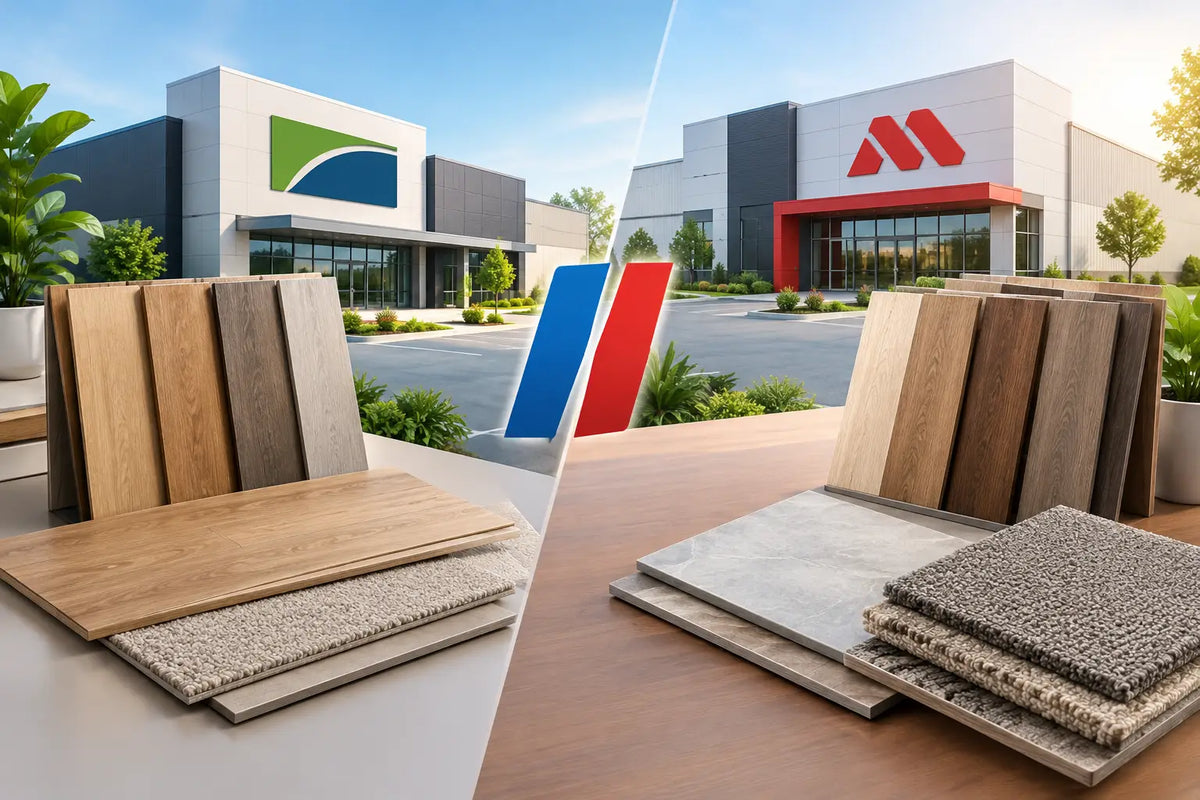
A brand name can narrow your flooring search, but it should not make the final decision for you. The Shaw Flooring manufacturer vs Mohawk Flooring manufacturer comparison is most useful when you look past the label and focus on the exact product in front of you: its construction, wear protection, visual style, installation requirements, available inventory, and total project cost.
Both manufacturers offer broad hard-surface flooring selections across multiple price points and performance levels. That means neither name automatically tells you whether a floor is right for a busy household, a rental refresh, a whole-home renovation, or a commercial space. The smarter approach is to compare collection against collection and specification against specification.
At Factory Flooring Liquidators, that product-first mindset matters. Our first-quality factory-closeout, overstock, discontinued, end-of-run, and special-buy opportunities can create exceptional value on premium flooring. The advantage comes from how inventory is sourced and priced, not from compromising on product quality.
Shaw Flooring Manufacturer vs Mohawk Flooring Manufacturer: What Actually Matters
When comparing Shaw and Mohawk flooring, begin with the material category you are considering. Hardwood, luxury vinyl, waterproof flooring, and laminate have different construction methods and different strengths. A high-performing luxury vinyl plank from one brand may be a better fit for your project than a hardwood product from the other, even if you originally started with a brand preference.
Within the same category, compare the details that affect daily use. For wood flooring, review the species, plank width, finish, texture, and whether the product is solid or engineered. For luxury vinyl and waterproof options, look at core type, wear layer, locking system, thickness, texture, and whether the installation instructions approve the product for your room and subfloor conditions. For laminate, check surface durability, water-resistance features, board profile, and installation method.
The most useful comparison is not “Which manufacturer is better?” It is “Which available floor gives this room the appearance, performance, and value I need?” That question protects your budget from being spent on features that do not match the space.
Product Breadth Can Be Helpful - But It Can Also Be Overwhelming
Shaw and Mohawk both have large product portfolios, which gives shoppers plenty of colors, formats, and constructions to consider. That breadth is helpful when you need a particular look, such as light oak visuals, warm natural tones, wide planks, low-gloss finishes, or stone-inspired vinyl tile. It can also make it easy to compare products based only on a photograph or a familiar brand name.
Do not stop at color. Two floors with a similar white-oak appearance can perform very differently. One may be designed for floating installation, while another may require a different preparation process. One may have more pronounced embossed texture, while another has a smoother, more uniform surface. Those differences affect both the finished look and the way the floor fits your renovation plan.
For homeowners updating several connected rooms, consistency is often a deciding factor. Check whether the available inventory can cover your required square footage, including the appropriate amount for cuts and layout. For investors, flippers, and rental-property owners, a practical balance of durability, cleanable surfaces, and cost control may matter more than selecting a particular manufacturer.
Compare Construction Before Comparing Marketing Terms
Marketing descriptions can make many products sound alike. Construction tells a clearer story. A floor's performance depends on what it is made of, how it is installed, and where it will be used.
Engineered hardwood can offer the warmth and natural variation buyers want while providing installation flexibility that suits many renovation projects. It remains real wood, so its finish, veneer, and care requirements deserve close attention. Luxury vinyl can be a strong candidate for active households and properties where practical water resistance and straightforward maintenance are priorities. Laminate can provide convincing wood visuals and strong everyday durability when matched to an appropriate location and properly installed.
Waterproof should also be read carefully. A waterproof or water-resistant floor may be well suited for spills and normal daily moisture exposure, but every product has installation instructions and site limitations. The floor, underlayment, transitions, perimeter spacing, and subfloor preparation all influence the outcome. A product should be chosen for the room, not simply for a word printed on the carton.
How Closeout Inventory Changes the Value Conversation
A retail comparison between Shaw and Mohawk is only part of the picture. Available closeout inventory can change the equation significantly. A first-quality discontinued color, factory overstock, end-of-run product, or special buy may make a higher-specification floor attainable at a more favorable project cost than a current, regularly stocked alternative.
That does not mean every closeout is automatically the right purchase. It means value should be measured against the exact quantity available and the needs of your project. Before committing, confirm that enough material is available for the installation, including reasonable overage. If you expect to complete another room later, recognize that closeout and discontinued inventory can move quickly and may not be replenished once it sells through.
For a defined project with a clear square-footage requirement, closeout flooring can be an especially smart opportunity. You can focus your budget on first-quality construction and a finish you genuinely like rather than paying more simply because a product is part of a standard, ongoing collection.
Appearance Is Personal, but Practicality Is Not Optional
The right color and texture depend on your home, lighting, cabinetry, furnishings, and design goals. Wide-plank floors can make open spaces feel more expansive. Natural variation can bring character to a traditional or transitional interior. Cleaner, more consistent visuals may suit a contemporary remodel or a rental where easy coordination matters.
Still, a beautiful floor needs to work with real life. Consider pets, children, entry traffic, rolling chairs, sunlight, and the amount of maintenance you are willing to do. Matte and textured surfaces can be more forgiving of everyday dust and small marks than a glossy, smooth finish. Lighter colors may make a room feel open, while medium tones can be a practical choice for homes that see frequent activity.
If you are unsure how a floor will look in your space, use room visualization tools and compare product images in conditions similar to your home. DFW shoppers can also visit the showroom to see color, texture, and plank scale in person. Customers nationwide can get knowledgeable guidance before arranging delivery, which is valuable when a flooring purchase is being made online.
A Better Buying Process for Shaw and Mohawk Flooring
Start by defining the room and the non-negotiables. Is the priority a natural hardwood surface, enhanced water resistance, a pet-friendly finish, a specific color family, or a controlled renovation budget? Then compare available products by material, construction, performance features, installation method, and quantity.
Next, calculate your flooring needs carefully. Measure each room, account for closets and adjoining areas, and plan for cuts, layout, and waste. Complex room shapes, diagonal layouts, and wider planks can change the amount required. Ordering the correct quantity at the outset is particularly important when selecting closeout inventory.
Finally, compare total project value rather than only the price per square foot. Include the flooring itself, needed accessories, underlayment where appropriate, delivery, installation preparation, and the likelihood that the product will serve the property well over time. A lower upfront price is valuable only when the floor also suits the application.
The Best Brand Choice Is Often the Best Available Product
The Shaw Flooring manufacturer vs Mohawk Flooring manufacturer decision does not need a one-size-fits-all winner. Both names can be part of a productive search, but the product specifications and available opportunity should lead the decision. A first-quality floor from either manufacturer can be a strong choice when it matches your space, style, installation plan, and budget.
The most confident purchase comes from seeing the full picture: what the product is, how it will perform, how much you need, and what makes its price a genuine value. When a factory-closeout opportunity checks those boxes, it can be the kind of practical find that makes a renovation look more expensive than the budget suggests.