
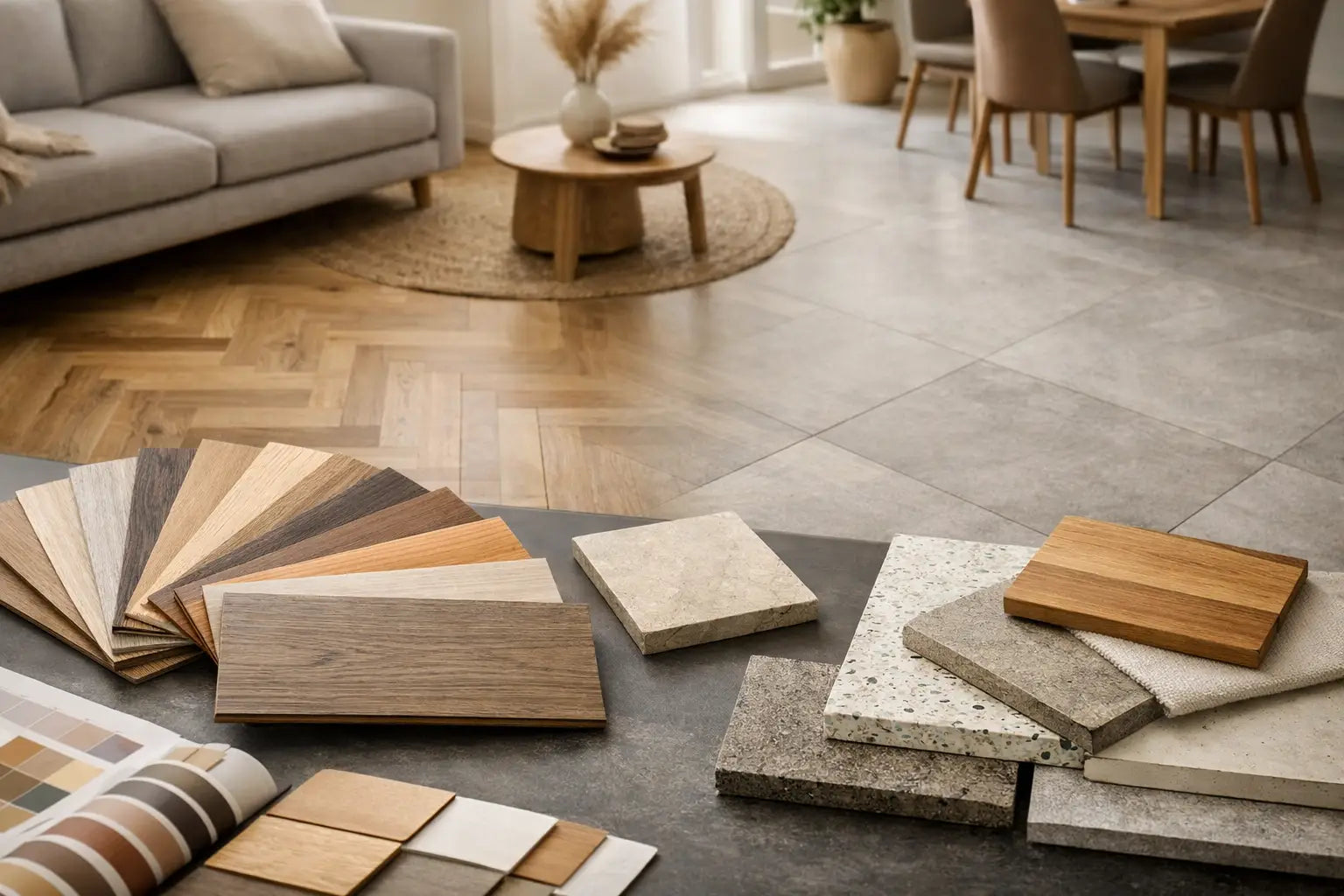
A floor can make a freshly painted room look finished or make expensive furnishings feel disconnected. The top flooring trends interior designers are recommending right now are less about chasing a dramatic look and more about choosing warmer tones, believable texture, practical durability, and materials that hold their value. For homeowners, investors, and contractors, that is good news: designer-approved flooring does not have to mean designer-showroom pricing.
The smartest projects start with the room, the traffic level, and the overall property value. A wide-plank hardwood may be the right upgrade for a primary living area, while premium waterproof vinyl can be the better business decision for a busy family kitchen or rental. Here is where design direction and real-world performance meet.
Top Flooring Trends Interior Designers Are Recommending Now
Warm, natural wood tones
Cool gray floors had a long run. Designers are now moving toward natural oak looks, soft honey undertones, muted medium browns, and gentle taupes. These shades give a room warmth without pushing it into orange or overly rustic territory.
This trend works because warm-neutral flooring is easier to live with. It pairs naturally with creamy walls, black accents, aged brass, green cabinetry, and the layered textiles homeowners are choosing now. It also gives buyers and renters a more flexible backdrop than a floor with a strong gray cast.
For a whole-home update, look for coloring with tonal variation rather than a flat, uniform stain. Variation makes a floor feel more authentic and helps everyday dust or minor scuffs blend in better. The trade-off is that highly varied boards require more attention during installation to distribute shades evenly across the room.
Wider, longer planks
Wide-plank flooring remains a high-impact choice, especially in open-concept spaces. Fewer seams create a calmer, more expansive visual effect, and longer boards can make a standard room appear more intentional and upscale.
In real hardwood, wide planks bring natural character to the foreground: grain movement, knots, and color shifts become part of the design. In luxury vinyl and laminate, wider and longer formats can deliver a similar high-end scale at a more aggressive price point. That makes them especially appealing for flips, rentals, basements, and large square-footage renovations.
Scale still matters. An extremely wide plank can overpower a very small room, while a more moderate width may provide the same updated look without making the space feel crowded. Ask for guidance based on your room dimensions instead of buying by trend alone.
Matte and low-sheen finishes
High-gloss floors reflect light, but they also reveal every footprint, scratch, and speck of dust. Designers increasingly favor matte, satin, and low-luster finishes because they look relaxed, modern, and far more forgiving in active households.
A lower sheen lets texture and grain do the work. It is particularly effective with white oak visuals, wire-brushed hardwood, and embossed vinyl or laminate that follows the printed grain pattern. The result feels less plastic, less formal, and more like a floor chosen for daily life.
Matte does not mean maintenance-free. Every flooring type still needs the right cleaning routine, and a textured surface can hold debris if neglected. But for buyers who want a premium look without constantly policing shine, low-sheen flooring is a practical win.
Authentic texture over perfectly smooth surfaces
The current design preference is tactile but controlled. Light wire-brushing, subtle grain embossing, and small natural-looking knots add depth without making the floor feel rough or overly distressed. This is a major reason first-quality vinyl and laminate have become serious design options rather than just budget substitutes.
For hardwood, a lightly textured finish adds visual interest and can reduce the visibility of small wear marks. For vinyl and laminate, registered embossing and realistic edge detail help close the gap between a printed surface and genuine wood. The best examples look convincing from standing height and feel appropriately textured underfoot.
Avoid going too far with heavy hand-scraping or exaggerated distressing unless it genuinely suits the home. Those looks can be beautiful in a farmhouse or rustic property, but they are more specific and may limit broad resale appeal.
Character-grade visuals and organic variation
Perfectly clean, uniform boards are giving way to floors with more personality. Designers are choosing wood looks that include mineral streaks, gentle knots, and organic color movement because they make a space feel grounded rather than staged.
This does not require a dark or rustic floor. A pale oak visual with natural character works beautifully in contemporary, transitional, coastal, and Scandinavian-inspired interiors. It brings dimension to an otherwise simple palette.
For investment properties, the goal is balance. Too much variation can make furniture selection harder and lead to a busy look across a large home. Choose a product with enough character to feel premium, but not so much that it becomes the only thing people notice when they enter the room.
Waterproof luxury vinyl for high-demand rooms
Interior designers may love hardwood, but they also understand where hardwood is not the most practical choice. Premium waterproof luxury vinyl is a top recommendation for kitchens, laundry rooms, basements, mudrooms, and homes with pets or young children. It offers a wood-forward look with everyday moisture protection and a more comfortable feel underfoot than tile.
The key word is premium. Look beyond the color sample and compare plank thickness, wear layer, locking system, texture, and backing. A better-built vinyl plank is more likely to install cleanly, resist dents, and maintain its appearance through heavy use.
Luxury vinyl is not a universal replacement for hardwood. In a formal main-level renovation where natural materials are central to the property’s value, real wood can still be the stronger long-term choice. But when water resistance, speed, and cost control lead the project, vinyl gives buyers a compelling return.
Elevated laminate for value-focused renovations
Modern laminate has improved dramatically in visuals, plank size, and surface texture. It is becoming a go-to choice for homeowners and project buyers who want a durable wood look at a lower material cost, particularly in bedrooms, living rooms, hallways, and rental turnovers.
Laminate is especially attractive when scratch resistance is a top concern. Many households appreciate its tougher surface for pets, kids, and frequent use. It can also provide the wide-plank, warm-oak look designers favor without requiring a hardwood-level investment.
Its limitation is moisture. Water-resistant laminate can handle everyday spills when installed and maintained correctly, but it is not the same as waterproof vinyl. For rooms with repeated standing water risk, choose the material built for that environment rather than forcing a trend into the wrong space.
How to Choose a Trend That Pays Off
The best floor is not simply the one that photographs well. It should support how the property is used, what the project needs to accomplish, and how long you expect the material to perform. Start by deciding whether visual impact, water resistance, scratch resistance, resale appeal, or upfront savings is the priority. Most projects need a balance, but one factor usually leads.
Hardwood is a premium statement for spaces where natural beauty and long-term value matter most. Waterproof vinyl gives you strong design flexibility in moisture-prone or high-traffic areas. Laminate is a smart value play when you need durable style across more square footage. Choosing the right category first makes selecting color and plank width much easier.
Before ordering, view samples in the room at different times of day. Natural and artificial lighting can pull out undertones that are not obvious online or under showroom lighting. A room visualizer is also useful for narrowing the field, but a physical sample remains the final check for color, texture, and scale.
Get the Designer Look Without the Markup
A current floor should feel intentional, not trendy for the sake of it. Warm wood tones, low-sheen finishes, wider planks, and realistic texture have staying power because they make homes feel comfortable and complete. That is exactly what gives them stronger appeal for homeowners and future buyers alike.
Factory Flooring Liquidators helps shoppers turn that design direction into a practical purchase with first-quality hardwood, vinyl, and laminate at unbeatable liquidation prices, plus expert support and nationwide delivery. Choose the look that fits your life, buy the quality your project deserves, and let the savings go toward the rest of the room.