
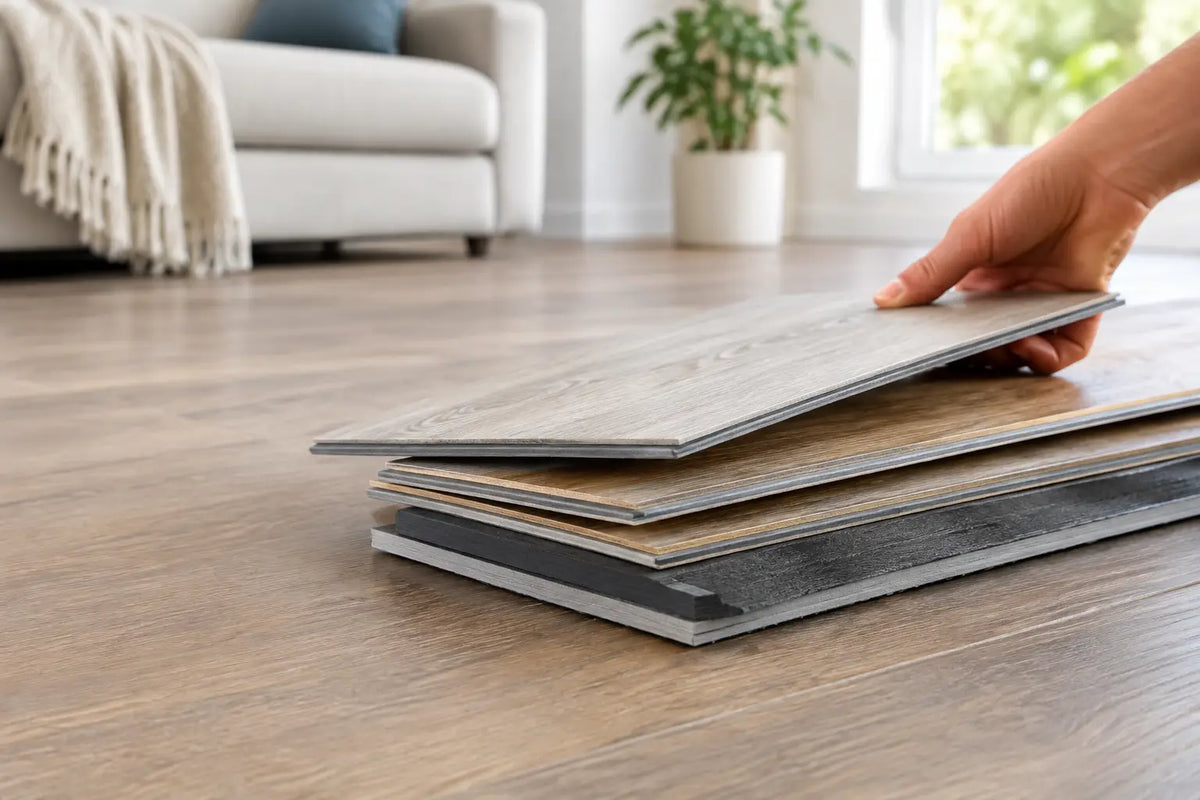
A luxury vinyl plank can look nearly identical from across the room whether it is thin or thick. The difference becomes clearer once it is installed: how it feels underfoot, how it handles an uneven subfloor, how it meets adjoining rooms, and how confidently it holds up to daily use. Vinyl flooring thickness matters, but it is only one part of choosing a first-quality floor that fits your home, budget, and project conditions.
For homeowners, renovators, and rental-property owners, the best choice is rarely the thickest product on the spec sheet. It is the product with the right construction, wear layer, installation method, and total thickness for the room.
What Vinyl Flooring Thickness Actually Measures
When shoppers compare vinyl flooring, they may see a total thickness listed in millimeters. This measurement describes the full plank or tile, including its core, backing, decorative layer, and protective top layer. Common luxury vinyl flooring can range from relatively thin options around 2 mm to thicker rigid-core products around 8 mm or more, depending on the construction.
A thicker plank often feels more substantial and may do a better job of minimizing the appearance of minor subfloor imperfections. It can also help create a more solid feel underfoot. That said, total thickness does not automatically tell you how well the floor will resist scratches, stains, dents, or heavy traffic.
The number that deserves equal attention is the wear layer. This is the clear protective surface over the printed wood or stone visual. Wear-layer thickness is usually measured in mils, which is different from millimeters. A 12 mil wear layer does not mean the flooring is 12 mm thick. These are separate measurements, and confusing them can lead to an apples-to-oranges comparison.
Total Thickness vs. Wear Layer
Think of total thickness as the flooring's overall build and wear layer as the part that protects the visual surface. Both affect performance, but in different ways.
For a quieter bedroom, guest room, or low-traffic area, a thinner luxury vinyl product with a suitable wear layer may be a practical value choice. For a busy kitchen, active family room, entry, rental property, or light commercial setting, a more substantial construction and stronger wear layer may be worth prioritizing.
The wear layer should be evaluated alongside the manufacturer’s stated use recommendations. A thicker clear layer generally offers more surface protection, but it does not erase the need for reasonable care. Grit at an exterior door, dragged furniture, and heavy point loads can damage many flooring surfaces, including premium vinyl.
For projects where appearance and long-term maintenance matter, ask about both specifications before focusing on a single thickness number. This is especially useful when comparing factory-closeout, discontinued, overstock, or special-buy opportunities. A closeout price can create exceptional value on first-quality flooring, but the product still needs to suit the room and expected traffic.
How Thick Should Vinyl Flooring Be?
There is no universal answer because the right vinyl flooring thickness depends on where it will be installed and what is already on the floor. A thin product can be the smart fit for one renovation, while a thicker rigid-core plank makes more sense for another.
Bedrooms, Closets, and Low-Traffic Rooms
In lower-traffic spaces, a thinner vinyl floor may provide the look and easy maintenance you want without paying for features the room may not need. The condition of the subfloor still matters. Vinyl flooring needs a clean, dry, stable, and appropriately prepared surface according to the product’s installation instructions.
Thin flooring can also be useful when floor height is a concern. If you are renovating a room next to existing flooring, keeping the new floor profile lower may reduce the need for taller transition pieces or door adjustments.
Kitchens, Living Areas, and Busy Homes
For main living areas, kitchens, hallways, and homes with pets or frequent activity, many buyers prefer a thicker luxury vinyl plank or tile with a durable wear layer. Rigid-core flooring can provide a more substantial feel and may better accommodate minor subfloor variation than thinner flexible vinyl products, within the manufacturer’s preparation requirements.
This does not mean every busy household needs the thickest option available. A well-chosen first-quality product with the right wear layer and a realistic maintenance plan can deliver strong everyday value. The goal is to match the floor to the way the home is actually used.
Bathrooms, Laundry Rooms, and Moisture-Prone Areas
Waterproof flooring is often a practical choice for rooms where spills and routine moisture are concerns. Thickness still influences comfort and transitions, but waterproof performance depends on the complete product construction and proper installation, not simply on the plank being thicker.
Pay attention to the flooring manufacturer’s approved rooms and installation requirements. A waterproof surface does not mean moisture problems below the floor can be ignored, and it does not replace proper preparation of the installation area.
Rentals, Flips, and Investment Properties
Property owners often need flooring that balances appearance, durability, availability, and budget. A mid-range thickness with a dependable wear layer can be a highly practical choice for many rental and resale projects. The right product should look finished and current while standing up to routine turnover cleaning and daily traffic.
For investment projects, consistency matters as much as the specification. If multiple rooms or units are involved, confirm that enough material is available before finalizing your selection. Closeout inventory can offer excellent value on first-quality flooring, but quantities can change as inventory sells.
Thickness and Installation Considerations
Floor height is one of the most overlooked parts of selecting vinyl flooring. A thicker product can create a more substantial finished floor, but it may affect door clearance, transitions to tile or hardwood, appliances, cabinets, and stair details. Measure the existing floor heights before ordering, especially during a kitchen or whole-home renovation.
Installation method matters, too. Click-lock floating floors, glue-down vinyl, and other systems have different performance characteristics. A thicker click-lock plank may be appealing for a room update, while a thinner glue-down product can be useful where a lower profile is needed. Neither is automatically better. The right choice depends on the product, substrate, room use, and installation plan.
Subfloor condition should never be treated as a minor detail. A thicker plank may disguise small imperfections better than a thin product, but it cannot correct major unevenness, movement, moisture concerns, or an unsuitable surface. Following the manufacturer’s requirements protects both the appearance of the floor and the investment in installation.
Don’t Let Thickness Override Design and Value
It is easy to treat a larger number as a better product. In flooring, that shortcut can cause buyers to overlook details that have a bigger impact on satisfaction: the visual, plank width and length, texture, core construction, wear layer, installation requirements, and how the floor works with the rest of the home.
A thinner first-quality floor in a color you love, with a suitable wear layer and proper installation, can be a better purchase than a thicker product that creates transition challenges or exceeds the needs of the space. Conversely, paying more for a thicker rigid-core floor can be worthwhile when you want a more substantial feel or are working with a renovation where minor subfloor variation is a concern.
Factory Flooring Liquidators helps customers compare these details without assuming that one specification fits every project. Shoppers can review changing selections of first-quality luxury vinyl and waterproof flooring, including value opportunities created by factory closeouts and special buys, while getting guidance on the practical details behind the product description.
A Smarter Way to Compare Vinyl Flooring
When narrowing your choices, compare products side by side using the same questions: What is the total thickness? What is the wear-layer thickness? What type of core does it have? Is it approved for the intended room? How will its finished height meet adjacent flooring? Is the available quantity enough for the project, including an appropriate allowance for cuts and future needs?
If you are shopping online, review product specifications carefully and order a shipping sample when available to see the color and texture in your home’s lighting. DFW shoppers can also use a showroom visit to compare plank construction and feel in person. For projects outside North Texas, nationwide delivery makes it possible to access the same changing inventory from wherever your renovation is taking place.
Choose vinyl flooring thickness as part of the complete picture, not as a contest for the highest number. The right floor is the one that suits the room, installs correctly, looks right in your space, and delivers first-quality value long after the boxes are opened.