
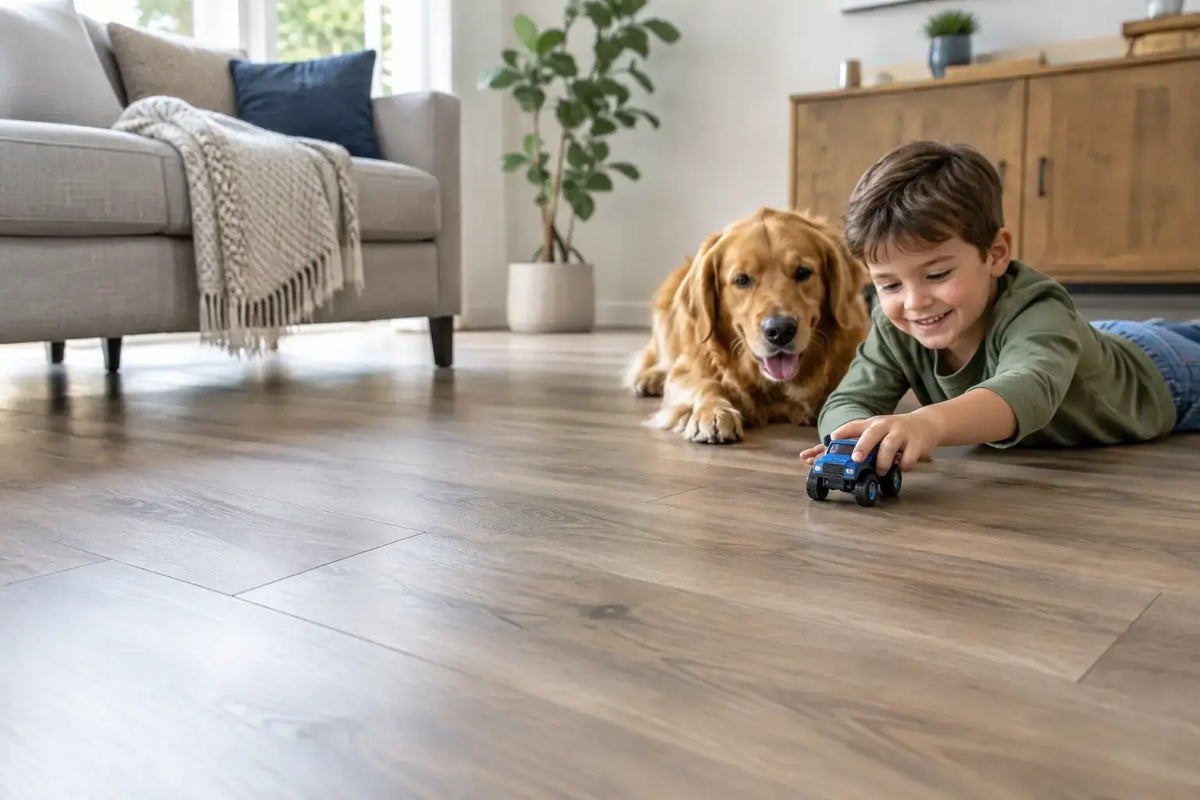
A realistic vinyl plank durability review starts with the conditions underfoot: a dog racing through the kitchen, chairs sliding away from the table, wet shoes at the entry, and sunlight hitting the same stretch of floor every afternoon. Luxury vinyl plank can handle a great deal, but not every plank is built for the same level of traffic, moisture, or wear. The right choice depends on the construction, the room, and how the floor will actually be used.
For homeowners, renovators, and rental-property owners, vinyl plank remains a practical option because it offers wood-inspired style with easy care and water-resistant or waterproof performance, depending on the product. The key is buying based on specifications and application, rather than assuming every vinyl plank performs the same way.
Vinyl Plank Durability Review: What Determines Performance?
Vinyl plank durability comes down to several layers working together. The decorative layer creates the wood look, while the clear wear layer protects that design from everyday abrasion. Beneath it, the core provides stability, water performance, and the feel of the plank underfoot. A factory-closeout price does not mean the construction is second-rate. First-quality overstock, discontinued colors, end-of-run inventory, and special buys can offer outstanding value when the product specifications fit the project.
The wear layer deserves close attention. It is the protective surface that takes the impact of foot traffic, pet nails, moving furniture, and dropped items. A thicker wear layer generally makes more sense for active family spaces, rentals, busy hallways, and light commercial settings. For a low-traffic guest room, a lighter residential specification may be a sensible way to control project cost.
Thickness also matters, though it is not a shortcut for judging durability. A thicker plank can feel more substantial and may help bridge minor subfloor irregularities when installed over a properly prepared surface. Still, a well-made thinner product with a capable wear layer can outperform a thicker plank with a less protective surface. Review the full construction before making a decision.
How Vinyl Plank Holds Up in Real Rooms
Luxury vinyl plank is popular because it performs well in spaces where hardwood may require more caution. Its durability is especially appealing for kitchens, living areas, bedrooms, entryways, and many finished basements. Water-resistant and waterproof constructions give homeowners more confidence around daily spills, but waterproof flooring is not a substitute for addressing standing water, leaks, or moisture problems below the floor.
Kitchens, Entries, and Main Living Areas
These are often the most demanding residential rooms. Grit tracked in from outside can act like sandpaper, especially near exterior doors. Use quality doormats, sweep regularly, and place protective pads beneath furniture legs. Those simple habits do more for long-term appearance than most shoppers expect.
For an open-plan home, choose a plank with a wear layer appropriate for the combined traffic of the entire space. A kitchen-to-living-room installation may look continuous and polished, but it also means the same floor handles cooking, dining, pets, guests, and everyday foot traffic. This is where spending a little more on first-quality vinyl with stronger surface protection can be a smart long-term decision.
Bathrooms and Laundry Rooms
Vinyl plank is valued in moisture-prone rooms because many options resist water at the surface. Check the manufacturer’s installation instructions for the specific product, particularly around perimeter gaps, transitions, and approved underlayment. The plank itself may be waterproof, but improper installation can still create problems.
Bathrooms also call for realistic expectations. Vinyl flooring stands up well to splashes and routine cleaning, yet persistent water at seams, around toilets, or beneath appliances should be cleaned up promptly. Good moisture habits protect both the floor and the subfloor below it.
Homes With Pets and Children
Vinyl plank is a strong contender for active households because it is easier to maintain than many hard-surface alternatives. Textured finishes and medium wood tones can help disguise small amounts of dust, pet hair, and minor day-to-day scuffing better than high-gloss or very dark floors.
No floor is completely scratch-proof. Large dogs, grit, rolling toys, and furniture dragged without pads can mark even premium surfaces. If your household is especially hard on floors, focus on a durable wear layer, a realistic embossed finish, and a color that will be forgiving between cleanings.
Core Type Affects Durability and Comfort
Vinyl plank products are available in different constructions, and the core changes how a floor feels and performs. Rigid-core vinyl is often chosen for its stability and ability to handle busy residential spaces. It can provide a firmer feel and is commonly available in click-lock formats that suit floating installations.
Some products include an attached pad for added comfort and sound reduction. That can be helpful in bedrooms, upstairs rooms, and multi-level homes, but it does not eliminate the need for a flat, clean, properly prepared subfloor. The installation requirements always matter more than a broad category label.
For a rental renovation or flip, selecting a dependable, easy-care rigid-core vinyl in a versatile color can help balance appearance, turnover needs, and budget. For a long-term primary residence, it may be worth prioritizing a more substantial wear layer or a finish that closely matches the character of the home.
Installation Can Make or Break Durability
Even excellent vinyl plank can disappoint when the installation is rushed. Subfloor preparation is one of the biggest factors in a floor’s long-term performance. Uneven areas can lead to movement, stress on locking mechanisms, visible gaps, or a hollow feel underfoot.
Before installation, confirm the product’s requirements for flatness, acclimation if required, moisture testing, expansion space, and approved underlayment. Do not assume all vinyl plank products follow the same rules. Glue-down vinyl, click-lock rigid-core plank, and other formats each have their own installation standards.
For larger projects, unusual layouts, or properties with known moisture concerns, professional guidance can prevent expensive mistakes. Contractors and property managers should also consider how the selected installation method fits future repairs. A product that is easy to replace plank by plank may offer practical value in a rental or commercial environment.
What Can Damage Vinyl Plank?
Vinyl plank is durable, not indestructible. Heavy point loads can dent some products, particularly where furniture legs are narrow or appliances are moved carelessly. Use broad furniture protectors and follow product guidance when placing heavy items.
Direct, intense sunlight may affect any flooring over time. Window coverings, UV-filtering treatments, and furniture rotation can help limit uneven fading in bright rooms. Avoid harsh cleaners, steam mops unless specifically approved, abrasive scrubbers, and wax-based products. These can dull the finish or leave residue that attracts dirt.
The good news is that routine maintenance is simple. Sweep or vacuum with a hard-floor setting, clean spills quickly, and use a manufacturer-approved cleaner when needed. Keeping abrasive grit off the floor is the most practical defense against premature wear.
Is Vinyl Plank Durable Enough for Your Project?
For many households, the answer is yes, provided the product matches the demands of the space. A first-quality vinyl plank with an appropriate wear layer, stable core, correct installation, and routine care can deliver years of attractive performance. It is particularly compelling when you want a wood-look floor for rooms where moisture, pets, children, or high traffic make natural hardwood less practical.
Value matters here, but the lowest upfront cost is not always the best project value. Factory-closeout and liquidation inventory can make premium specifications more attainable because the savings come from how products are sourced, not from selling inferior flooring. Since closeout inventory changes, confirm available quantities and purchase enough material for the installation, waste allowance, and possible future repairs.
At Factory Flooring Liquidators, homeowners can compare first-quality luxury vinyl options with knowledgeable support, whether they are shopping from the DFW showroom or planning a delivery elsewhere in the United States. Start with the room, the traffic level, and the performance features you genuinely need. That approach leads to a floor that feels like a smart buy long after installation day.