
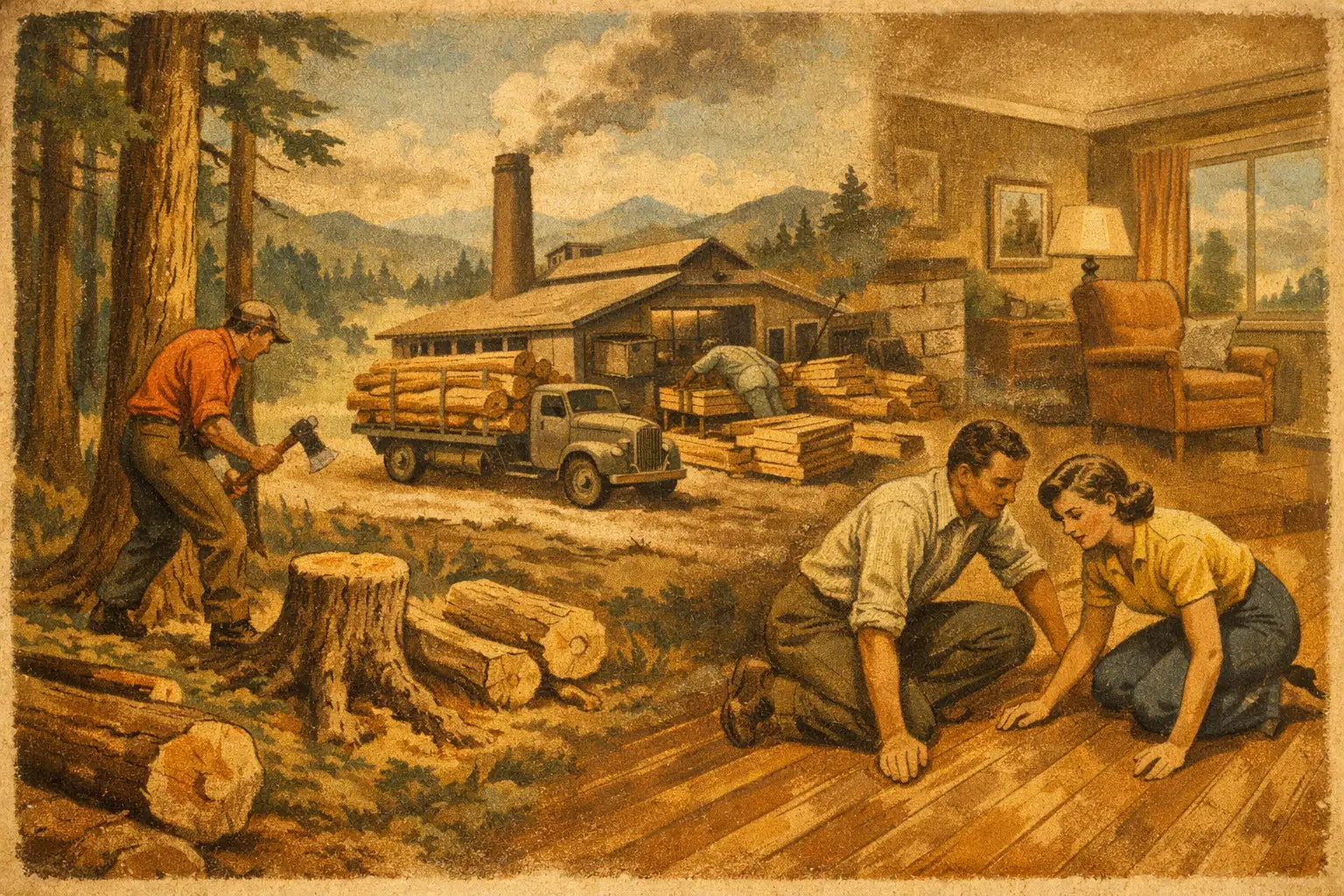
A hardwood floor can look like a simple purchase until you compare two similar-looking planks with very different prices. The difference often starts long before the boards reach your home. Understanding where hardwood flooring comes from and why it matters helps you buy for real performance, not just a color sample or a sale tag.
For homeowners, contractors, and property investors, origin affects more than the story behind the floor. It can influence grain pattern, stability, available lengths and widths, environmental documentation, refinishing potential, and replacement options down the road. The smart move is not assuming domestic is always better or imported is always a compromise. It is asking the right questions about the material, construction, and manufacturer before you buy.
Where Hardwood Flooring Comes From and Why It Matters
Hardwood flooring begins with a tree species, but its finished quality depends on a longer chain: responsible forestry, log selection, milling, drying, grading, manufacturing, finishing, and distribution. A floor labeled oak, hickory, maple, or walnut tells you the species. It does not automatically tell you where the logs were harvested, where the flooring was milled, or how the planks were constructed.
Many popular hardwood floors sold in the U.S. use lumber from North American forests. Red oak, white oak, hickory, maple, and walnut are common domestic species. These woods are familiar choices because they offer proven performance in American homes, broad style flexibility, and dependable availability.
Other floors may use European oak, French oak styling, Baltic birch plywood cores, or species sourced from Asia, South America, or Africa. Imported flooring is not automatically lower quality. In fact, many premium engineered floors combine a high-grade European oak wear layer with carefully constructed plywood cores. The important distinction is whether the product's sourcing and construction fit your installation, expectations, and budget.
From Forest to Finished Plank
The tree species sets the baseline
The species determines the natural character of the wood. Oak delivers visible grain and broad color versatility. Hickory is harder and more dramatic, with stronger variation from board to board. Maple has a cleaner, subtler grain that suits contemporary spaces. Walnut brings rich, dark character but is softer than oak or hickory.
Hardness matters, especially in busy households, rentals, and high-traffic entry areas. Still, it is not the only durability factor. A harder species can show dents less readily, while a quality finish and the right construction can make a major difference in how the floor handles everyday use.
Wood also varies naturally based on where and how it grows. Growth rate, climate, and soil conditions affect grain density and color variation. That is why no two real-wood floors look exactly alike. Those differences are part of hardwood's value, not a defect to be designed away.
Milling and drying make the wood usable
After harvest, logs are cut into boards or veneers. Solid hardwood planks are milled from one piece of wood, typically with tongue-and-groove edges. Engineered hardwood uses a real hardwood top layer bonded to multiple supporting layers beneath it.
Before either type becomes flooring, the wood must be dried to an appropriate moisture level. This step is critical. Wood expands and contracts with humidity, so improperly dried material can create gaps, cupping, or movement after installation. Reliable manufacturers use controlled drying and quality checks to help the flooring perform in real homes, not just in a warehouse.
The boards are then graded, cut, sanded, stained or finished, and packaged. Grade generally describes visual variation, knots, mineral streaks, and natural markings. It does not mean one grade is automatically stronger than another. A cleaner grade delivers a more uniform look, while character grade showcases more knots and color movement. Choose based on the look you want, not the assumption that more variation equals lower quality.
Solid and engineered hardwood have different origins on paper
Solid hardwood is straightforward: one thick piece of wood from top to bottom. It can often be sanded and refinished multiple times, depending on thickness and condition. It is a strong choice for main-level rooms with stable humidity and a traditional hardwood feel.
Engineered hardwood is still real hardwood, but the top veneer is paired with a layered core. Better engineered products often use multi-ply plywood cores rather than thinner fiberboard-style cores. This construction can improve stability when seasonal humidity changes are a concern. It also makes engineered hardwood a practical choice for many concrete slabs, below-grade spaces, and wide-plank designs.
Do not dismiss engineered hardwood as fake wood. The question is how thick the hardwood wear layer is, how the core is built, and whether the flooring is first-quality material from a manufacturer with clear specifications. A premium engineered floor can deliver authentic wood character and excellent long-term value.
Why Sourcing Matters to Your Project
Performance depends on more than the species name
Two white oak floors can perform differently. One may be solid, site-finished, and narrow-plank. Another may be wide-plank engineered flooring with a sawn-face veneer and factory-applied matte finish. Both are white oak, but they respond differently to moisture, installation conditions, maintenance, and refinishing.
For a Dallas home or any climate with noticeable seasonal changes, matching the product to the environment matters. Wide solid planks can be beautiful, but they need disciplined humidity control. Engineered hardwood may offer a more stable option where a slab foundation, open floor plan, or changing indoor conditions make movement a bigger concern.
Responsible sourcing supports a better buying decision
Ask whether the manufacturer can identify the species, country or region of origin, and relevant sourcing standards. Some products carry third-party forest-management certifications, while others provide chain-of-custody or legal-harvest documentation. These details can matter to buyers who want greater confidence in how lumber was obtained.
Responsible sourcing is also practical. Clear product information usually signals a more accountable supply chain. It gives you a better chance of understanding what you are installing, how to care for it, and whether matching material may be available later.
Be cautious with vague claims such as “premium hardwood” when the species, wear-layer thickness, core type, and finish are not disclosed. A low price can be a great opportunity, but it should come with clear specs. Value is not just the lowest cost per square foot. Value is buying the right first-quality floor once, installing it correctly, and enjoying it for years.
Origin can affect appearance and availability
Domestic oak often provides classic grain patterns and easier access to coordinating trims or future repairs. European oak tends to be associated with longer, wider boards, softer color palettes, and more natural-grade variation, though exact styling varies by manufacturer. Exotic species can create a distinctive look but may have more limited availability if you need additional material later.
This is why ordering enough flooring matters. Purchase the recommended overage for cuts, layout, and future repairs, especially when working with a specific lot, stain, or character grade. Hardwood is natural material. Variation between production runs is normal.
How to Compare Hardwood Without Paying Showroom Markups
When comparing products, focus on the details that determine performance rather than the label alone. Confirm the species, solid or engineered construction, plank dimensions, wear-layer thickness for engineered options, finish type, installation method, and warranty terms. Then compare those specifications against the room itself.
A kitchen, pet-friendly family room, rental renovation, and formal dining room do not need the same flooring solution. A property investor may prioritize an attractive, durable engineered oak that installs efficiently and appeals to broad buyer tastes. A homeowner restoring a long-term residence may value solid oak's refinishing potential. Both can be smart purchases when the product fits the project.
Liquidation pricing can make premium flooring more accessible, but it should not force a rushed decision. First-quality closeouts, excess inventory, discontinued colors, and overstock can offer serious savings without requiring you to settle for lower-grade materials. The key is to verify quantity availability, review the specifications, and order samples when appearance is central to the decision.
Factory Flooring Liquidators helps buyers compare premium hard-surface flooring at aggressive liquidation prices, with expert support and nationwide delivery across the mainland U.S. If you are choosing between looks, use a room visualizer to narrow the field, then evaluate the product details that will matter after installation day.
Hardwood earns its place because it is real material with real variation, not a printed pattern designed to look predictable. Choose the origin story, construction, and finish that suit your room, your climate, and your budget. That is how a good flooring deal becomes a floor you will still be glad you bought years from now.