
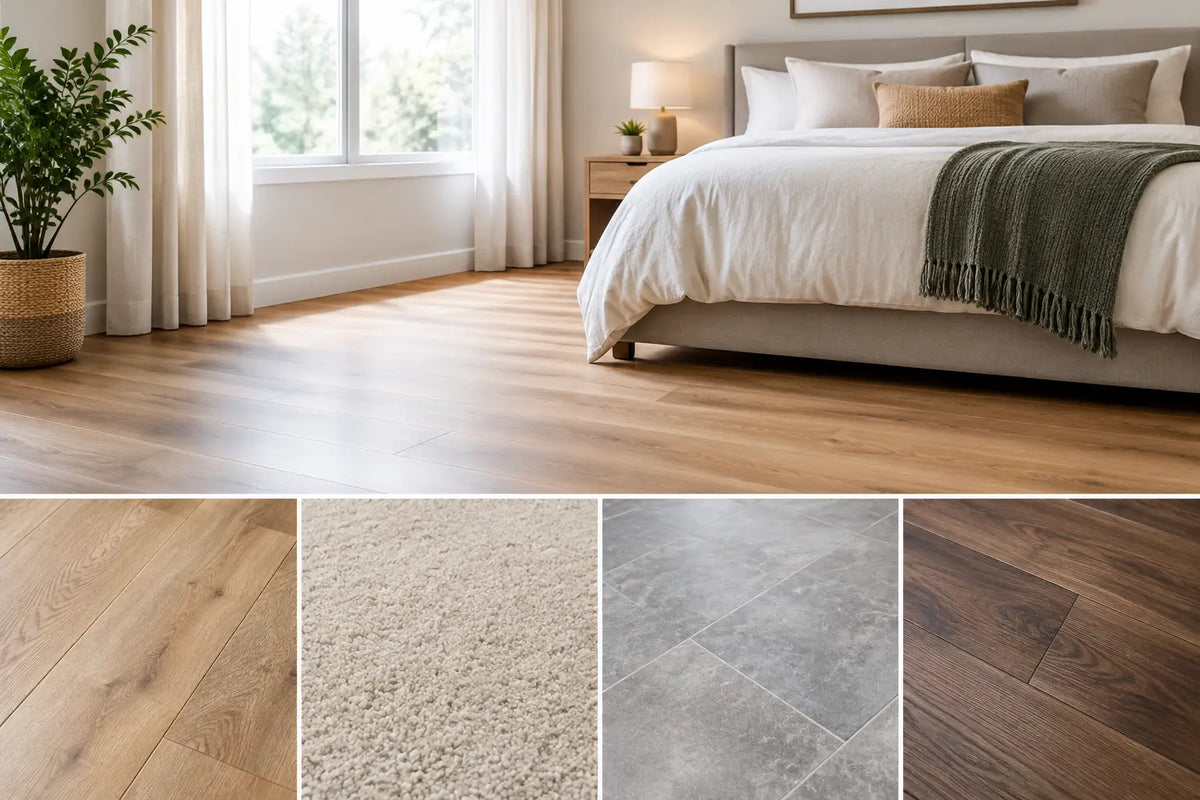
A bedroom should feel settled, quiet, and personal from the moment you step inside. The best bedroom flooring is not automatically the softest or the most expensive option. It is the floor that fits how you use the room, the look you want, your maintenance expectations, and the rest of your renovation budget.
For most homeowners, hardwood, luxury vinyl, waterproof flooring, and laminate are the strongest hard-surface choices. Each brings a different balance of warmth, durability, visual impact, and value. The right answer may be a premium wood floor for a primary suite, a waterproof option for a busy household, or a well-made laminate that keeps a guest-room refresh on budget.
What Makes the Best Bedroom Flooring?
Bedrooms do not face the same abuse as kitchens, entryways, or bathrooms. That opens the door to more appearance-driven decisions, but comfort and practicality still matter. Consider the room's traffic level, whether pets sleep there, how much natural light it receives, and whether the floor continues into an adjoining hallway or bathroom.
A bedroom floor should also work with the way the space feels underfoot. Hard-surface flooring can be made more comfortable with the proper underlayment where appropriate and a well-sized area rug. That combination gives homeowners the clean look and easy upkeep of a hard surface without making the room feel sparse.
For a whole-home renovation, continuity is often the deciding factor. Using one flooring style through bedrooms, hallways, and living spaces can make the home feel larger and more intentional. For a single-room update, matching or closely coordinating with the existing floors outside the bedroom usually produces the most polished result.
Hardwood for a Timeless Primary Bedroom
Hardwood remains one of the best bedroom flooring choices when character, warmth, and long-term style are the priority. Real wood has visual depth that is difficult to duplicate, and its natural grain gives a bedroom a more finished, elevated feel. It works especially well in primary bedrooms, higher-end remodels, and homes where hardwood already carries through the main living areas.
The trade-off is that wood requires a little more awareness than resilient flooring. Pets, rolling furniture, and high heels can leave marks, while water should be cleaned up promptly. Bedroom use is generally gentler than kitchen use, but a household with large dogs or active children may prefer a more scratch-forgiving option.
Color selection matters as much as species or plank width. Light and natural wood tones can make a smaller bedroom feel open. Medium tones often conceal everyday dust and minor debris better than very dark floors. Wide planks can create a calm, updated look, while narrower planks may suit a more traditional home.
Hardwood is also a smart place to consider first-quality closeout inventory. A discontinued colorway or end-of-run collection can provide the quality and appearance of premium wood at exceptional value. The key is ordering enough material for the room, closets, transitions, and a reasonable allowance for cuts. Closeout availability can change, so confirm the quantity needed before finalizing the design.
Luxury Vinyl and Waterproof Flooring for Everyday Ease
Luxury vinyl plank is a practical favorite for bedrooms because it offers a wide range of wood-look visuals with straightforward care. It is comfortable enough for everyday bedroom use, handles the realities of pets and busy households well, and gives renovators flexibility when they want consistent flooring across several rooms.
Waterproof flooring can be particularly useful when a bedroom connects directly to a bathroom, laundry area, or exterior entry. It also makes sense for rental properties, flips, and family homes where simple cleanup is a priority. A waterproof surface does not mean that every installation detail can be ignored, but it gives homeowners more confidence around routine spills and moisture exposure.
The best luxury vinyl choice depends on more than color. Look closely at plank size, surface texture, overall construction, and the visual repeat of the pattern. A floor can look realistic in a small sample but feel repetitive across a large bedroom if the design is too limited. Ordering a sample shipped to your home can help you view the color beside your wall paint, bedding, and furniture in the room's actual light.
Luxury vinyl is not always the most luxurious-looking choice for every home. If your goal is the natural variation and unmistakable feel of real wood, hardwood may still be worth the added investment. But for a bedroom that needs attractive, low-maintenance performance at a value-focused price point, luxury vinyl is hard to overlook.
Laminate for Style on a Controlled Budget
Laminate flooring can be one of the best values for bedrooms, particularly for guest rooms, secondary bedrooms, rental updates, and projects where the floor needs to look sharp without consuming the entire renovation budget. Today's laminate options can offer convincing wood visuals, a durable wear surface, and an easy-to-coordinate finish for whole-home projects.
Laminate is especially worth considering in dry, low-traffic bedrooms. It performs best when moisture is not a regular concern and when the installation conditions follow the product's requirements. If the bedroom opens into a moisture-prone area and you want one continuous floor, waterproof flooring may be the more practical direction.
As with every flooring category, not all laminate is the same. Thickness, edge detail, texture, locking system, and visual design all affect the finished result. A well-selected laminate can look far more substantial than its price category suggests, while a product chosen solely for the lowest upfront cost can disappoint once it is installed across a full room.
Factory closeout and special-buy laminate can be a strong fit here. First-quality products from changing inventory can give homeowners access to better looks and construction at a more favorable project cost. That is value created by smart sourcing, not by settling for inferior flooring.
Choosing the Right Color and Finish for Bedrooms
A bedroom is one of the few rooms where design preference can lead the decision, provided the floor still fits the household. Start with the fixed elements: the trim color, doors, adjoining floors, and natural light. Then consider the mood you want the room to create.
Light oak-inspired tones and soft natural finishes tend to feel relaxed and versatile. They pair easily with white, cream, gray, green, blue, and warm neutral walls. Mid-tone brown floors offer warmth and often work well with traditional furniture. Darker floors can look dramatic and refined, but they may show dust, pet hair, and scratches more readily.
Texture changes the equation. A low-gloss or matte-look surface generally feels more forgiving than a highly polished finish, particularly in homes with pets. Subtle grain texture can add dimension without competing with rugs, patterned bedding, or statement furniture.
A Practical Buying Plan Before You Order
Before selecting a bedroom floor, measure the room and include closets if they will receive the same material. Think through doorways, transitions into adjoining rooms, and where the flooring will start and stop. These small details influence how cohesive the project looks.
Next, narrow the choice based on daily use. Choose hardwood when natural material and lasting style are central to the project. Choose luxury vinyl or waterproof flooring when you want easy care and added moisture confidence. Choose laminate when the room is dry and you want a polished look with strong budget control.
Finally, buy from a flooring source that can explain exactly what you are getting. At Factory Flooring Liquidators, homeowners can explore first-quality hardwood, luxury vinyl, waterproof flooring, and laminate sourced through factory closeouts, overstocks, discontinued collections, and special buys. Local shoppers can visit the DFW showroom, while customers across the country can purchase online and arrange nationwide delivery.
The best bedroom floor should make the room feel better to live in, not just better in a product photo. Give yourself time to compare the finish in your own lighting, confirm the quantity, and choose the material that supports both your design and your day-to-day life.