
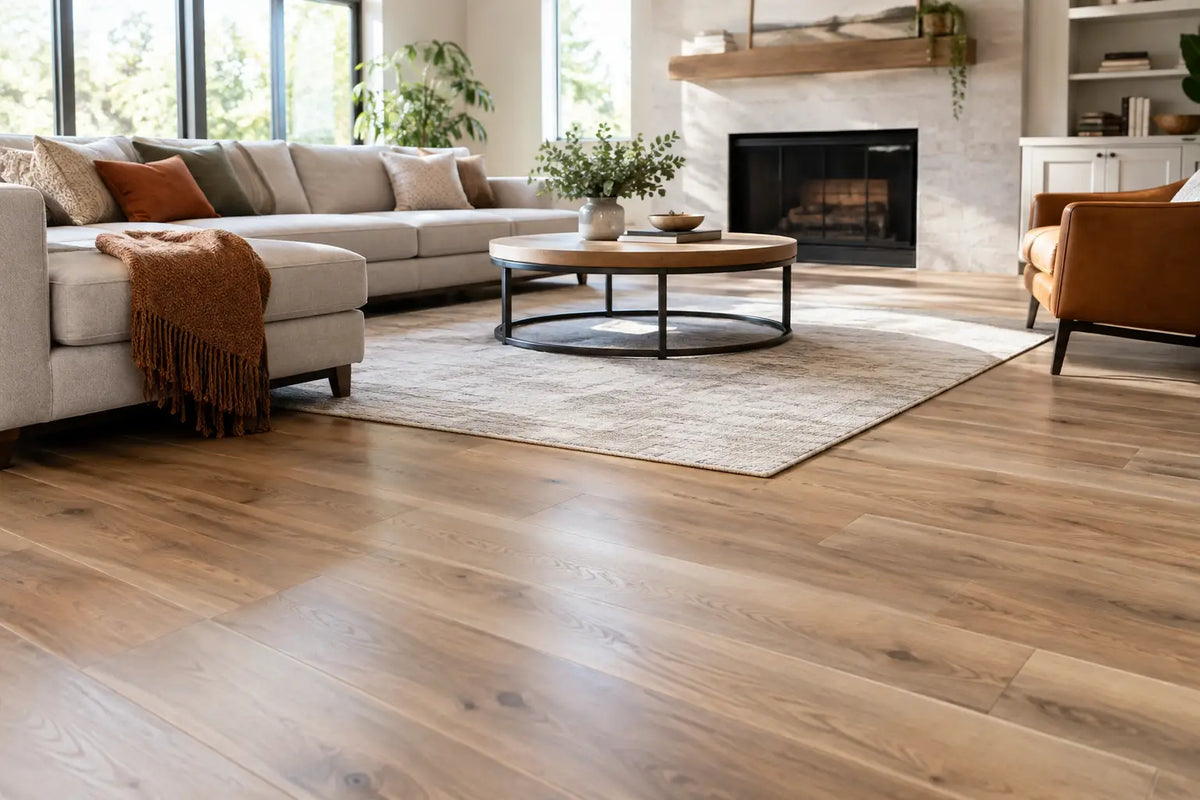
A living room floor has to do more than look good under a coffee table. It handles pets racing to the door, kids building forts, moving furniture, muddy shoes, sunlight, and the everyday traffic that makes a house feel lived in. The best living room flooring is the option that fits your household, your design goals, and the level of maintenance you are realistically willing to take on.
For many homeowners, the decision comes down to hardwood, luxury vinyl, waterproof flooring, or laminate. Each can create a polished, high-value look. The right choice depends less on a single “best” material and more on how your living room functions from day to day.
What Makes the Best Living Room Flooring?
Start with the room itself. A formal living room with light traffic can prioritize natural beauty and long-term appeal. A busy family room connected to a kitchen, patio, or entry needs stronger protection from scratches, spills, and tracked-in moisture. If the room is part of an open layout, the floor may also need to work visually and practically across several spaces.
Appearance matters, but it should not be the only deciding factor. Consider how much direct sun the room receives, whether pets have nails that can mark a surface, how often furniture gets rearranged, and whether the floor will continue into hallways or adjacent rooms. A floor that fits the whole home usually delivers a better result than one selected only for a showroom display.
Budget is part of the equation, too. First-quality closeout, discontinued, overstock, and special-buy flooring can give buyers access to premium looks at exceptional value. The opportunity is in the sourcing and pricing - not in settling for inferior material. Because closeout inventory can change, it is wise to confirm available quantity before planning a large or multi-room project around a particular product.
Hardwood Flooring for a Timeless Living Room
Hardwood remains one of the strongest choices for homeowners who want natural character, warmth, and a floor that complements a wide range of furnishings. Every plank has variation in grain and color, which gives the room depth that printed surfaces cannot fully duplicate. It works especially well in living rooms where design impact and long-term appeal are top priorities.
Engineered hardwood is often a practical option for living areas because it offers real wood on the surface with layered construction underneath. Solid hardwood can also be an excellent fit when the installation conditions and product specifications support it. Wider planks, wire-brushed textures, and matte finishes are popular for a relaxed, current look, while smoother finishes and classic oak visuals suit more traditional interiors.
The trade-off is care. Hardwood is not the best match for frequent standing water or a room that regularly receives wet shoes from an exterior door. It can also show scratches over time, particularly in homes with large active dogs. Many homeowners see that natural wear as part of hardwood’s character, but those who want a more worry-free surface may prefer luxury vinyl or waterproof flooring.
Hardwood makes sense when you want the real material, intend to maintain it properly, and see your living room floor as a lasting design investment. Choosing a first-quality hardwood closeout can make that investment more attainable without compromising the look you want.
Luxury Vinyl and Waterproof Flooring for Busy Homes
Luxury vinyl plank is one of the most versatile answers for a high-traffic living room. It can deliver realistic wood visuals in a surface designed for practical daily use. Many styles feature textured finishes, wide-plank formats, and natural color variation that work well in everything from modern renovations to traditional homes.
Waterproof flooring is particularly compelling when the living room opens directly to a backyard, pool area, kitchen, or dining space. Spills, pet water bowls, and damp shoes are less stressful when the floor is designed to handle moisture. For active families, rental properties, and renovation projects where durability needs to be a priority, this category offers a strong balance of appearance, maintenance, and value.
That does not mean every luxury vinyl product is interchangeable. Wear layer, overall construction, locking system, attached pad, texture, and installation requirements can vary. A product intended for a quiet bedroom may not be the smartest choice for a heavily used great room. Review the specifications for the specific product, especially when the living room will see frequent traffic or continue into other rooms.
Luxury vinyl and waterproof flooring also offer a useful design advantage in open-concept homes. Carrying one wood-look floor through the living room, kitchen, dining area, and hallways can make the home feel more connected. It also reduces transitions, which helps create a cleaner finished look.
Laminate Flooring for Style at a Smart Value
Modern laminate has come a long way from the glossy, repetitive patterns many shoppers remember. Current options can offer convincing wood looks, embossed texture, and a durable surface that works well in living rooms. It is a strong consideration when you want attractive hard-surface flooring and need to keep the project budget focused.
Laminate can be especially practical for a living room that gets regular traffic but does not face repeated wet conditions. Its wear-resistant surface can be a good fit for households concerned about everyday scuffs and scratches. The best choice is a product with the visual depth and plank texture that matches the rest of the home, rather than simply choosing the lowest initial cost.
Moisture performance varies by product, so homeowners should read the product details carefully before using laminate near exterior entries or in layouts where kitchen spills may reach the living area. For a dry living room, however, laminate can provide impressive style and dependable performance at a compelling value.
Match the Floor to Your Household, Not Just the Trend
A pale natural oak look may be everywhere in design photos, but it is only a good choice if it works with your lighting, furniture, and habits. Very light floors can make a living room feel open and fresh, though dirt and dark pet hair may be more visible. Deep brown floors add warmth and contrast, but dust can stand out. Mid-tone floors often hide daily debris well and adapt easily when décor changes.
Texture deserves just as much attention as color. A low-gloss or matte finish usually disguises minor scratches and footprints better than a high-shine surface. Wire-brushed and embossed wood looks add visual movement, helping the floor feel more natural while making small signs of everyday use less obvious.
If you have pets, prioritize scratch resistance and easy cleanup over a perfectly smooth surface. If you have young children, waterproof flooring may bring more peace of mind than hardwood. If the living room is mostly used for entertaining and quiet evenings, hardwood may be worth the added care. For a rental or flip, durable luxury vinyl or laminate can help create a polished finish while keeping the budget focused on the full project.
Plan Before You Buy
Measure the living room carefully, including closets and connected areas that will receive the same flooring. Account for a reasonable amount of extra material for cuts, layout, and future repairs. The right percentage depends on the room shape, installation pattern, and plank size, so complex layouts may need more than a simple rectangular room.
Bring home flooring samples when possible and look at them morning, afternoon, and evening. Living room light changes dramatically throughout the day. A color that looks warm under showroom lighting may appear cooler beside your paint, windows, and existing furniture. Room visualization tools can also help you compare different looks before making a final selection.
Finally, think ahead about quantity and timing. Factory-closeout flooring can represent an outstanding chance to purchase first-quality material at a strong value, but some styles are available only while current inventory lasts. For whole-home projects, additions, or future phases, confirming enough material is available up front can prevent an avoidable mismatch later.
For homeowners in Dallas-Fort Worth and buyers nationwide, a knowledgeable flooring specialist can help narrow the field based on traffic, moisture exposure, design direction, and project budget. The best floor is not the one with the loudest claim. It is the one that still looks right after real life happens on it.