
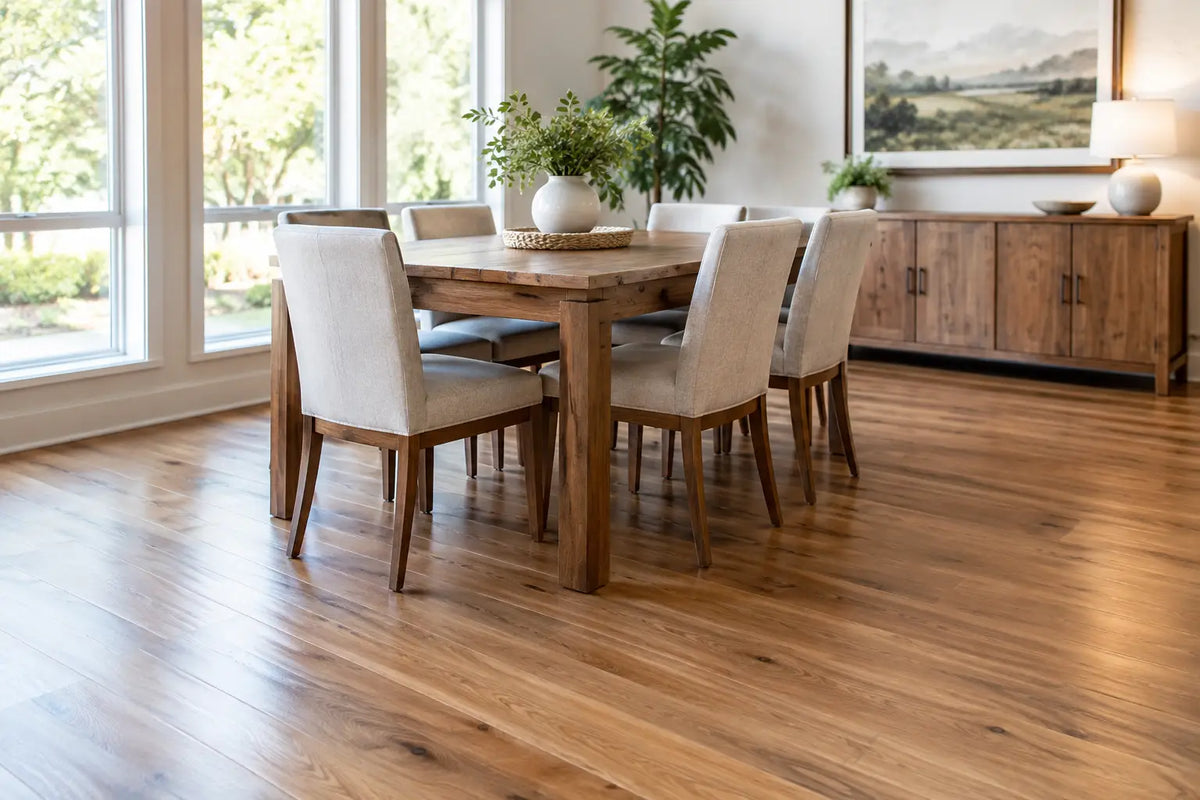
A dining room floor has to handle more than a table and chairs. It sees pulled-out seating, dropped utensils, holiday traffic, pet paws, and the occasional spilled drink. The best dining room flooring is the one that fits how you actually use the room while delivering a finish you will be happy to see every day.
For some homeowners, that means the natural character and long-term appeal of hardwood. For others, it means the easy cleanup and practical durability of luxury vinyl or waterproof flooring. There is no single right answer, but there are clear reasons to choose one material over another.
What the Best Dining Room Flooring Needs to Handle
Dining rooms are usually lower-moisture spaces than kitchens or bathrooms, but they are not low-impact spaces. Chair movement is the main consideration. Even a beautiful floor can show wear early if dining chairs are dragged rather than lifted or if protective glides are missing.
The right floor should also work with the rest of the home. An open-plan dining area often benefits from flooring that continues into the kitchen, living room, or entry for a more connected look. In a separate formal dining room, you may have more freedom to select a distinct wood color, wider plank, or more design-forward finish.
Before narrowing the choices, think about daily use. Do you host large gatherings? Have young children or pets? Need the same floor through a kitchen or nearby hallway? Are you updating an investment property where appearance, durability, and project cost all matter? Those answers matter more than a trend photo.
Hardwood: Timeless Dining Room Appeal
Hardwood remains one of the strongest choices for a dining room because it brings warmth, character, and a level of visual depth that is hard to duplicate. It works especially well in traditional homes, transitional interiors, and open spaces where a continuous wood floor creates a polished, established feel.
A dining room is generally a favorable setting for hardwood because standing water and constant moisture are less common than they are in kitchens. Still, hardwood is not maintenance-free. Spills should be wiped up promptly, and chair-leg pads are essential. A floor with a lower-gloss finish and natural variation can be more forgiving of everyday marks than a very smooth, high-gloss look.
Solid or Engineered Hardwood?
Both can be excellent options, depending on the installation environment and the look you want. Solid hardwood offers classic construction and can be a strong choice for appropriate above-grade rooms. Engineered hardwood pairs a real wood surface with layered construction, making it a practical option for many renovation projects and installations where added dimensional stability is useful.
The deciding factor is often the specific product, the subfloor, and whether the floor will continue into other rooms. A flooring specialist can help match the construction and installation method to the project instead of treating every wood floor the same.
Hardwood usually makes the most sense when authentic wood is the priority and you are willing to give it routine care. First-quality closeout and special-buy hardwood can be an especially smart opportunity for homeowners who want a premium visual at exceptional value. Since closeout inventory changes, it is wise to confirm that enough material is available for the full project, including an appropriate overage.
Luxury Vinyl Plank: A Practical Favorite for Active Homes
Luxury vinyl plank, often called LVP, has become a leading dining room choice for households that want a wood-look floor with easier maintenance. It is comfortable underfoot, easy to clean, and available in a broad range of colors, plank widths, and grain patterns.
Its biggest advantage in a dining room is practicality. It handles everyday messes well, and many waterproof luxury vinyl products can make sense when the dining room connects directly to a kitchen or patio door. For families with pets, frequent entertaining, or children learning their way around a cup of juice, that added peace of mind can be valuable.
Not every vinyl floor performs the same way, so look beyond color. Consider the wear layer, core construction, locking system, texture, and manufacturer installation requirements. Also think about the subfloor. Some plank floors can show imperfections beneath them if preparation is overlooked.
LVP is often a particularly good fit for rental properties, flips, and value-focused remodels because it combines attractive design with straightforward care. It can also help create a cohesive floor plan across several connected rooms without asking you to change materials at every doorway.
Waterproof Flooring: Best for Dining Areas Near Kitchens
Waterproof flooring is worth a closer look when the dining room is part of an open kitchen layout or gets regular traffic from an exterior entrance. These products are designed to offer strong resistance to water exposure, making them a practical choice where meal-time spills are only part of the equation.
The term waterproof describes the flooring product, not every part of the finished room. Proper installation, perimeter details, and timely cleanup still matter. But for homeowners who want a unified look from kitchen to dining area, waterproof flooring can reduce the worry that comes with busy, connected spaces.
Visual quality matters here. Look for a realistic embossed texture, natural plank variation, and a color that works in both rooms. A cool gray floor may feel too stark beside warm cabinetry, while an overly rustic pattern can compete with a formal dining table. Ordering shipping samples can help you assess tone and texture under your home's own lighting before making a final decision.
Laminate Flooring: Style and Value in the Right Setting
Laminate remains a practical dining room option when you want the look of wood at a value-focused price point. Modern laminate flooring can offer convincing visuals, useful scratch resistance, and a durable surface for ordinary dining-room traffic.
It is a sensible choice for dry dining rooms, especially when chair pads are used and spills are addressed quickly. If your dining room opens into a moisture-prone kitchen or you expect frequent wet messes, a waterproof flooring option may be the better fit. That trade-off is worth considering before selecting a floor based on appearance alone.
For property investors and renovators, first-quality laminate from a factory closeout or overstock opportunity can stretch the project budget without settling for inferior material. The key is choosing a product with enough available inventory and a look that supports the value of the property.
How to Choose Color, Plank Size, and Finish
The floor should support the dining room, not compete with it. Lighter wood looks and pale oak-inspired tones can make smaller rooms feel more open. Medium brown shades tend to be versatile and can hide everyday dust better than very dark or very light floors. Dark floors bring drama, but they may show crumbs, pet hair, and surface marks more readily.
Wider planks can make a dining room feel current and expansive, especially in open layouts. Narrower planks may suit more traditional homes or spaces where a classic scale feels appropriate. Texture matters, too. A subtle wire-brushed or textured finish can add character and make normal use less noticeable than a perfectly smooth surface.
Do not make the decision from a small online image alone. Compare samples beside your cabinetry, wall color, dining table, and trim. Check them in morning light and evening light. A floor that looks perfect under showroom lighting may read warmer, cooler, or darker at home.
Plan for Chairs Before You Install
No matter which material you choose, dining chairs need protection underneath them. Use quality felt pads or compatible chair glides, inspect them regularly, and replace them when they collect grit or become worn. Avoid dragging heavy furniture across the floor during rearranging.
A rug beneath the table can add softness and define the room, but it should be large enough that chairs remain on the rug when pulled back. If you prefer the clean look of exposed flooring, that is fine too - just be more consistent about chair protectors and cleanup.
Find the Right Floor at the Right Value
The best dining room flooring balances appearance, traffic, maintenance, and the rooms around it. Hardwood brings authentic, lasting character. Luxury vinyl and waterproof flooring deliver strong everyday practicality. Laminate can provide a stylish, budget-conscious solution in the right environment.
At Factory Flooring Liquidators, homeowners, contractors, and property buyers can explore first-quality flooring sourced through closeouts, overstocks, discontinued runs, and special buys. That sourcing model can create exceptional value, while knowledgeable guidance helps you compare what is available for your room and project scope.
Choose the floor that fits the meals, gatherings, and ordinary moments your dining room will hold. The right material should make the room feel finished without making daily life feel fragile.