
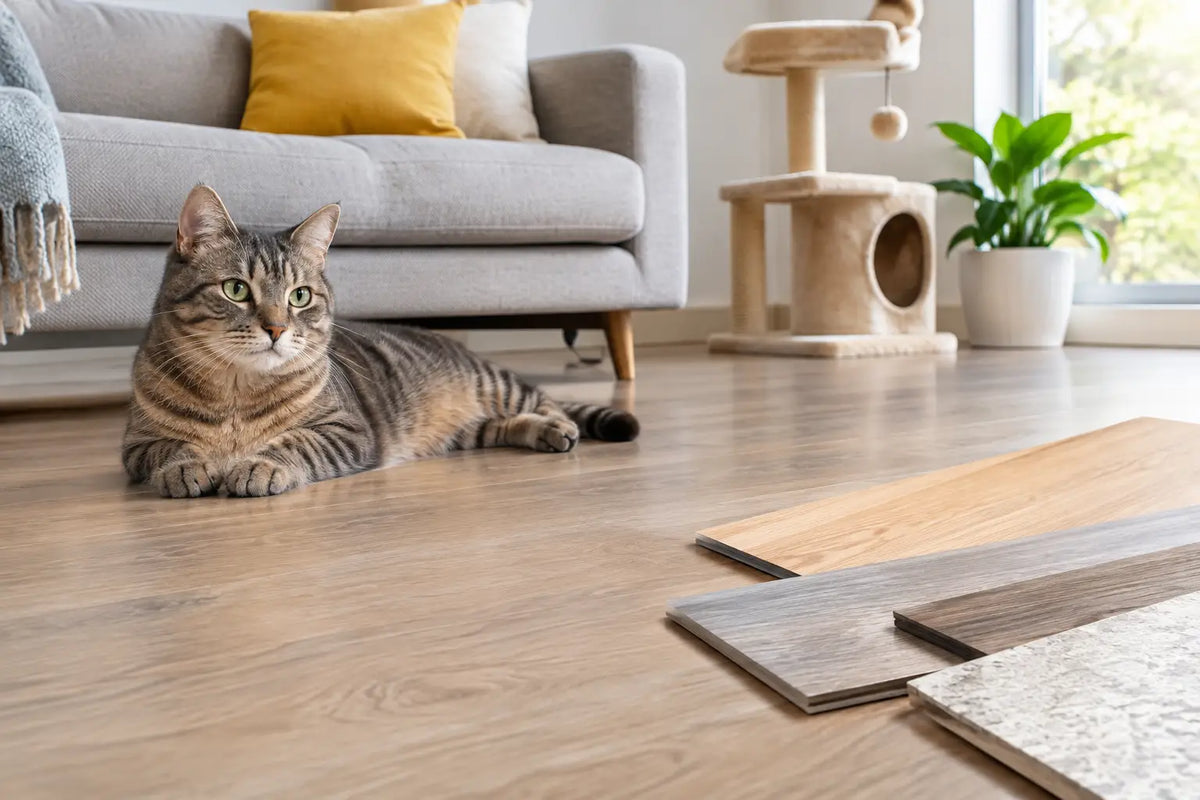
A cat can turn a beautiful floor into a real-life durability test. Litter granules travel farther than expected, water bowls get tipped, claws leave their mark, and sunny window spots become favorite daily lounging areas. The best flooring for cats is not simply the hardest surface available. It is the one that balances scratch resistance, moisture protection, easy cleanup, traction, style, and the budget for your specific home.
For most cat owners, waterproof luxury vinyl flooring is the strongest all-around choice. But a well-chosen laminate or hardwood floor can also make sense when appearance, room use, and maintenance expectations line up. Here is how to compare the leading hard-surface options before you buy.
What Makes Flooring Cat-Friendly?
Cats are generally easier on flooring than large dogs, but their habits still matter. A single cat that stays indoors and uses a mat outside the litter box creates different demands than several active cats sharing a busy household. Start by looking at the areas where your flooring will face the most use.
Moisture is often the deciding factor. Water bowls, litter box accidents, wet paws near an entry, and routine cleaning can all expose flooring to moisture. Floors in kitchens, laundry areas, mudrooms, bathrooms, and litter box zones need more protection than a quiet bedroom.
Surface texture matters, too. A highly glossy floor may show claw marks, dust, loose fur, and tracked litter more readily than a low-sheen or lightly textured finish. At the same time, overly slick flooring can make cats feel less secure when they run or jump. A subtle texture often provides a more forgiving, practical surface.
Finally, consider maintenance. A floor that looks great but requires immediate attention after every splash may not fit a busy household. The right product should support regular sweeping and damp cleaning without making everyday pet ownership feel like a constant chore.
Best Flooring for Cats: Waterproof Luxury Vinyl
Waterproof luxury vinyl is often the best flooring for cats because it handles the everyday issues pet owners actually face. Quality luxury vinyl plank and tile products are designed with protective wear layers, realistic wood or stone visuals, and waterproof construction that makes cleanup straightforward.
For homes with litter boxes, multiple water stations, or cats that occasionally miss the box, waterproof performance is a major advantage. Spills can be wiped up without the immediate concern associated with moisture-sensitive flooring. This makes luxury vinyl especially practical for whole-home renovations where you want one coordinated look through living areas, kitchens, hallways, and pet-prone spaces.
Luxury vinyl also offers visual flexibility. Wood-look planks can provide the warmth of oak, hickory, or wider European-style boards without asking you to treat every dropped water bowl like an emergency. Stone-look options can work well in laundry rooms or bathrooms while maintaining a comfortable, finished appearance.
Not every vinyl floor performs the same way, so compare the product’s construction and wear layer rather than shopping by color alone. A more substantial wear layer can be a smart consideration for active homes, rental properties, and projects where long-term appearance matters. Texture and finish can also help disguise light dust, fur, and daily traffic better than a smooth, high-gloss surface.
Luxury vinyl is not completely immune to damage. Heavy furniture dragged across the floor can still leave marks, and sharp objects can gouge any finished surface. Use proper furniture protection, keep nails trimmed, and choose a product suited to the room. Still, for practical moisture protection and low-maintenance living, waterproof luxury vinyl is difficult to beat.
Laminate Flooring for Cats: Strong Value With Limits
Laminate flooring can be an excellent value for cat owners, particularly in dry spaces such as bedrooms, living rooms, home offices, and hallways. Modern laminate can offer convincing wood visuals and a durable protective surface that stands up well to routine foot traffic and the occasional claw scratch.
The trade-off is moisture. Traditional laminate cores can swell or become damaged if water reaches seams and sits too long. Many newer products offer improved water resistance or waterproof features, but buyers should still review the product specifications and follow care instructions closely. “Waterproof” and “water-resistant” are not interchangeable terms, and that distinction matters around litter boxes and water bowls.
If laminate is your preferred look or budget choice, place litter boxes on a waterproof mat and use a tray beneath water bowls. Clean accidents and spills promptly rather than assuming the floor will tolerate standing water. In lower-risk rooms, laminate can deliver attractive performance at an exceptional value.
For investment properties and renovation projects, first-quality laminate acquired through factory-closeout, overstock, discontinued, or special-buy opportunities can be particularly compelling. The value comes from the sourcing model, not from lower product quality. Inventory can change, so a closeout product that fits your project’s performance needs, color direction, and quantity requirements may be worth securing while it is available.
Is Hardwood Flooring Good for Cats?
Hardwood remains a strong choice for homeowners who want natural character, long-term design appeal, and a floor that can suit many interior styles. Cats do not automatically rule out hardwood, but they do make finish selection and maintenance more important.
Hardwood can show scratches, especially on darker stains, high-gloss finishes, and softer species. A matte or low-luster finish is usually more forgiving because it diffuses light rather than highlighting every small surface mark. Natural color variation, visible grain, and character details can also make minor wear less noticeable over time.
Engineered hardwood may be a practical option when you want real wood visuals with added dimensional stability. However, neither engineered hardwood nor solid hardwood should be treated as waterproof. Water bowl spills and litter box accidents need prompt cleanup to protect the finish and the wood beneath it.
For cat owners committed to hardwood, choose a finish and color with real-life maintenance in mind. Medium tones and natural oak-inspired looks tend to hide dust and minor marks better than very dark or very pale smooth finishes. Put mats under bowls, keep a litter-catching mat near the box, and avoid leaving wet messes in place. Hardwood asks for more care, but it can still be a rewarding choice in bedrooms, living rooms, and formal spaces where moisture exposure is limited.
Choose the Right Finish and Color for Daily Life
The color you love in a showroom may perform differently once it meets fur, litter, and sunlight. Extremely dark flooring can show light fur and dust quickly. Very light, uniform floors may reveal darker fur, tracked debris, or scratches. A medium-tone floor with variation in grain, knots, or pattern is often the easiest choice for homes with pets.
Finish is equally important. Low-gloss and matte surfaces generally hide small scratches and smudges better than high-gloss finishes. Embossed wood-look vinyl and textured laminate can also add visual depth while offering more grip underfoot.
Before making a final decision, view flooring in your own lighting. Morning sunlight, overhead fixtures, and the shadows in your hallway can change how a color reads. Ordering samples with shipping included at no charge helps you compare tones beside cabinets, paint, furniture, and your pet’s fur before committing to a full order.
Practical Buying Tips for Homes With Cats
Measure beyond the main room. If you want continuous flooring from a living room into a kitchen or hallway, plan the project as one visual system. A consistent floor can make a home feel larger, but the product must be suitable for the highest-moisture area included in that layout.
For a litter box area, do not rely on flooring alone. Use a quality litter mat that catches granules before they spread, and select a waterproof tray or mat for water stations. These simple layers of protection reduce abrasion, moisture exposure, and cleanup time regardless of the flooring you choose.
If you are renovating a rental, flipping a property, or updating several rooms on a budget, prioritize products that offer the right performance first, then look for first-quality closeout opportunities within that category. A factory-closeout luxury vinyl or laminate floor can help stretch the project budget while still giving the property a polished, durable finish.
A DFW showroom visit can be useful when you want to compare textures and plank sizes in person, while nationwide delivery gives online buyers access to the same changing selection. For any project, confirm available quantity before finalizing your layout, especially when considering discontinued or closeout inventory.
The smartest cat-friendly floor is the one that fits how your household actually lives. If spills and litter are your biggest concern, choose waterproof luxury vinyl. If you want a value-focused surface for dry rooms, laminate can be a capable option. If natural wood is the look you will enjoy for years, hardwood can work with a forgiving finish and attentive care. Choose for the messes you expect, not the idealized version of daily life, and your floor will be easier to enjoy from the first day onward.