
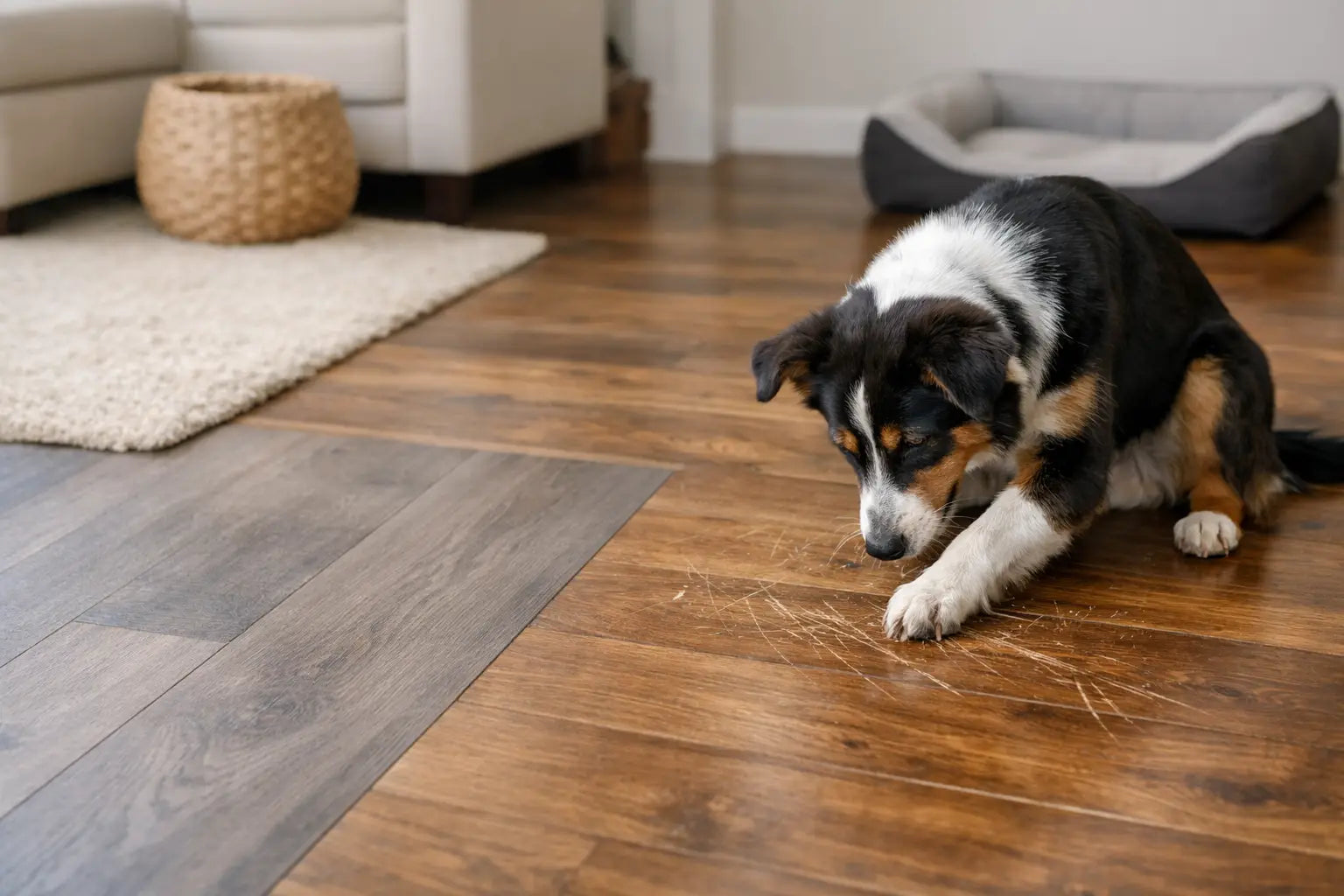
A dog can turn a beautiful hardwood floor into a daily stress test. You hear the click of nails down the hallway, spot fresh marks near the door, and start wondering whether every floor choice is destined to look worn too soon. The best flooring for dogs that scratch hardwood floors is usually luxury vinyl plank, but the right answer depends on your dog's activity level, your tolerance for maintenance, and whether you want the look of real wood or the strongest practical defense against claws and spills.
For busy households, rentals, remodels, and whole-home updates, the goal is not finding a floor that is magically scratch-proof. No hard-surface floor is. The goal is choosing a premium, first-quality floor whose texture, finish, construction, and color make everyday wear far less visible while giving you a better return on your investment.
Why Dog Nails Damage Hardwood So Easily
Hardwood is durable, but it is still wood. A large dog's nails can press into a softer species, especially when the dog launches off a rug, skids around a corner, or races toward the front door. Grit tracked in from outside makes the problem worse. That dirt acts like sandpaper under paws, shoes, and furniture.
The finish matters, but it cannot change the nature of the material. A glossy floor reflects light, so even fine scratches can stand out. A smooth, dark-stained plank can show pale marks, dust, and pet hair quickly. Softer woods such as pine and some lower-density hardwoods dent more readily than dense species, while even hard species can show wear in high-traffic areas.
That does not mean hardwood is off the table. It means pet owners need to choose it carefully and accept that a real-wood floor develops character over time. If the priority is a floor that still looks clean after a wet walk, a dropped water bowl, and an energetic game of fetch, vinyl or high-performance laminate is often the smarter buy.
Best Flooring for Dogs That Scratch Hardwood Floors: Luxury Vinyl Plank
Luxury vinyl plank, often called LVP, is the strongest all-around choice for most dog owners. It delivers realistic wood visuals without the same vulnerability to dents, surface scratches, and moisture exposure that comes with natural hardwood. Quality vinyl planks have a protective wear layer designed for daily traffic, and many feature waterproof construction that handles accidents, spills, and muddy paws with far less worry.
For homes with medium or large dogs, look for a thicker wear layer and a low-gloss, textured finish. A 20-mil wear layer is a popular target for active households because it offers stronger protection against routine scuffs. It is not a promise that claws will never leave a mark, but it is a meaningful upgrade for busy spaces.
Texture is just as valuable as wear-layer thickness. Embossed grain, wire-brushed looks, and matte finishes help disguise minor surface wear better than flat, shiny planks. They can also give dogs more traction than a slick finished hardwood floor. That matters for older pets, breeds prone to joint issues, and any dog that tends to slide when changing direction.
Rigid-core vinyl is a practical option where minor subfloor variation is a concern. Glue-down vinyl can be an excellent choice for high-traffic rooms when installed over a properly prepared subfloor. The better fit depends on the room, installation method, and product specifications, so expert guidance before ordering can prevent an expensive mismatch.
Laminate Is a Strong Value Option for Dry Areas
Modern laminate has come a long way from the hollow, repetitive-looking floors many homeowners remember. Premium laminate can offer convincing wood texture, excellent scratch resistance, and a hard wear surface that stands up well to dog nails. For buyers who want a durable wood look at unbeatable liquidation prices, it deserves serious consideration.
The trade-off is water. Many newer laminate products offer water-resistant or waterproof features, but the level of protection varies by product and installation. Standing water can still find its way into seams or around the perimeter if it is not cleaned up promptly. That makes laminate a better fit for living rooms, bedrooms, hallways, and other generally dry spaces than for a mudroom used by a rain-soaked dog.
Choose a textured, matte laminate instead of a smooth high-gloss design. Also pay attention to the product's durability rating and manufacturer guidelines. A well-made laminate can outperform a lower-quality hardwood in a pet-heavy home, especially when the homeowner wants a tough, attractive floor without paying premium showroom markups.
Can You Still Choose Hardwood With Dogs?
Yes, if authentic wood is the feature you care about most. The practical move is to choose engineered hardwood over a softer, highly polished solid hardwood in many pet-friendly projects. Engineered hardwood offers real wood at the surface, but its layered construction can provide better dimensional stability when indoor humidity changes.
For the best chance of success, choose a harder wood species, a lighter or medium natural tone, and a low-sheen finish. White oak is a popular choice because its grain has natural movement that can camouflage small marks better than a very smooth, uniform look. Wire-brushed and distressed styles are also more forgiving than sleek, glossy planks.
Avoid judging hardwood only by a sample held under showroom lighting. Ask how it will look in the sunlight near your patio door, in a hallway where your dog turns quickly, and beside the entry where grit collects. If a small scratch will bother you every time you see it, vinyl is likely the better long-term fit. If you appreciate a floor that gains a lived-in patina, hardwood can still be worth the investment.
Choose Color and Finish for Real Life, Not Just the Display
The wrong color can make a durable floor feel high-maintenance. Very dark brown, black, and red-toned flooring can highlight pale nail marks, dust, and light pet hair. Very light flooring can show dark mud and darker shedding. Mid-tone browns, natural oaks, warm greiges, and varied grain patterns tend to be the most forgiving choices.
A matte finish is another easy win. It reduces glare and hides fine abrasion better than a glossy surface. Multi-width visuals, knots, color variation, and realistic grain can also break up the appearance of small scuffs. This is where viewing a floor in your own room is more useful than relying on a tiny sample alone. A room visualizer can help you narrow the style, but a product sample and expert input remain valuable before a full order.
Protect Any New Floor From Day One
Even the toughest flooring performs better with a little routine care. Keep nails trimmed and smooth, especially if your dog spends a lot of time running indoors. Place absorbent mats at exterior doors and water bowls, and use washable runners in high-speed zones such as hallways and the path from the back door to the living room.
Sweep or vacuum frequently with a hard-floor-safe setting to remove grit before it creates fine scratches. Clean spills quickly, and avoid steam mops or harsh cleaners unless the flooring manufacturer specifically approves them. Use felt pads under furniture, because chairs and tables can create deeper damage than most dog nails.
These habits are not about treating your home like a museum. They are about protecting the premium floor you paid for while letting your dog live comfortably in it.
Get More Durability for Your Flooring Budget
The smartest pet-friendly floor is not automatically the most expensive one. It is the one that matches your household's wear level, moisture exposure, style goals, and budget. A premium LVP with a textured, low-gloss surface is often the best overall answer. A quality laminate can deliver outstanding scratch resistance and value in dry rooms. Engineered hardwood works when the warmth and authenticity of real wood outweigh the need for a perfectly mark-free surface.
At Factory Flooring Liquidators, homeowners and project buyers can compare first-quality vinyl, laminate, and hardwood options at liquidation pricing without settling for low-grade materials. Start with the room your dog uses hardest, choose a finish that hides real-life wear, and give yourself permission to buy the floor that makes daily living easier - not just the floor that looks perfect on installation day.