
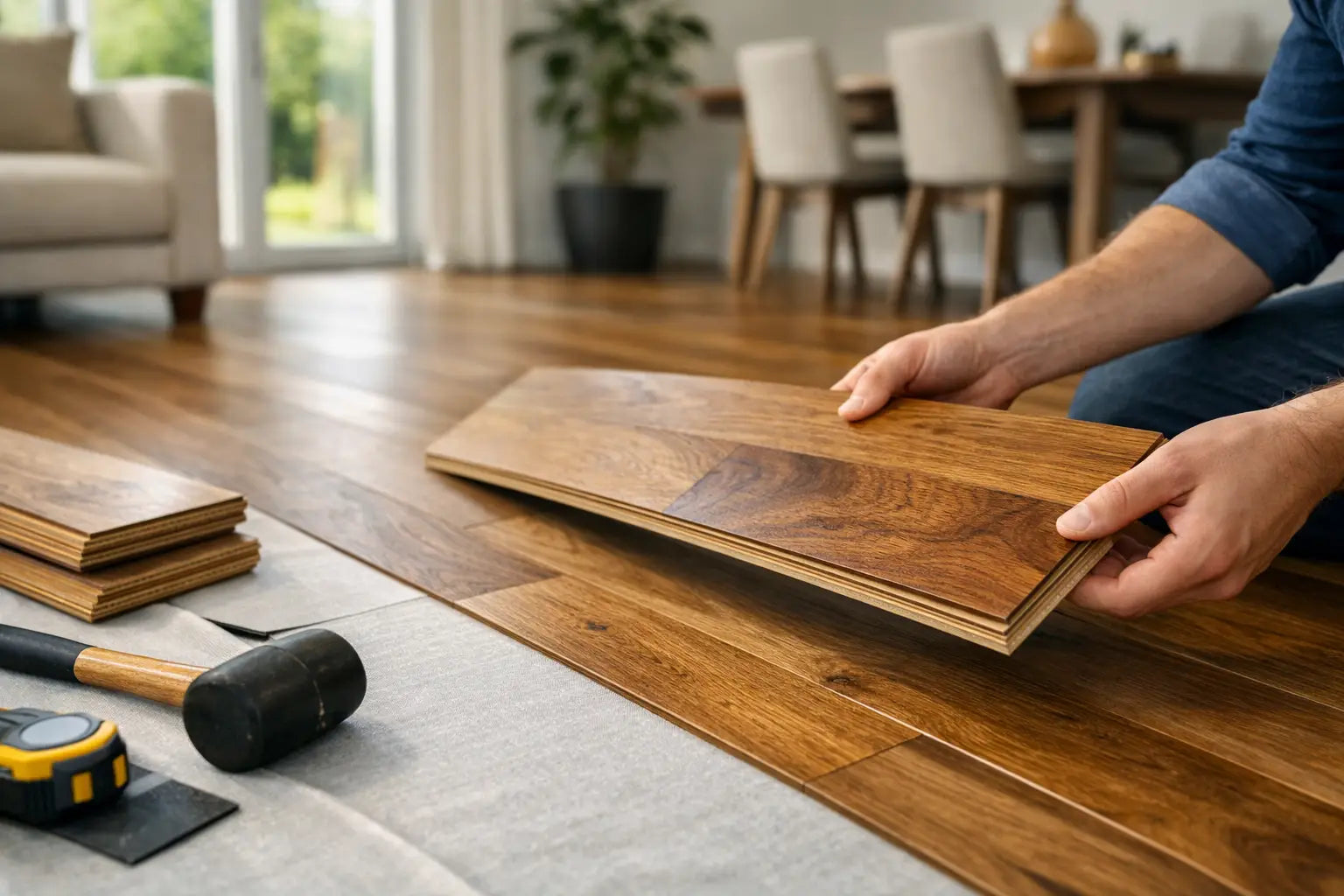
A real-wood floor can change the entire feel of a room, but many buyers no longer want the price, installation limits, or upkeep concerns that can come with solid hardwood. That is why more homeowners are switching to engineered hardwood floors: they get the warmth, grain, and lasting appeal of genuine wood with a construction built for real-life remodeling.
For homeowners updating a kitchen, opening up a living area, finishing a basement, or refreshing a rental property, engineered hardwood often hits the sweet spot. It looks premium, works in more areas of the home, and can deliver stronger value when purchased at the right price.
Why More Homeowners Are Switching to Engineered Hardwood Floors
Engineered hardwood is not a printed imitation of wood. It has a real hardwood wear layer on top, finished with the species, color, and texture buyers want. Underneath is a layered core, typically made from plywood or other stable wood materials. That core is the difference-maker.
Solid hardwood expands and contracts as humidity changes. Engineered hardwood is designed to be more dimensionally stable, which makes it a practical choice for homes where seasonal moisture, air conditioning, radiant heat, or below-grade spaces can create challenges. Buyers still get authentic wood underfoot, but with more flexibility in where it can be installed.
That combination has changed the conversation. Homeowners no longer have to choose between a premium wood look and a floor that fits the demands of the room.
Real wood style without showroom-only pricing
The appeal starts with appearance. Engineered hardwood offers the natural variations that make wood valuable: grain movement, knots, mineral streaks, color shifts, and texture that do not repeat from board to board. A quality engineered plank can create the wide-plank, designer-inspired look homeowners see in higher-end renovations without requiring a traditional showroom budget.
Price depends on the species, plank width, finish, wear-layer thickness, and construction quality. Still, engineered hardwood frequently gives buyers access to premium looks at a more manageable project cost than comparable solid wood. When first-quality inventory is available at liquidation pricing, the value becomes even more compelling.
This matters on large projects. A small difference per square foot can add up quickly across an open floor plan, several bedrooms, or an investment property. Smart buyers focus on the total installed value, not just the cheapest box on the shelf.
Better stability for more rooms
Engineered hardwood is especially popular because it can work where solid hardwood may be less practical. Its layered construction helps it better handle normal changes in indoor humidity, making it a strong option for main-level living spaces, bedrooms, kitchens, and many finished basements.
That does not mean it is waterproof. Standing water, plumbing leaks, and repeated wet mopping can damage any real-wood floor. For full bathrooms, laundry rooms with frequent water exposure, or active entryways in wet climates, luxury vinyl may be the more practical choice. But for homeowners who want real wood in the largest possible portion of the home, engineered hardwood expands the possibilities.
It can also be compatible with radiant heating systems when the product and installation instructions allow it. Always check the manufacturer's specifications before buying, because not every engineered floor is approved for every heating system or installation method.
Installation options can reduce project headaches
Many engineered hardwood products can be installed by glue-down, nail-down, or floating methods. The best choice depends on the subfloor, product design, room conditions, and installer recommendations. This flexibility gives homeowners and contractors more ways to plan a project around the existing space.
A floating installation can be useful in certain remodels because it may avoid extensive fastening into the subfloor. Glue-down installation is often preferred for concrete slabs and can create a solid, quiet feel underfoot. Nail-down methods remain common over suitable wood subfloors. The right method is not about what is easiest in every case - it is about what protects the floor and performs well over time.
Before ordering, measure carefully, account for closets and transitions, and include an overage for cuts and layout. Flooring is a visual material, so rushing the measurement stage can turn a great deal into an avoidable delay.
A practical upgrade for busy homes and investment properties
Homeowners want floors that look good on day one and still make sense after pets, guests, furniture moves, and everyday traffic. Engineered hardwood meets that need well, particularly when buyers choose a finish and surface texture suited to their household.
Wire-brushed, hand-scraped, and low-gloss finishes can be forgiving because they help camouflage minor scratches and daily wear better than a perfectly smooth, high-gloss floor. Lighter natural tones can hide dust, while medium variations often disguise small marks and grain differences. There is no single best color for every home, but choosing with daily life in mind is better than choosing from a tiny sample alone.
For property investors, engineered hardwood can also make financial sense. It creates a high-end impression that can help a property stand out, while offering a more accessible path to real-wood flooring across larger square footage. The key is matching the product to the property's use. A durable, easy-care finish may be a better investment than an exotic species that requires more maintenance.
Wear-layer thickness deserves attention
Not all engineered hardwood is built the same. One of the most important details is the thickness of the real hardwood wear layer. A thicker wear layer can offer more potential for refinishing, depending on the product, its condition, and a flooring professional's assessment.
For a long-term personal residence, buyers may prioritize a thicker wear layer, high-quality core, and finish warranty. For a flip, rental refresh, or lower-traffic room, a well-made value option may be the smarter spend. Premium does not have to mean overspending. It means getting the construction and look your project actually needs.
Ask about total plank thickness, veneer thickness, finish type, warranty coverage, and recommended installation conditions. These details are more useful than relying on a product photo or a broad label alone.
The value case is stronger when buyers shop smarter
The biggest reason engineered hardwood continues to gain ground is simple: homeowners are more informed. They know that a beautiful floor does not have to come with inflated retail markups, and they are willing to compare construction, finish, and price before committing.
Factory Flooring Liquidators helps make that comparison easier by offering premium, first-quality hard surface flooring at aggressive liquidation prices. Buyers can evaluate options online, use a room visualizer to see how a color may work in their space, and get expert support before placing an order for nationwide delivery.
That buying model is valuable because flooring is not a one-size-fits-all purchase. A pale oak that looks perfect in a bright Dallas living room may feel different in a low-light basement or a compact condo. Viewing samples, checking specifications, and considering the room's traffic and moisture exposure should guide the final decision.
When engineered hardwood may not be the best fit
Engineered hardwood is a strong choice, but it is not automatically the right floor for every room or buyer. If a household expects heavy water exposure, vinyl flooring may deliver better peace of mind. If the goal is to refinish the same floor multiple times over several decades, a thick solid hardwood floor may still have an advantage.
Buyers should also be realistic about maintenance. Use floor protectors under furniture, clean spills promptly, avoid steam mops, and follow the manufacturer's care instructions. Real wood rewards sensible care, but it is not indestructible.
The best flooring decision comes down to how the space is used, what the subfloor allows, and where the budget delivers the most visible value. Choose an engineered hardwood that fits those realities, and your next floor can look like an upgrade without costing like a compromise.