
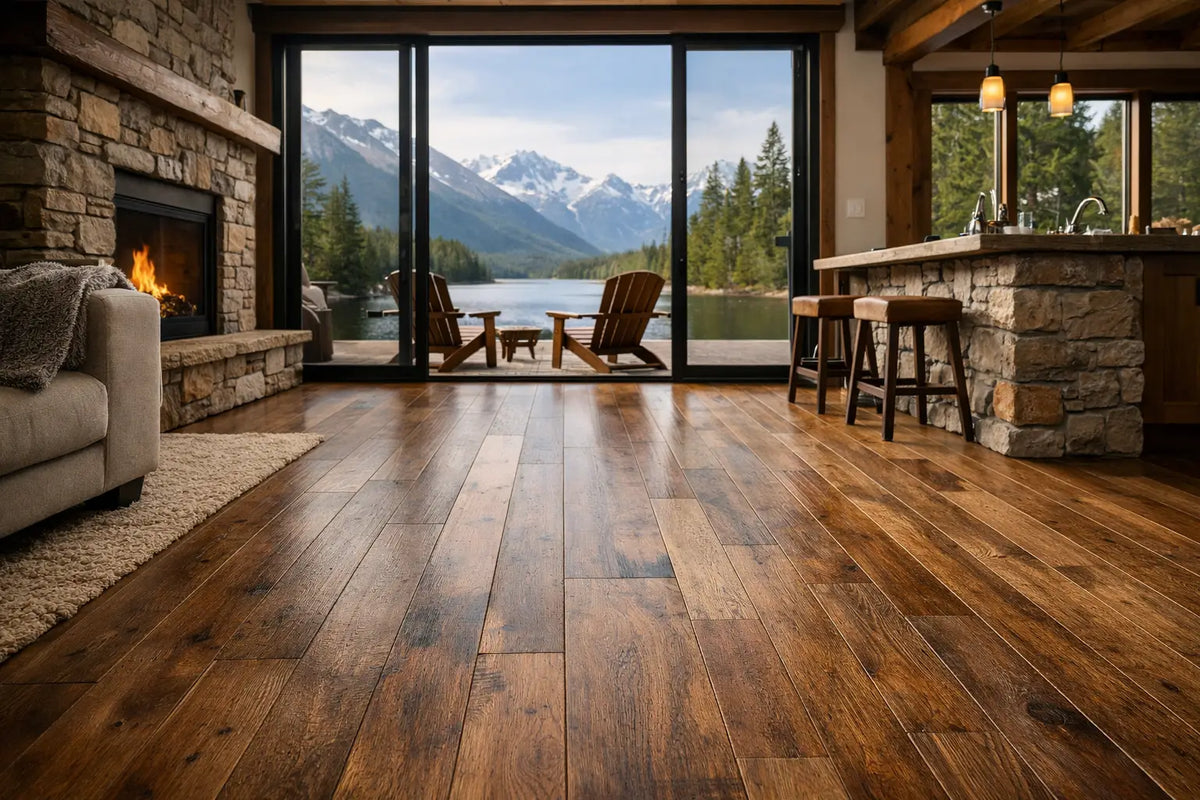
A mountain home asks more from its floors than a typical suburban living room. Snowmelt at the entry, muddy boots after a trail walk, wet dogs, dry winter air, and big swings between indoor and outdoor temperatures can all test a floor's appearance and performance. The best flooring for mountain homes is not one universal product. It is the material that suits your climate, room use, design goals, and willingness to maintain it.
For many homeowners, waterproof luxury vinyl plank is the most practical all-around choice. For those who want the warmth and character only real wood brings, engineered hardwood can be an excellent fit in the right areas. Laminate also deserves consideration when you want a hard-surface floor with a realistic wood look and strong everyday value. The smart choice starts with understanding where each option works best.
What Mountain-Home Flooring Needs to Handle
Mountain properties often see more moisture and grit than homes in milder settings. Even with good mats and a covered porch, tracked-in snow, rain, sand, small gravel, and salt residue can reach the floor. An entryway, mudroom, kitchen, and main living area may all need to stand up to activity that would be unusual in a formal city home.
Humidity also matters. Some mountain regions have damp summers and cold, dry winters. Others have high-altitude sun, low humidity, and sharp temperature changes. Flooring naturally responds to its environment, especially genuine wood. A product's installation requirements, acclimation guidance, and approved room applications should be reviewed before buying - not after the boxes arrive.
Then there is the visual question. Mountain interiors can lean rustic, modern, cabin-inspired, or surprisingly refined. A floor should complement exposed beams, stone fireplaces, big windows, and natural light without making the room feel overly themed. Wide planks in natural oak tones, warm brown finishes, and quiet matte textures tend to work across several mountain-home styles.
Best Flooring for Mountain Homes by Room
The most successful projects do not always use a single flooring material everywhere. Choosing products by room can protect your investment while creating a cohesive look from the front door to the bedrooms.
Waterproof luxury vinyl plank for busy, moisture-prone spaces
Luxury vinyl plank, often called LVP, is a leading option for entryways, kitchens, lower-level rooms, and high-traffic living spaces. Waterproof flooring gives mountain homeowners useful protection against everyday spills, wet footwear, and pet accidents. It is also easier to maintain than many natural materials: regular sweeping and prompt cleanup go a long way.
LVP is available in wood looks that range from clean, contemporary oak to more rustic grain and character. For a vacation property or rental where durability and simple care are priorities, it can provide a practical balance of style and performance. Look beyond color alone. Wear-layer details, overall construction, texture, and the manufacturer's installation specifications all influence whether a particular product fits your project.
Waterproof does not mean damage-proof. Standing water should still be addressed promptly, and a floor must be installed over a properly prepared subfloor. But for families bringing the outdoors in, waterproof vinyl is often the least stressful option.
Engineered hardwood for authentic warmth and long-term style
Engineered hardwood is often the right answer when the goal is a genuine wood floor with more dimensional stability than traditional solid hardwood. Its layered construction helps it perform more consistently through normal seasonal humidity changes, making it a strong candidate for conditioned mountain-home living areas, dining rooms, and bedrooms.
The appeal is hard to overstate. Real hardwood brings natural variation, depth, and a tactile quality that printed visuals cannot fully duplicate. It can make a new-build retreat feel established or give a renovated cabin a more elevated finish. Wider planks and low-sheen finishes are especially well suited to relaxed mountain interiors because they emphasize the wood's natural character rather than a glossy, formal look.
The trade-off is maintenance and placement. Wood is not the first choice for a frequently wet entry, an area where snow gear is dropped, or a space with uncontrolled moisture. Use durable entry mats, maintain stable indoor conditions when possible, and choose a finish that makes sense for how the home is actually used. A lightly textured or character-grade look can be more forgiving of daily life than a smooth, uniform floor.
Laminate for wood style and disciplined budgets
Laminate flooring can be a compelling choice for bedrooms, living rooms, and other dry areas where you want a durable hard-surface floor at a value-focused price point. Current laminate styles offer realistic visual detail and can handle the scratches and traffic of an active household well, depending on the product's rating and construction.
The key is to match laminate to its intended application. It is not automatically the best choice for every wet zone, and water resistance varies by product. Read the specifications carefully before selecting it for kitchens, entries, or lower-level spaces. In a dry, climate-controlled room, however, laminate can deliver attractive continuity throughout a home while leaving more of the renovation budget available for other priorities.
Do Not Choose by Appearance Alone
A pale oak may look perfect beside a stone hearth, but the finish, texture, and construction deserve equal attention. In mountain homes, practical details often decide whether you love the floor two years from now.
A lower-gloss finish generally hides dust, minor scratches, and footprints better than a high-gloss surface. Textured planks can add visual warmth and help disguise the small marks that come with boots, pets, and furniture movement. Mid-tone colors are often easier to live with than very dark floors, which can highlight dust, or very light floors, which can make muddy debris more obvious.
Plank width changes the feel of the room, too. Wide planks can make an open great room feel calm and expansive, especially in a home with large windows and natural materials. In smaller cabins or rooms with many transitions, a more moderate-width plank may create a more balanced visual rhythm. Order samples when possible and view them in the home's changing daylight before making a final call.
Plan for Entries, Transitions, and Seasonal Use
The best floor can still struggle if the home's most demanding zones are not planned thoughtfully. Give the entry a serious moisture-control strategy with quality mats inside and outside the door. A bench, boot tray, and designated place for wet outerwear can reduce the amount of water and grit that reaches the floor.
If the property is a seasonal cabin or vacation rental, think honestly about how often it will be occupied and climate controlled. A floor suitable for a continuously conditioned primary residence may not be the same product you would select for a home that sits vacant through significant seasonal changes. Product documentation and site conditions should guide this decision.
Transitions are another chance to make the project work harder. You may choose waterproof flooring at the entry and in a mudroom, then continue with engineered hardwood through the main living area in a coordinating tone. That approach recognizes how each room functions instead of forcing one material into every condition.
How Closeout Flooring Can Improve the Project Budget
A mountain-home renovation can involve more than flooring. Windows, fireplaces, cabinetry, lighting, and delivery logistics all compete for budget. Factory-closeout, overstock, discontinued, end-of-run, and special-buy flooring can create a meaningful opportunity to purchase first-quality products at exceptional value.
The value comes from how the flooring is sourced, not from compromised quality. Closeout inventory may include a beautiful color that is no longer part of a current collection, an overstocked run, or a manufacturer special buy. For homeowners who are flexible about a specific brand name or colorway, that changing inventory can open access to premium-looking hardwood, luxury vinyl, and laminate options that better fit the overall project budget.
There is one practical consideration: when you find a closeout product that is right for the project, confirm the available quantity and purchase enough material for the full installation, including a reasonable allowance for cuts and future repairs. Limited inventory can be a genuine advantage, but it requires confident planning.
Make the Final Choice With Real-Life Use in Mind
Before purchasing, picture a normal February weekend rather than an untouched showroom floor. Will children run in from the snow? Are dogs part of the household? Is the home occupied year-round? Does the front door open directly into the main living room? These answers often point clearly toward waterproof vinyl in demanding zones, engineered hardwood in protected gathering spaces, or laminate in dry rooms where budget and durability are central.
At Factory Flooring Liquidators, homeowners can compare first-quality hard-surface flooring options with knowledgeable guidance, visualize the look in their rooms, and arrange nationwide delivery or visit the DFW showroom. The right mountain floor should let you enjoy the view, the gathering, and the muddy boots at the door - not worry about every bit of life that comes inside.