
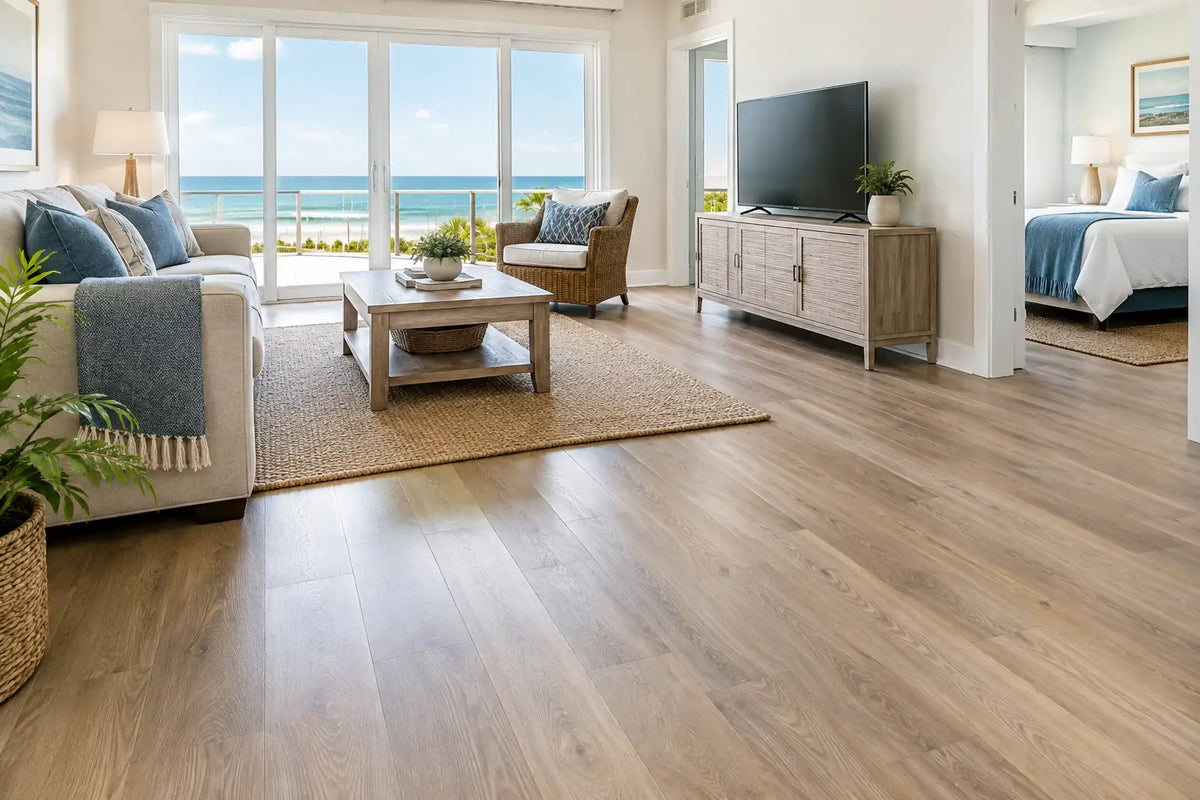
A vacation rental floor has to look good in listing photos on turnover day, then stand up to rolling suitcases, wet shoes, spilled drinks, pet claws, and guests who may not treat the home like their own. The right flooring for vacation rental properties protects your investment without making every refresh feel like a major renovation.
The best choice is rarely the least expensive material upfront or the most luxurious-looking option in a sample. It is the floor that fits the property’s location, guest profile, maintenance plan, and replacement budget. For many owners, first-quality luxury vinyl, waterproof flooring, laminate, or carefully selected hardwood offers a stronger long-term value than flooring chosen only for a low initial cost.
What Vacation Rental Flooring Needs to Handle
Unlike a primary residence, a short-term rental may see many households cross the same floor each year. That makes day-to-day resilience especially valuable. Look beyond color and plank width to consider water exposure, scratch resistance, cleanability, repair options, and how consistently the floor will perform from room to room.
Entryways, kitchens, bathrooms, laundry areas, and ground-floor spaces near pools or patios deserve special attention. These are the rooms where moisture and grit can create the fastest wear. Bedrooms and low-traffic upper levels may give you more freedom to prioritize warmth, character, or a different price point.
Maintenance also matters. A beautiful material that requires careful cleaning can become a headache for a property manager, cleaning crew, or owner handling turnovers remotely. Flooring that can be swept, vacuumed appropriately, and cleaned with manufacturer-approved products helps keep each turnover simple and predictable.
Choosing Flooring for Vacation Rental Properties
Luxury vinyl and waterproof flooring: the practical all-around choice
Luxury vinyl flooring is often a strong fit for rentals because it can deliver a convincing wood-look appearance with everyday durability and straightforward maintenance. Many products are designed to resist water exposure, making them particularly useful for kitchens, baths, mudrooms, and open living areas where guests move between indoor and outdoor spaces.
The key distinction is to check the product’s specific performance details. “Waterproof” describes how a floor is designed to handle water, but it does not mean a property owner can ignore standing water, leaking appliances, or moisture issues beneath the floor. Prompt cleanup and proper installation remain part of protecting the investment.
For a whole-home rental, using one luxury vinyl visual through the main living spaces can create a cohesive look in photos and reduce the need for transitions between rooms. Wood-look tones in natural oak, warm brown, soft greige, or light neutral finishes tend to work with a wide range of furnishings and appeal to different guest preferences.
Laminate: strong style and value in the right rooms
Modern laminate can be an attractive choice for bedrooms, living rooms, hallways, and other areas that stay relatively dry. It offers the look of wood at an approachable project cost, and many current options provide impressive visual detail and scratch resistance for active rentals.
Moisture performance varies by product, so laminate deserves a closer look before it is specified for a bath, laundry room, or entrance exposed to frequent rain and tracked-in water. Review the manufacturer’s room-use guidance rather than assuming every laminate floor handles moisture the same way.
Laminate is especially worth considering when an owner wants an elevated wood visual throughout a larger property while preserving more of the budget for furnishings, appliances, lighting, or other guest-facing upgrades. A first-quality closeout can make that strategy even more compelling when the available quantity fits the project.
Hardwood: a premium choice with a more selective role
Hardwood brings genuine character and can help a well-positioned vacation property feel distinctive rather than generic. In a higher-end cabin, historic home, or design-forward rental, hardwood may support the atmosphere guests are booking. Its natural variation also allows minor marks to blend in more gracefully than they might on a highly uniform surface.
Still, hardwood asks more from the owner. Water, heavy abrasion, and inconsistent humidity can affect its appearance, and refinishing or board repair may require more planning between bookings. It is generally best reserved for dry areas where the property’s rate, guest expectations, and upkeep plan support the material.
If you choose hardwood, avoid a precious mindset. Select a color and finish that can live with normal use, rather than a very dark or highly glossy look that puts every bit of dust and every small scratch on display. A matte or low-sheen finish is often more forgiving in a rental setting.
Select a Look That Works Beyond the Listing Photos
A floor that photographs well should also make the property easier to operate. Very light floors can show dark grit near entrances. Very dark floors may reveal dust, lint, and pet hair between cleanings. Extremely gray finishes can feel dated quickly if the rest of the home changes. Mid-tone wood looks and balanced neutral colors usually give owners more flexibility with furniture, wall paint, and seasonal decor.
Plank size affects the impression of the room, too. Wider planks can make open living areas feel expansive and current, while narrower or more traditional proportions may better suit a smaller cottage or older home. The right choice depends on the architecture and the audience you want to attract, not just what is currently popular.
For a property with several bedrooms, it is usually easier to use one primary flooring visual across connected dry spaces. This creates visual flow, simplifies future repairs, and makes it easier to hold back extra material. In moisture-prone rooms, a coordinated waterproof option can keep the design consistent without forcing one product into every application.
Plan for Turnovers, Repairs, and Reorders
Rental flooring decisions should account for the day something gets damaged, not just installation day. Keep a reasonable amount of unopened extra material in a labeled, climate-appropriate storage area whenever possible. Record the product name, color, lot information if available, and installation details. That small step can save substantial time when a repair is needed months later.
Closeout, discontinued, end-of-run, overstock, and special-buy flooring can offer exceptional value because of the sourcing model, not because the material is inferior. These opportunities are typically first-quality products, but inventory can change. If a closeout floor is the right fit for your rental, confirm that there is enough material for the full project, including a practical overage and any future repair stock you want to keep.
It also helps to order samples or view flooring in person before committing. Lighting changes color dramatically: a warm plank can look different under bright coastal sun, in a shaded mountain home, or beneath the warm bulbs commonly used in a rental. DFW-area owners can compare options in a showroom, while nationwide buyers can use product information and room visualization tools to narrow the field before arranging delivery.
Do not overlook transitions, stair parts, trim, and the floor’s compatibility with the rooms where it will be installed. These details affect both the finished appearance and the durability of the project. A knowledgeable flooring specialist can help confirm quantities, room suitability, and the supporting pieces needed to avoid a last-minute mismatch.
Make the Budget Work Harder
The most profitable rental upgrade is not always the one with the lowest ticket price. Consider the installed project cost, expected maintenance, guest appeal, and how soon the floor may need attention. Spending more for a first-quality waterproof floor in a busy entry or kitchen may be more economical than replacing a less suitable floor after repeated moisture-related issues.
Factory-closeout sourcing gives owners, investors, and property managers a practical way to shop premium-looking first-quality flooring with stronger value in mind. The best opportunities are the ones that match the property’s needs, have sufficient available inventory, and leave room in the budget for proper installation and finishing details.
Choose a floor your cleaning crew can maintain, your guests can enjoy without special instructions, and your future self will appreciate after a busy season. That is the kind of flooring decision that keeps a vacation rental looking ready for the next check-in.