
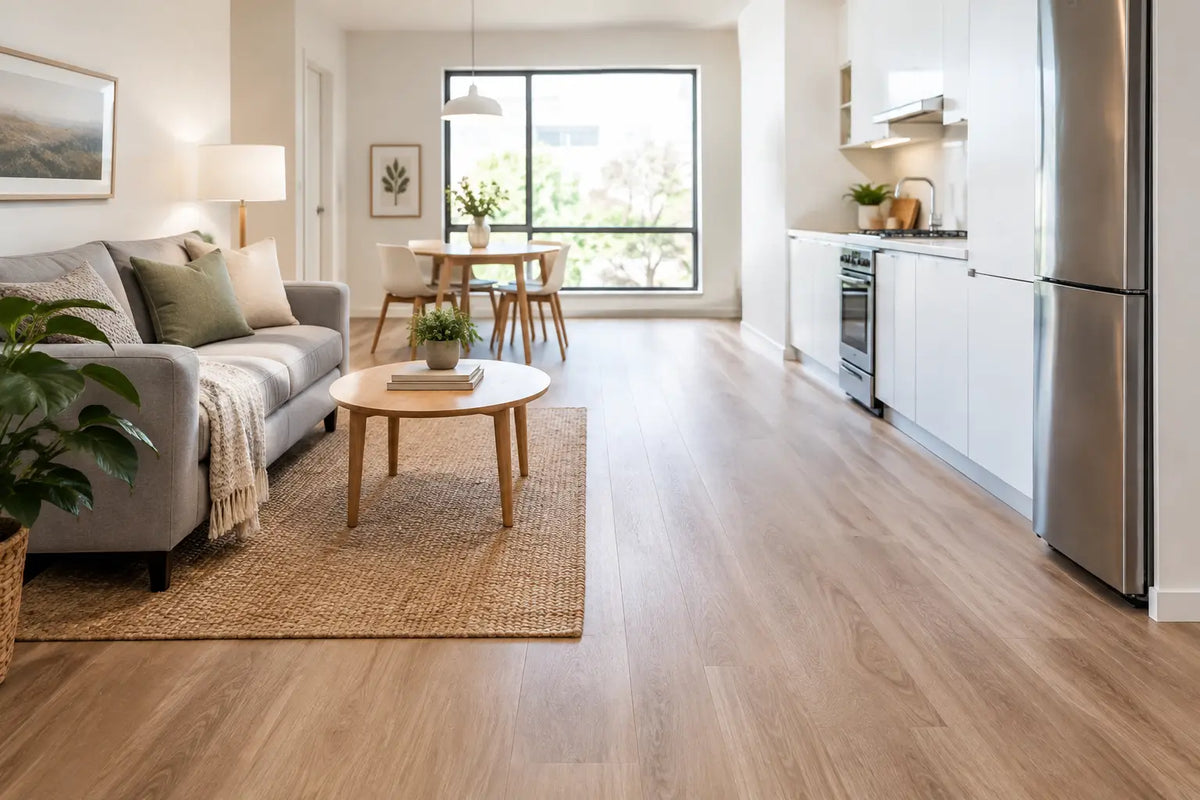
A small home gives every design choice more visibility. Flooring runs through multiple rooms, catches natural light, and can either make the layout feel connected or break it into smaller visual pieces. The best flooring for small homes is not simply the least expensive option or the trendiest color. It is the floor that fits your daily use, supports the look you want, and delivers strong value across the square footage you need.
For many homeowners, that means choosing one hard-surface floor for connected living areas rather than mixing several materials. A consistent surface can make a compact home feel calmer, wider, and more intentional. The right factory-closeout or special-buy product can also make it possible to choose first-quality flooring with the performance and appearance your project deserves.
What Makes Flooring Work in a Small Home?
Flooring does more than cover the subfloor. In a smaller footprint, it sets the visual baseline for nearly every wall color, cabinet finish, rug, and piece of furniture. A floor with a clean, cohesive look helps rooms flow into one another instead of feeling boxed in.
Plank size, color variation, sheen, and installation direction all matter. Wide-plank visuals can reduce the number of visible seams, while a medium or light neutral color often reflects more light and keeps the room from feeling heavy. That does not mean every small home needs pale flooring. A rich wood tone or deeper vinyl plank can look excellent when the space has good lighting and a simple, coordinated palette.
Durability should carry equal weight. A beautiful floor that does not fit your household can become an expensive frustration. Consider pets, children, entry traffic, moisture exposure, and whether the property is a primary residence, rental, flip, or vacation home before narrowing the choices.
Best Flooring for Small Homes by Lifestyle
Waterproof luxury vinyl for busy, connected spaces
Waterproof luxury vinyl flooring is often a practical front-runner for small homes with open kitchens, living areas, hallways, and active households. It offers the wood-look style many buyers want while providing a surface designed to handle everyday spills and moisture exposure. That makes it especially appealing when one floor needs to serve several rooms with different demands.
Luxury vinyl is available in a wide range of colors, plank widths, and surface textures, so homeowners can create a consistent look without committing to a high-maintenance material. A warm oak visual can make a compact home feel inviting, while a soft natural tone can help a narrow hallway or galley-style layout feel more open.
The trade-off is that not every waterproof vinyl product has the same wear layer, core construction, attached pad, or installation requirements. Review the specifications of the exact product, particularly for heavy-use areas and rental properties. For a project where water resistance, easy care, and visual continuity lead the decision, first-quality waterproof luxury vinyl can offer exceptional value.
Laminate for realistic style and budget control
Modern laminate is a smart option for homeowners who want convincing wood visuals, durable everyday performance, and strong control over project costs. Its decorative layer can create detailed grain patterns and color movement that work well in living rooms, bedrooms, hallways, and other dry interior spaces.
For a small home, choose a laminate with a natural-looking repeat pattern and a finish that complements the available light. Avoid selecting solely from a single plank image. Viewing multiple boards together gives a clearer picture of how the pattern will read across the room.
Laminate may be a particularly efficient choice for bedrooms and living areas when moisture is not the main concern. However, product-specific water-resistance ratings and installation guidance matter. If your small home has a kitchen or entry that sees frequent wet shoes, pet bowls, or spill risk, compare laminate carefully against waterproof luxury vinyl before deciding.
Hardwood for lasting character and resale appeal
Hardwood brings natural variation that no printed visual can duplicate. In a small home, its warmth can make a simple floor plan feel more considered and established. A consistent hardwood floor across living spaces and bedrooms can also create a polished, continuous appearance that supports long-term enjoyment and broad buyer appeal.
The right hardwood depends on species, construction, finish, plank width, and site conditions. Lighter or mid-tone wood can make a compact space feel more open, while character-grade visuals and wider planks can add personality without needing bold wall treatments. Hardwood is an investment-minded choice for homeowners who value natural material, refinishing potential where applicable, and a classic finish.
It does require more consideration around moisture, maintenance expectations, and room use. Hardwood may not be the most practical choice for every kitchen, entry, or rental property. Still, factory-closeout hardwood can be an opportunity to purchase first-quality material at an exceptional value when the available color, quantity, and specifications align with the project.
Use One Floor to Create Better Flow
Small homes benefit from visual consistency. When appropriate for the product and rooms involved, carrying the same flooring from the main living area through hallways and bedrooms reduces transitions and makes the square footage feel more connected.
This approach is especially effective in open-concept homes, condos, townhomes, and smaller rental properties. It also simplifies purchasing. Instead of coordinating several flooring categories, trims, and installation heights, you can focus on one well-chosen product and the accessories needed for a clean finish.
There are exceptions. A bathroom, laundry room, or other moisture-prone area may call for a different solution depending on the product selected and the installation conditions. The goal is not to force one material everywhere. It is to avoid unnecessary visual breaks while choosing flooring that is appropriate for each space.
Color, Plank Direction, and Finish Matter More Than You Think
A small room does not need bland flooring. It needs a floor with enough visual balance that it does not compete with everything else in the room. Mid-tone and light natural wood visuals are popular because they hide everyday dust better than very dark floors and create an easy foundation for changing furniture or paint colors.
Consider the direction of the planks early. Running planks along the longest sightline often helps emphasize length, while extending flooring through adjoining rooms strengthens the sense of continuity. In a narrow room, the best direction can depend on the doorways, windows, and primary view from the entrance.
Matte and low-gloss finishes are often forgiving in active homes because they show fewer smudges and minor surface marks than high-shine finishes. Textured wood visuals can also add depth without making a room feel busy. For a smaller home, subtle texture usually works better than dramatic contrast from plank to plank.
How to Shop Factory-Closeout Flooring Confidently
Closeout pricing should not be confused with lower quality. Factory-closeout, overstock, discontinued, end-of-run, and special-buy inventory can be first-quality flooring sourced at a value-oriented price because of the way it was purchased. That difference matters when you are comparing a premium product against a limited budget.
The key is to shop with the project details ready. Measure each room, include closets and hallways, account for a reasonable waste factor based on the layout, and confirm the quantity available before finalizing your selection. For a whole-home project, buying enough material at one time helps protect color and style consistency.
Changing inventory can create worthwhile opportunities, but it also means a closeout product may not be available indefinitely. If you find a first-quality floor that fits your room, performance needs, and design plan, verify the product details and purchase enough for the complete project, plus any future repair needs you prefer to keep on hand.
A showroom visit can help DFW homeowners compare texture, color, and plank scale in person. Online shoppers nationwide can still make an informed decision by reviewing product specifications, checking current inventory, using room visualization tools when available, and requesting shipped samples to see how a floor looks in their own lighting.
Make the Final Choice Around Real Life
The best flooring for small homes is usually the option that makes daily life easier while giving the entire home a unified, finished look. Waterproof luxury vinyl is a strong choice for active, spill-prone spaces. Laminate can deliver attractive wood style and value in the right rooms. Hardwood adds natural character for homeowners who want a classic material and are prepared for its care requirements.
Start with the rooms you use hardest, then choose the color and construction that can carry the rest of the home with confidence. A well-matched first-quality closeout floor can make a small home feel more open, more polished, and far more personal without stretching the renovation budget beyond what the project requires.