
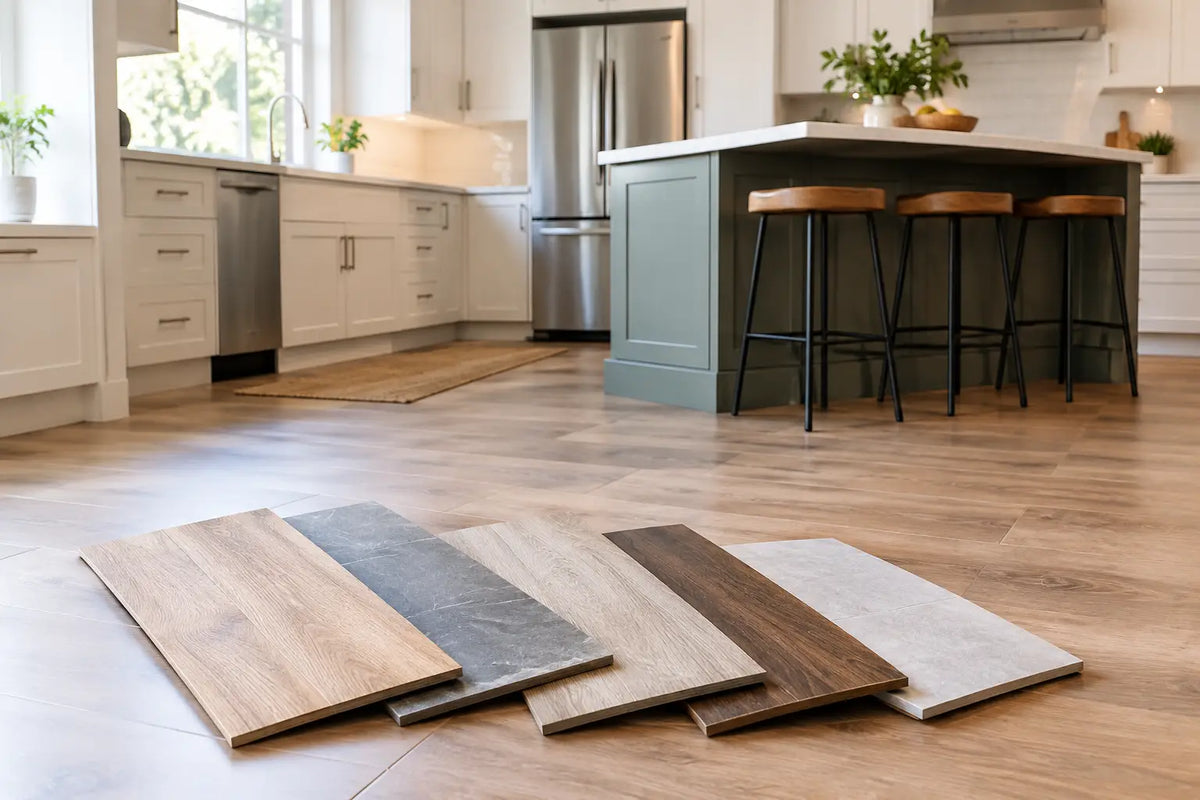
A kitchen floor gets tested before breakfast is over. Water lands beside the sink, chairs scrape back from the table, groceries get dropped, and pets cross the room with wet paws. The best kitchen flooring is not simply the surface with the most dramatic showroom look. It is the one that suits how your household cooks, cleans, entertains, and lives - while delivering the right value for the project.
For many homeowners, the strongest choices come down to waterproof luxury vinyl, engineered hardwood, and laminate. Each can create a finished, durable kitchen, but they perform differently around moisture, maintenance, comfort, and long-term expectations. A clear comparison makes it easier to spend wisely, especially when first-quality factory-closeout flooring creates an opportunity to buy a higher-caliber look for less.
What the Best Kitchen Flooring Must Handle
Kitchen flooring has a tougher assignment than flooring in a formal living room. It should stand up to occasional spills, frequent traffic, rolling stools, food preparation, and regular cleaning. It also needs to work visually with cabinets, counters, wall color, and nearby flooring.
Start by considering your daily routine. A busy family kitchen with children and pets usually benefits from a waterproof, forgiving surface. A carefully renovated kitchen in a home where natural materials are central to the design may be a better fit for engineered hardwood. For a refresh where budget, appearance, and straightforward installation matter most, modern laminate can be a smart contender.
The right choice also depends on whether the kitchen is part of an open floor plan. Continuing the same flooring through the kitchen, dining room, and living areas can make the home feel larger and more cohesive. That often changes the decision: you are selecting a floor for the entire visual field, not just one room.
Waterproof Luxury Vinyl: The Practical Favorite
Luxury vinyl plank and luxury vinyl tile are among the most practical choices for active kitchens. Quality waterproof vinyl is designed to handle everyday moisture exposure, so a spilled drink or a wet area near the dishwasher is less likely to become a flooring emergency. It is also comfortable underfoot compared with many hard surfaces, a welcome benefit for anyone who spends time cooking.
Today’s premium luxury vinyl flooring offers convincing wood visuals in colors ranging from clean blonde oak to warm brown tones and deeper contemporary shades. Wider planks and low-gloss finishes can give a kitchen the relaxed, natural character homeowners often want without making them worry over every splash.
Durability still varies by product, so look beyond color alone. The wear layer, core construction, locking system, texture, and manufacturer installation requirements all matter. For rentals, flip projects, and busy family homes, waterproof vinyl can offer an especially strong balance of appearance, resilience, and maintenance simplicity.
Luxury vinyl is not automatically the answer for every kitchen. Homeowners who want genuine wood grain, natural variation, and the ability to create a more traditional hardwood-led design may prefer engineered hardwood. But for a kitchen where water resistance is the leading concern, luxury vinyl is difficult to overlook.
When waterproof vinyl makes the most sense
Choose waterproof luxury vinyl when you want wood-inspired style with dependable everyday moisture protection, easy cleaning, and a floor that can transition naturally into adjacent rooms. It is particularly practical for homes with pets, young children, frequent entertaining, or a rental-property maintenance plan that needs to stay manageable.
Engineered Hardwood: Real Wood With More Flexibility
Engineered hardwood gives a kitchen the warmth and authenticity that only real wood can provide. Its layered construction offers greater dimensional stability than traditional solid hardwood in many settings, making it a thoughtful option for kitchens and open-concept homes when the product is approved for the application and installed correctly.
A wood kitchen floor has a character that printed visuals cannot fully duplicate. Knots, mineral streaks, grain movement, and tonal variation make each plank feel individual. Engineered hardwood can also support a more elevated, enduring design direction, whether the goal is a traditional kitchen, a refined transitional renovation, or a warm modern space.
The trade-off is that wood requires more attentiveness around water. Spills should be wiped up promptly, and standing water is never a good match for hardwood. Protective pads beneath chair legs, entry mats in nearby exterior-door areas, and manufacturer-approved cleaning methods help preserve the finish.
Engineered hardwood can be an excellent kitchen choice for homeowners who value natural materials and are comfortable with normal wood-floor care. It may also be a strategic choice when continuity through living spaces is a design priority. Just be realistic: a household that regularly leaves puddles near the sink may be better served by waterproof vinyl.
Laminate: A Value-Focused Option With Style
Laminate flooring has changed dramatically from the products many homeowners remember. First-quality laminate can offer detailed wood visuals, textured surfaces, and plank formats that create a polished kitchen update without pushing the budget as far as some premium alternatives.
For kitchens, the key question is water resistance. Some laminate products offer improved protection against everyday spills, but performance depends on the individual construction and the conditions of the installation. Read product specifications carefully and follow the stated cleaning and installation guidance. Laminate should not be treated as interchangeable with a fully waterproof floor.
When selected for the right household, laminate can be a strong option for a remodel, rental turnover, or investment property where appearance and project value are essential. It is also worth considering for shoppers who want the look of wood but prefer a surface that is straightforward to maintain. Choosing a quality product and protecting it from prolonged water exposure are the deciding factors.
How to Compare Kitchen Flooring Before You Buy
The fastest way to narrow your options is to compare floors against the conditions in your own kitchen, not against a generic ranking. Ask what happens at the sink, how often people come in from outdoors, whether pets live in the home, and how connected the kitchen is to other rooms.
Bring home a sample when possible and look at it next to cabinet doors, countertop materials, and paint colors throughout the day. Lighting can shift a floor from warm to cool, and an expansive open room can make a color read differently than it did in a small showroom display. Room visualization tools can also help you assess plank width, tone, and pattern before placing an order.
Do not calculate only the square footage of the room. Flooring orders need to account for cuts, layout, closets or adjoining areas where applicable, and the direction the planks will run. A flooring specialist can help you think through quantity and transitions before purchase, which is far easier than trying to locate more material after an installation begins.
Four details worth checking
- Water performance: Confirm whether the product is waterproof, water-resistant, or simply suitable for certain low-moisture applications.
- Wear and finish: Review the surface durability features and choose a finish level that fits the amount of traffic and activity in the space.
- Installation requirements: Check subfloor, underlayment, acclimation, and room-condition requirements before committing to a product.
- Available inventory: If you find a first-quality closeout you love, verify the available quantity for the full project, including an appropriate allowance for cuts.
Why Factory-Closeout Flooring Can Change the Decision
A closeout price should not mean settling for a lower-grade floor. Factory closeouts, discontinued colors, end-of-run inventory, overstock, and special buys can all be first-quality products. The value comes from how the flooring is sourced, not from a compromise in the product’s original quality standard.
That distinction matters in a kitchen, where shoppers often feel forced to choose between the look they want and the budget they have. A factory-closeout opportunity may put a premium waterproof vinyl visual or an attractive engineered hardwood collection within reach. Inventory can change, so it is wise to confirm that enough flooring is available before finalizing your design, especially for larger homes and commercial or multi-unit projects.
At Factory Flooring Liquidators, shoppers can compare first-quality hardwood, luxury vinyl, waterproof flooring, and laminate with knowledgeable guidance from a DFW-based team that also serves customers nationwide. The goal is not to push one material into every kitchen. It is to help you match the product to the room, the property, and the budget with confidence.
A great kitchen floor should make daily life easier while helping the entire room look finished. Choose the surface that fits your real habits, then take advantage of a first-quality closeout when the color, performance, and available quantity line up with your project.