
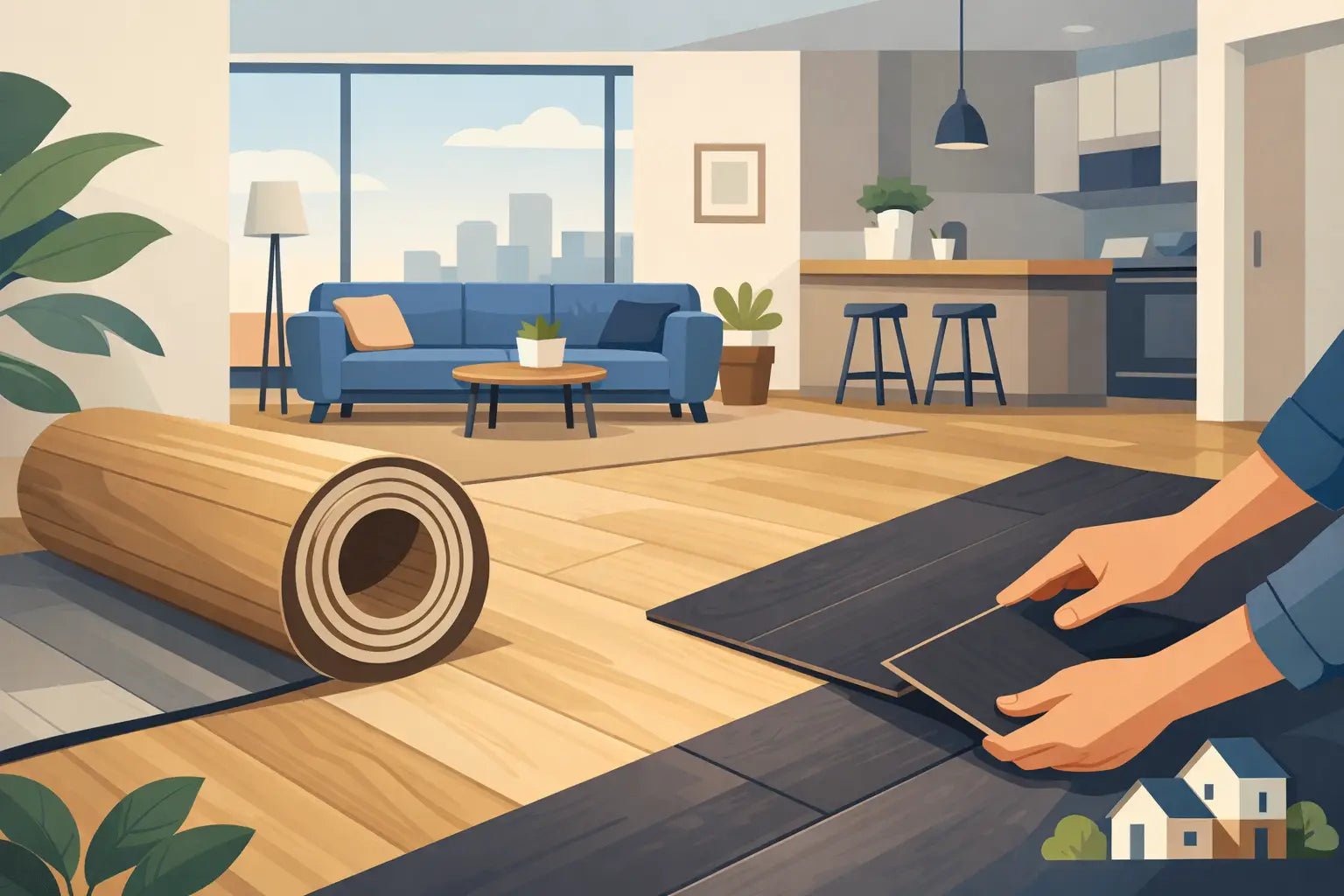
A rental floor usually gets judged in two ways - how it looks on move-in day and how it holds up after a few lease cycles. That is exactly why the best vinyl flooring for rentals is not simply the cheapest box on the shelf. It needs to survive foot traffic, furniture drag, pet claws, wet shoes, quick turnovers, and the occasional tenant who is harder on interiors than they promised.
For most landlords, property investors, and remodelers, vinyl is the sweet spot. It gives you the look buyers and renters want, better moisture resistance than many other hard-surface options, and a lower total replacement risk than materials that chip, stain, or require more upkeep. But not every vinyl product belongs in a rental. Some save money upfront and cost more later.
What makes the best vinyl flooring for rentals?
The right answer starts with durability, not color. If a floor scratches too easily, separates at the seams, or shows wear after one tenant, it stops being a bargain. The best rental vinyl flooring balances four things at once: wear resistance, water protection, easy maintenance, and a clean, updated look that appeals to the widest range of renters.
That usually points landlords toward luxury vinyl plank, often called LVP, or luxury vinyl tile, known as LVT. In most rental settings, plank-style vinyl wins because it gives you a strong wood-look finish without the maintenance demands of real hardwood. It also works across living rooms, bedrooms, kitchens, and often bathrooms, which helps create a more consistent look throughout the unit.
Sheet vinyl can still make sense in very price-sensitive projects, especially in smaller spaces or utility areas, but it generally does not deliver the same premium appearance. Peel-and-stick products may seem attractive for quick installs, yet they are often a weak choice for long-term rental performance unless the application is very light-duty. If you are trying to reduce turnover costs, better construction matters.
Wear layer matters more than most shoppers think
If you compare products long enough, you will notice that one of the biggest differences is the wear layer. This is the protective top surface that takes the abuse before the printed design does. In a rental, that layer is not a minor detail. It is one of the clearest indicators of whether the floor will still look respectable after repeated use.
For lighter-duty rentals, a 12 mil wear layer can work, especially in bedrooms or lower-traffic units. For stronger all-around performance, many landlords do better with 20 mil. That extra protection can pay off fast in family rentals, pet-friendly properties, downstairs units, and homes where kitchens and living spaces take daily impact.
There is a trade-off, of course. Higher wear layers usually cost more. But replacing a floor early is almost always more expensive than buying a better one the first time. If the goal is value, not just a low invoice, wear layer is where cheap flooring often reveals its real cost.
Waterproof vinyl is usually the smarter rental choice
A rental property does not get treated like an owner-occupied home. Water spills sit longer. Wet towels hit bathroom floors. Ice melts by the entry. Tenants may not notice a dishwasher leak right away. That is why waterproof or highly water-resistant vinyl is often the safer pick.
In kitchens, bathrooms, laundry spaces, and entry areas, waterproof performance helps protect not only the floor itself but also the subfloor underneath. That can reduce repair scope when something goes wrong. For landlords managing multiple units, fewer moisture-related callbacks can make a big difference over time.
This does not mean every rental needs the most expensive waterproof core on the market. It means the flooring should match the risk level of the property. In a one-bath apartment with steady tenants, a good water-resistant product may be enough. In family rentals, pet-friendly units, or properties with frequent turnover, waterproof construction is often worth the upgrade.
The best style for rentals is broad appeal, not trendy appeal
It is easy to over-shop color. Many owners get stuck debating bold tones, ultra-rustic textures, or high-contrast grain patterns when the better question is simpler: will this still look current in three to five years?
The best vinyl flooring for rentals usually lives in the middle. Medium-tone wood looks, light natural oak visuals, and muted greige-brown shades tend to perform well because they hide dust, work with a wide range of furniture styles, and photograph cleanly in listings. They also help units feel updated without pushing a design choice that limits renter appeal.
Very dark floors can show dust and scratches faster. Very light floors can reveal dirt and scuffs in busy units. Trend-heavy colors may date the property more quickly than you expect. A neutral, premium-looking plank is usually the safer investment.
Texture matters too. A low-gloss, lightly embossed finish often looks more realistic and does a better job masking everyday wear than a shinier surface. In rentals, subtle texture can be an advantage because it helps the floor keep its appearance between turnovers.
Click-lock vs glue-down for rental properties
Installation method affects both upfront cost and long-term maintenance. Click-lock vinyl is popular because it installs faster and can be a practical option for many renovation timelines. It is especially useful when speed matters and subfloor conditions are reasonably good.
Glue-down vinyl, however, has a strong case in rentals with heavier traffic or rolling loads. It can provide a firmer feel underfoot and may reduce movement in demanding settings. For apartments, multifamily units, or properties where durability under repeated use is the priority, glue-down deserves a serious look.
This is one of those areas where it depends on the project. A single-family rental refresh may benefit from the efficiency of click-lock. A harder-working unit with frequent turnovers may justify glue-down for the added stability. What matters is not choosing the most popular format. It is choosing the one that fits the property.
Price per square foot is only part of the value story
A lot of rental buyers shop flooring by the lowest square-foot price and stop there. That is understandable, but it is also where mistakes happen. A bargain floor that needs replacement after a short run is not actually a bargain.
Better value comes from first-quality materials that look more expensive than they are, perform well under rental conditions, and reduce future replacement cycles. That is why premium vinyl bought at liquidation pricing can be such a strong play for investors and remodelers. You are not settling for entry-level looks just to hit a budget. You are buying smarter.
This is also where expert support matters. If you are comparing core types, wear layers, plank widths, and installation methods across several units, the right guidance can keep you from overbuying in one room and underbuying in another. Factory Flooring Liquidators is built around that kind of practical value - premium flooring, aggressive pricing, and help choosing products that make sense for real projects, not showroom fantasy budgets.
Where vinyl works best in a rental
Vinyl earns its keep in almost every room. In kitchens and baths, moisture resistance is the clear advantage. In living rooms and hallways, durability and easier maintenance stand out. In bedrooms, vinyl gives owners a cleaner hard-surface option for tenants with allergies, pets, or a preference for low-maintenance flooring.
That said, the property type still matters. A higher-end rental may need a thicker, more realistic plank with stronger acoustic performance. A budget-conscious turnover may call for a practical but attractive product that upgrades the look without overspending. The best vinyl flooring for rentals changes slightly depending on the rent level, tenant profile, and expected wear.
A smart buying standard for landlords
If you want a simple filter, look for first-quality vinyl plank with a durable wear layer, water protection that suits the unit, and a neutral wood-look finish that will still make sense a few years from now. Avoid going so cheap that the floor becomes a repeat expense, and avoid paying for luxury features your rental will never use.
That middle ground is where the strongest returns usually show up. You want a floor that rents well, cleans easily, and does not create headaches after every move-out. Good vinyl can do all three.
The smartest rental upgrades are the ones that keep saving you money after installation, and flooring is one of the clearest places to get that right.