
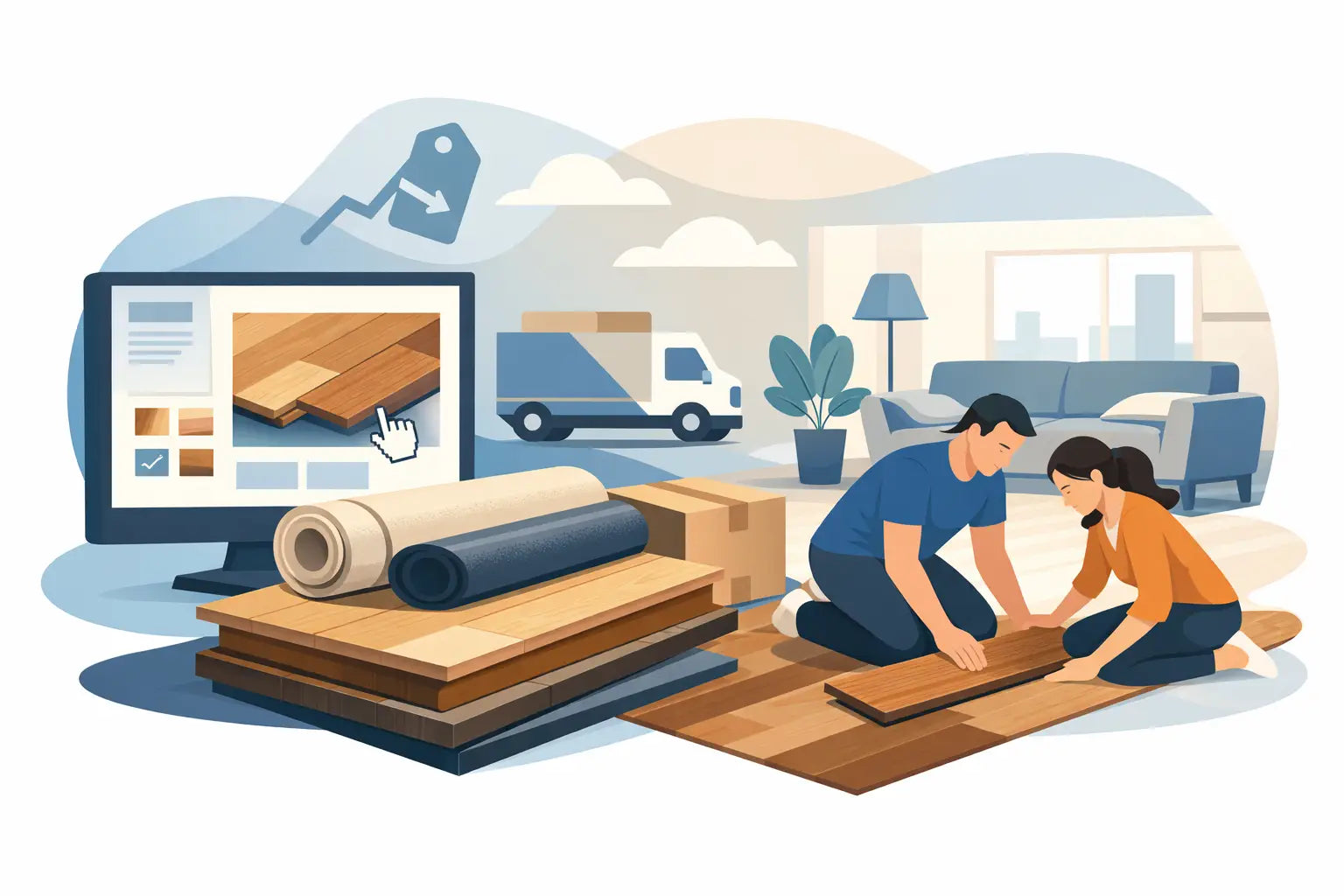
Sticker shock usually hits right after you fall in love with the floor. A sample board looks perfect under showroom lighting, the finish feels upscale, and then the quote lands. If you are shopping for premium flooring without showroom markup, that gap between what you want and what you are told to pay does not have to be the end of the conversation.
The truth is simple: high-end flooring and inflated retail pricing are not the same thing. A lot of buyers still assume premium means walking into a design showroom, paying for a polished sales environment, and accepting a heavy markup as part of the deal. That model works for the store. It does not always work for the homeowner, contractor, investor, or remodel buyer trying to get first-quality materials at a price that makes sense.
What premium flooring without showroom markup really means
This is not about settling for cheap flooring and hoping it holds up. Premium flooring without showroom markup means buying better material through a more efficient sales model. Instead of paying extra for showroom overhead, layered distribution costs, and traditional retail margins, you are paying closer to the real value of the product.
That matters because flooring is one of the biggest visual and budget decisions in any space. Whether you are updating a single room, finishing a rental, improving a flip, or remodeling an entire home, the floor sets the tone. It affects durability, maintenance, resale appeal, and how finished the room feels. Overpaying for that category can throw off the entire project budget fast.
A smarter buying path gives you access to first-quality hardwood, vinyl, and laminate at pricing that feels much closer to wholesale than showroom retail. The product still needs to perform. The finish still needs to look right. The construction still needs to hold up. The difference is that the price is no longer inflated just because the sales setting is.
Why showroom pricing gets so high
Traditional flooring retail comes with costs that have very little to do with the plank or tile itself. Large display spaces, commissioned sales teams, staging, local inventory handling, and multiple markup layers all affect the final number. By the time a customer sees the product, the price often reflects the business model as much as the flooring.
That is why two floors with similar specs can have very different price tags depending on where they are sold. One may be positioned as a premium showroom product. Another may be offered through a direct-to-consumer or liquidation-focused channel that cuts out much of the retail padding.
This does not mean every inexpensive floor is a bargain, and it does not mean every expensive floor is overpriced. It means buyers should look past presentation and focus on measurable value. Wear layer, finish quality, core construction, species, thickness, locking system, water resistance, and warranty terms tell you more than a showroom setup ever will.
How to shop for premium flooring without showroom markup
The best flooring buyers do not start with a store type. They start with project needs. A busy family home, a rental property, a luxury primary bedroom, and a light commercial update all call for different strengths.
For hardwood, the main question is often whether you want the character and long-term appeal of real wood enough to take on the added cost and maintenance that can come with it. Premium hardwood brings warmth and resale appeal that many buyers still prefer. It can be a strong choice for main living spaces, bedrooms, and homes where authentic material matters. But if moisture, pets, or heavy wear are major concerns, vinyl may offer a better practical return.
Luxury vinyl earns its place by handling real-life traffic better than many shoppers expect. Good vinyl flooring can deliver the upscale look people want with easier upkeep and stronger water resistance. Not every vinyl product is built the same, though. If you want premium results, pay attention to construction quality and wear layer, not just color and price.
Laminate sits in an interesting middle ground. It can be an excellent value when you want a durable floor with a clean, high-end visual at a more aggressive price point. Modern laminate has improved a lot in appearance and performance, but it still depends on the specific product and the room. Some spaces call for more water resistance than laminate can comfortably provide.
Where value-focused buyers gain the advantage
The biggest advantage is not just lower pricing. It is better allocation of your budget. When you avoid showroom markup, you can often move up in quality without moving up in total spend.
That might mean choosing a stronger wear layer in vinyl, a more attractive hardwood finish, or enough square footage to complete another room now instead of later. It might also mean staying on budget while still selecting a floor that looks right for the home and holds up to daily use.
For contractors and investors, this matters even more. Margins matter. Project timelines matter. So does repeatability. If you can source premium-looking, first-quality flooring at liquidation pricing, you improve the finish level of the job without eating into the numbers that make the project work.
For homeowners, the win is usually emotional and financial at the same time. You are not compromising the look of your space just to keep costs under control. You are buying smarter.
What to check before you buy
Price gets attention first, but flooring satisfaction usually comes down to fit. The right product has to match the room, the subfloor, the traffic level, and your maintenance expectations.
Start with use case. A guest room has different demands than a kitchen, entryway, or busy living area. Then check the actual specs. Thickness, wear layer, plank dimensions, edge detail, finish type, and installation method all affect how the floor performs and how premium it feels once installed.
It is also worth checking whether the seller can help reduce uncertainty before purchase. This is where online buying has improved dramatically. A room visualizer, clear product information, and real guidance can replace a lot of the guesswork shoppers used to associate with buying flooring outside a showroom. You are not just looking for low prices. You are looking for confidence.
Delivery support matters too. Flooring is not a casual parcel purchase. Nationwide delivery makes premium products accessible well beyond a local store footprint, but reliability still counts. A good supplier makes the process feel controlled, not risky.
Premium flooring without showroom markup is not the same as bargain-bin flooring
This is where some shoppers hesitate, and it is fair. The phrase liquidation pricing can sound like a compromise if you do not understand the model. But first-quality liquidation inventory is not the same as low-grade, damaged, or throwaway stock.
The goal is not to push buyers into lesser flooring. The goal is to give them access to better flooring at a more aggressive price. That distinction matters. If the product quality is there, the value is real.
Factory Flooring Liquidators is built around that idea - premium hard surface flooring, direct-to-consumer pricing, and practical buying support that helps customers make the right call without paying traditional showroom premiums. That combination speaks to how modern flooring shoppers actually buy: online, price-aware, quality-sensitive, and ready to move when the value is obvious.
Who benefits most from this buying model
If you are renovating on a fixed budget, this approach gives you more control. If you are upgrading for resale, it helps you improve the look of the property without overspending in a category where buyers notice quality but rarely reward overinvestment dollar for dollar.
If you manage rentals or complete multiple projects a year, the advantage is even clearer. You need flooring that looks strong, installs efficiently, performs reliably, and supports your numbers. Paying showroom markup cuts against all of that.
Even design-conscious buyers benefit here. A better buying model does not remove style from the equation. It simply removes some of the artificial cost around it. You can still choose a floor that elevates the room. You just do it with a sharper eye on value.
The smart move is not to ask whether a floor came from a showroom. It is to ask whether the quality, price, and support line up with the project in front of you. When they do, premium flooring becomes a much better buy than most shoppers think.