
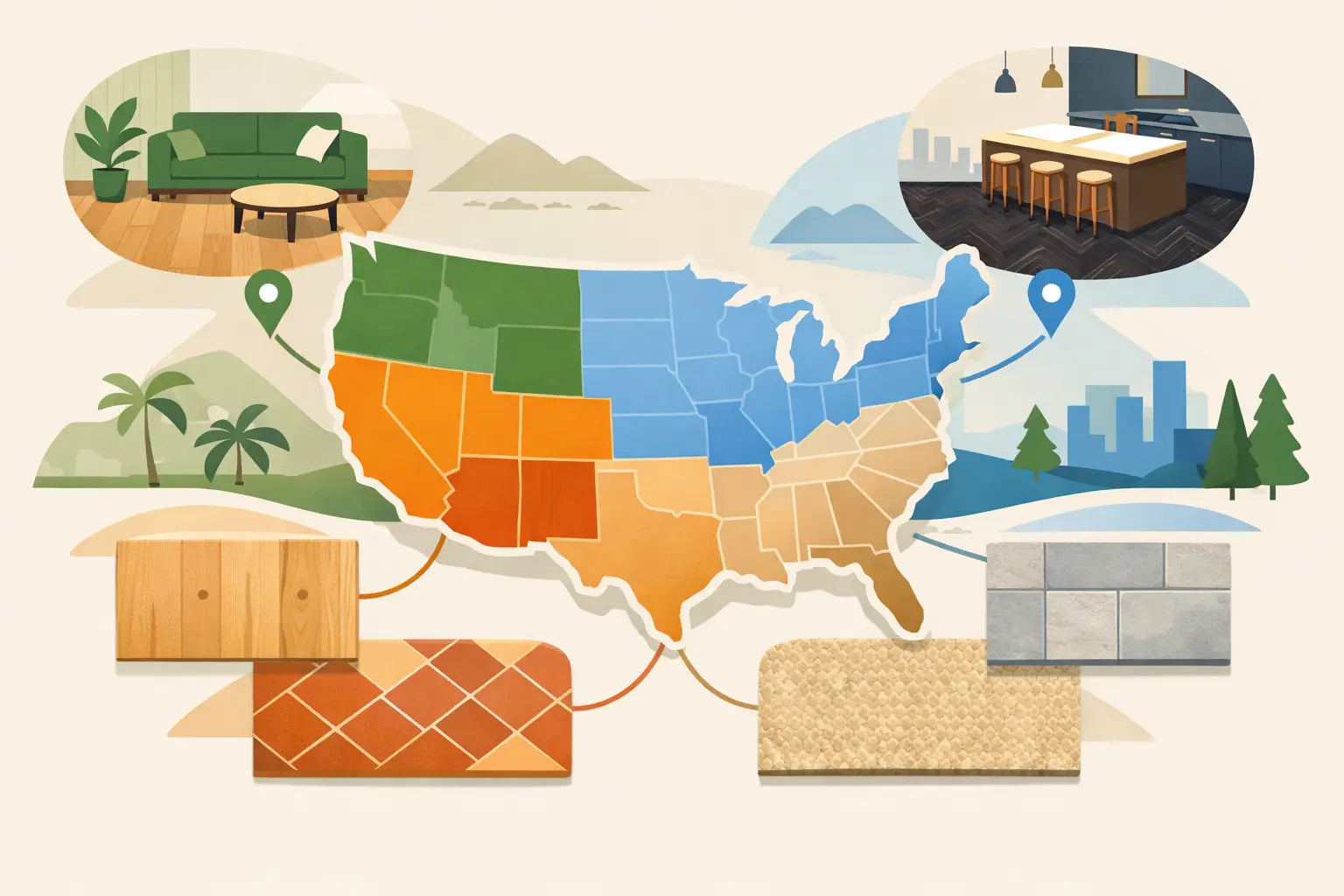
A beach house in California, a brownstone outside Boston, and a new-build in Dallas can all look current - and still call for very different floors. The biggest flooring trend differences between east coast, west coast, and southern homes come down to more than style. Climate, architecture, resale expectations, and day-to-day wear all shape what actually works.
For homeowners, investors, and remodelers, that matters because the wrong trend can get expensive fast. A floor that looks perfect on social media may not hold up to coastal humidity, muddy winters, or year-round heat. The smarter move is choosing a look that fits the region and a material that delivers premium performance without premium showroom pricing.
The biggest flooring trend differences between east coast, west coast, and southern homes
At a high level, East Coast flooring trends lean classic and architectural. West Coast homes usually push lighter, cleaner, more relaxed finishes. Southern homes tend to balance warmth, comfort, and practicality, especially in spaces that deal with heat, humidity, pets, and heavy traffic.
That does not mean every East Coast home needs dark oak or every West Coast remodel needs pale wide planks. Regional trends are really a mix of local climate, design history, and buyer preference. If you are updating a primary home, rental, or flip, those details affect both your short-term satisfaction and long-term value.
East Coast homes favor tradition with a polished edge
On the East Coast, flooring trends often reflect older housing stock and more formal interiors. Think colonial homes, townhouses, historic renovations, and suburban properties where buyers still respond to timeless finishes. Hardwood remains a strong visual benchmark here, especially in medium to rich brown tones that feel grounded and established.
That is why warmer oaks, classic hickory looks, and refined matte finishes continue to perform well in many East Coast projects. There is usually less interest in flooring that looks overly beachy, gray-washed, or ultra-rustic. Buyers often want character, but they also want it to feel clean and finished.
Seasonal weather also changes the equation. Snow, salt, wet boots, and fluctuating indoor humidity can be tough on floors. In homes where real wood may require more caution, high-quality laminate and waterproof vinyl become practical substitutes. They can deliver the visual depth of hardwood while reducing stress in entryways, kitchens, basements, and busy family zones.
West Coast homes lean light, natural, and understated
West Coast flooring trends usually move in a different direction. Homes across California and the broader coastal market tend to favor openness, natural light, and a more casual indoor-outdoor feel. That shows up in flooring through lighter wood visuals, softer grain patterns, and finishes that make rooms feel airy rather than formal.
Blonde oak looks, light natural beige tones, and wide planks are especially common in this style. The goal is not a high-gloss statement floor. It is a relaxed, premium base that lets the architecture and sunlight do the work. Matte and low-sheen finishes tend to fit better than anything too polished.
There is also a strong preference for visual simplicity. On the West Coast, homeowners often gravitate toward floors that feel organic and modern at the same time. Heavy red undertones, very dark stains, and busy hand-scraped textures can feel out of step with that look. A cleaner board pattern and a calmer color story usually win.
That said, light floors have trade-offs. They can brighten a room and feel current, but some pale finishes show dust, pet hair, and scuffs faster than buyers expect. That is where product choice matters. A first-quality luxury vinyl plank or durable laminate with a realistic oak visual can give you the regional look without the maintenance headache.
How Southern flooring trends differ from East Coast and West Coast styles
Southern homes usually sit in the middle stylistically, but they are often the most demanding from a performance standpoint. Heat, humidity, kids, pets, open floor plans, and high-traffic living all put pressure on flooring choices. In many Southern markets, buyers want a floor that looks warm and upscale but can also handle real life.
That is why waterproof and low-maintenance hard surface flooring is such a strong fit across the South. Luxury vinyl plank has become a major player because it checks several boxes at once. It handles moisture better than traditional hardwood in many settings, it works well in active households, and it delivers the wood-look style that buyers still want.
Color-wise, Southern homes often favor medium natural tones over the darkest East Coast looks or the palest West Coast ones. Warm oak, honey brown, soft taupe, and balanced greige can all work, depending on the home. These shades feel inviting without going too formal or too stark.
There is also more flexibility in home style. Southern properties range from traditional brick homes to modern farmhouses to newer suburban builds, so the flooring trend is less about one strict look and more about broad appeal. In practical terms, that means durable hardwood, vinyl, and laminate all have a place, as long as the finish feels current and the installation suits the environment.
Material trends matter as much as color trends
Regional style gets most of the attention, but material selection is where buyers either protect their investment or create future problems. Hardwood still carries premium appeal in every region, but the best fit depends on layout, moisture exposure, and household traffic.
On the East Coast, hardwood often remains the top choice for main living areas where classic resale value matters most. On the West Coast, hardwood is also strong, especially in design-forward remodels, but lighter visuals tend to lead. In Southern homes, hardwood is still popular, though many buyers shift toward vinyl plank or laminate in moisture-prone or high-activity areas for a more worry-free result.
That does not make one category better than another across the board. It means the smart buy is the floor that gives you the right regional look, the right durability, and the right price point. Paying showroom-level pricing for a product that does not fit your environment is not an upgrade. It is just an expensive mismatch.
What shoppers should get right before buying
If you are comparing floors for a remodel, flip, rental, or new room, regional trend awareness should guide your shortlist, not control it completely. A classic East Coast finish can still look fantastic in Texas if the home style supports it. A light West Coast-inspired floor can work in the South if you want a cleaner, more modern interior. The key is matching the floor to the home, the climate, and the level of maintenance you are actually willing to live with.
This is where buyers save money by being selective instead of reactive. Start with the room conditions. Then look at your local resale expectations. After that, narrow by color tone and plank style. Once you know the visual direction, compare premium hardwood, vinyl, and laminate options that give you first-quality performance without inflated markup.
A room visualizer can help close the gap between trend inspiration and real-world confidence. Seeing how a warm oak or light natural plank looks in your own space is often the fastest way to avoid a costly mistake. Expert support matters too, especially when you are deciding between hardwood for appearance, vinyl for waterproof durability, or laminate for budget-friendly wear resistance.
For value-focused buyers, this is the sweet spot. You do not need to overspend to get a premium regional look. You need the right material, the right finish, and pricing that makes sense. That is exactly why more homeowners and project buyers are turning to sources like Factory Flooring Liquidators for first-quality hard surface flooring at liquidation pricing.
The best regional trend is the one that still looks right after the boxes are opened, the furniture is back in place, and real life starts walking across it.