
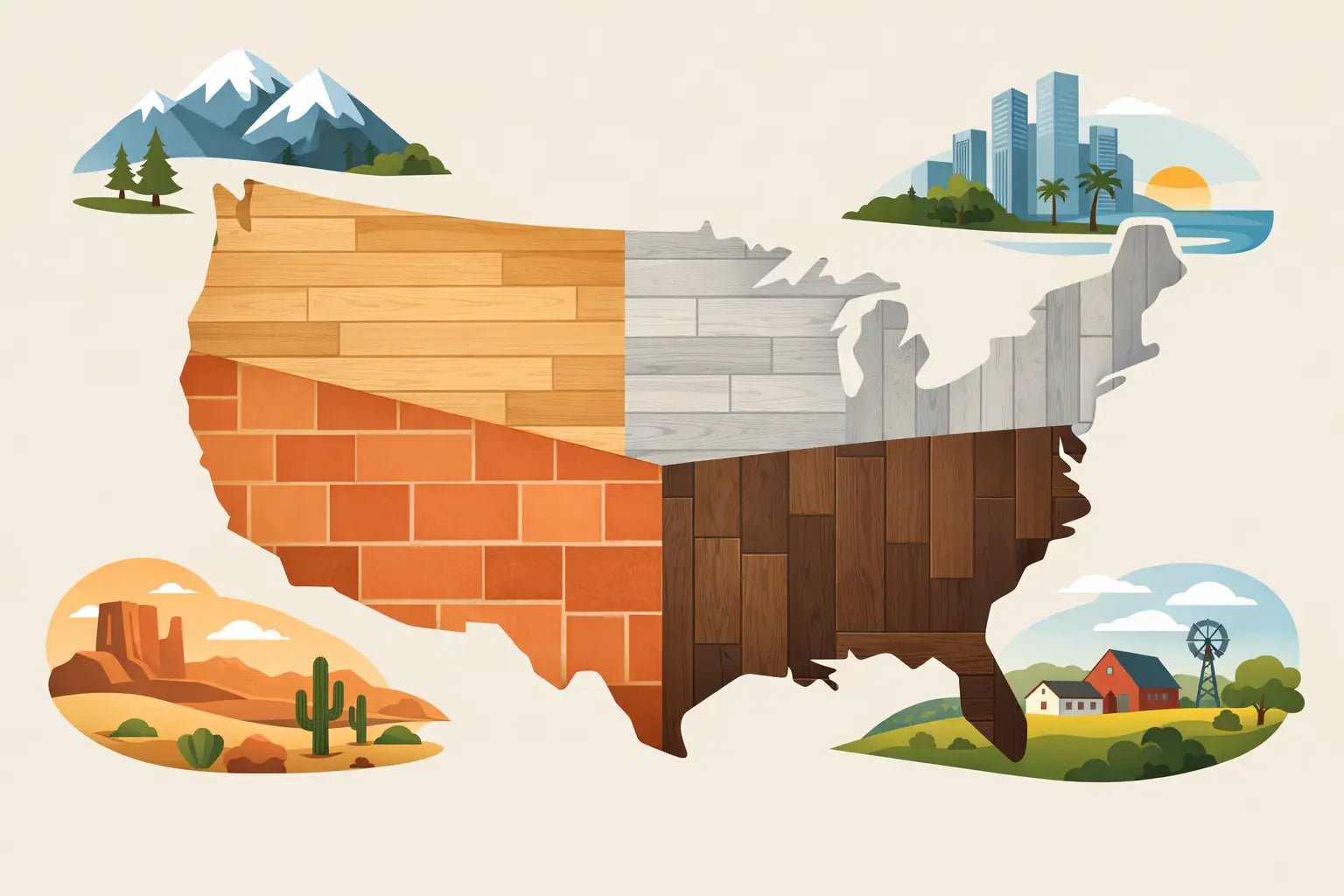
A beach house in Florida, a ski home in Colorado, and a rental in Phoenix should not be shopping the same flooring aisle. Climate, style, and lifestyle: why flooring trends differ across U.S. regions comes down to real-world performance, local design expectations, and how people actually live in their homes. If you are buying flooring for your own home, a flip, or a rental, regional trends are not just about taste. They affect durability, maintenance, resale appeal, and whether your money is going into the right product.
Climate, style, and lifestyle: why flooring trends differ across U.S. regions
Flooring is one of the few design decisions that has to look good and take a beating. In some parts of the country, the biggest issue is humidity. In others, it is tracked-in snow, desert dust, heavy sun exposure, or nonstop foot traffic from indoor-outdoor living. What sells well in one market may be a poor fit in another, even if it is a premium product.
That is why smart buyers look past national trend headlines. Wide-plank white oak may be popular on social media, but if you are outfitting a busy Gulf Coast property with high moisture exposure, rigid core luxury vinyl plank may be the better value. The best flooring choice is not just stylish. It fits the region, the property, and the budget.
The South and Southeast: moisture changes the conversation
In the Southeast, flooring has to deal with heat, humidity, and long cooling seasons. Homes in Florida, Georgia, the Carolinas, and along the Gulf Coast often lean toward hard surface products that can better handle moisture and active indoor-outdoor traffic. That is a big reason vinyl flooring performs so well in these markets.
Luxury vinyl plank is especially popular because it offers the wood-look style many buyers want without the same sensitivity to moisture as traditional solid hardwood. It works in full-time residences, vacation homes, and rental properties where durability matters just as much as appearance. Laminate can also make sense in certain dry interior spaces, but in moisture-prone regions, the details matter. Product construction, subfloor conditions, and installation quality all play a role.
Style also shifts in the South. Lighter tones, natural oak visuals, and coastal-inspired finishes tend to do well because they keep spaces feeling open and cooler. That does not mean dark floors never work. It means regional preference often favors floors that reflect more light and feel easygoing rather than formal.
The Northeast and Upper Midwest: weather brings wear and tear
Snow, slush, salt, and mud make flooring selection more practical in the Northeast and colder Midwest markets. Here, the floor by the front door sees more abuse than the floor in many warmer regions sees all year. Buyers in these areas often prioritize scratch resistance, water resistance, and easier cleanup.
This is where the trade-offs become clear. Hardwood still carries strong appeal in traditional homes and higher-end renovations, especially in historic markets where buyers expect authentic wood. But not every hardwood product is ideal for every room. Engineered hardwood can be a smarter move than solid hardwood in spaces where seasonal humidity swings are a concern. It delivers a premium look while offering more dimensional stability.
Vinyl and laminate are also strong choices in northern markets, especially for basements, mudrooms, family homes, and investment properties. A good laminate floor can deliver serious visual value at a lower price point, while waterproof or water-resistant vinyl can reduce worry in high-traffic zones. For many buyers, that balance of appearance, performance, and price is what wins.
The West and Southwest: dry air, sun, and a different look
In states like Arizona, Nevada, Utah, and parts of California, flooring trends often reflect a mix of climate performance and architectural style. Dry air and strong sunlight can influence material behavior and color choice. Floors that hold up well under UV exposure and daily dust are often favored, especially in homes with large windows and open-plan layouts.
The aesthetic is different too. Southwestern and Western interiors often lean into warmer neutrals, earthy tones, and natural textures. Blonde woods work in many spaces, but so do medium browns and greige tones that connect with desert palettes and modern organic design. Flooring in these markets often needs to complement stone, tile, and minimalist finishes rather than compete with them.
Hardwood can work beautifully in these regions, especially in climate-controlled interiors, but buyers should still think about expansion, contraction, and sun-fading. Vinyl and laminate can offer a more budget-friendly path to the same visual style, particularly for larger square footage projects where controlling costs matters.
The Pacific Northwest: moisture and modern taste
The Pacific Northwest has its own formula. Rainy conditions and a strong preference for clean, modern, natural interiors create a market where practical flooring and understated design go hand in hand. Buyers often want floors that look refined but not flashy.
That helps explain the popularity of matte finishes, medium natural wood looks, and cooler neutral tones. Engineered hardwood can be a strong contender in many homes because it brings authentic wood character with better stability than solid hardwood. At the same time, premium vinyl remains highly attractive for households that want easier maintenance and stronger water resistance.
In this region, trend-conscious buyers still tend to be practical. They want texture, realism, and quality, but they usually do not want a floor that feels delicate or high-maintenance. That is where first-quality hard surface flooring at liquidation pricing becomes especially compelling. You can get the visual upgrade without overpaying for a showroom experience.
Lifestyle often matters as much as geography
Regional trends are real, but zip code alone does not decide the best floor. A downtown condo, a suburban family home, and a short-term rental in the same city may need completely different products. Households with kids, dogs, pool access, or constant turnover tend to prioritize durability and easier upkeep over prestige materials.
This is why luxury vinyl plank continues gaining ground across the country. It solves a lot of problems at once. It gives buyers the wood-look they want, offers strong day-to-day resilience, and often costs less than hardwood. For investors, landlords, and remodelers working on timelines and margins, that is not a small advantage.
Laminate has also re-entered the conversation in a bigger way than many shoppers expect. Better visuals, improved wear layers, and competitive pricing make it a smart option for bedrooms, living spaces, and lower-moisture areas where buyers want style without stretching the budget. Hardwood still has a strong place, especially when authenticity, resale perception, and long-term appeal matter most. But it is no longer the default answer for every home.
How smart buyers use regional trends without getting trapped by them
The best approach is to treat regional flooring trends as signals, not rules. If a product category dominates a region, there is usually a practical reason behind it. That said, every project has its own priorities. A homeowner may choose engineered hardwood in a humid market because the design payoff is worth it. A rental owner may skip hardwood in a luxury-heavy market because the replacement risk does not pencil out.
What matters is buying with clear eyes. Think about the room, the subfloor, daily traffic, moisture exposure, maintenance expectations, and your exit strategy if resale or rental value is part of the equation. Then compare those needs against product quality and price. A premium first-quality floor bought at liquidation pricing can outperform a cheaper low-grade option in both looks and long-term value.
That is where decision support matters. Product photos alone do not always tell you enough, especially when color reads differently in different regions and lighting conditions. Tools like room visualization and expert guidance help narrow the gap between what looks good online and what works in the real world. For buyers comparing hardwood, vinyl, and laminate across markets, that kind of support can prevent expensive second-guessing.
Climate, style, and lifestyle: why flooring trends differ across U.S. regions for buyers today
The real takeaway is simple. Flooring trends differ across the U.S. because homes are used differently, weather hits differently, and buyers expect different things in different markets. A smart flooring purchase respects all three.
If you want the best value, do not chase trends in the abstract. Buy a floor that fits your region, your property, and your budget, then make sure you are getting premium quality without paying traditional retail markup. That is how you get a floor that looks right on day one and still makes sense years later.