
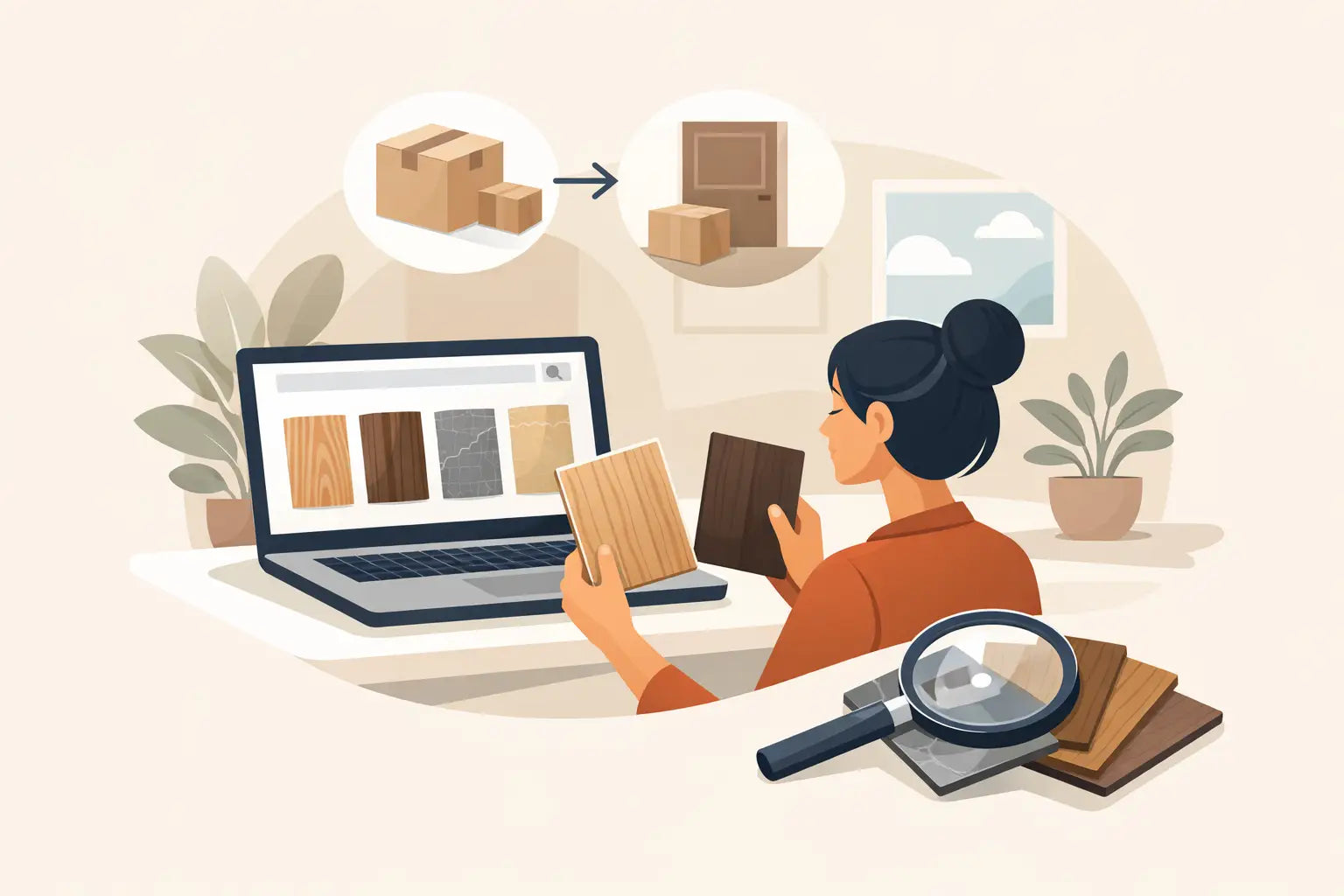
Choosing flooring from a screen is where expensive mistakes start. A product photo can look warm and natural on your phone, then show up too gray, too glossy, or too busy once it hits your actual room. That is exactly why smart shoppers buy flooring samples online before placing a full order. It is the fastest way to check color, texture, and overall quality in your own space, under your own lighting, with your own furniture.
For homeowners, landlords, flippers, and contractors, samples are not a nice extra. They are part of buying well. When you are investing in hardwood, vinyl, or laminate, a sample helps you make a decision based on reality instead of guesswork. That matters even more when you are shopping premium first-quality flooring at liquidation pricing, because the goal is not just to save money. It is to get real value without ordering the wrong floor.
Why buy flooring samples online before ordering
The biggest reason is simple: flooring behaves differently in real life than it does in product photography. Lighting changes everything. Natural daylight can pull out cooler undertones, while evening lamps can make the same floor read warmer or darker. A sample lets you see what actually happens in your kitchen, bedroom, office, or rental unit.
Texture is another factor that gets missed online. A floor may look smooth in photos but have heavy grain embossing when you touch it. That can be a great thing if you want a more natural wood look, but it can also feel too rustic for a cleaner, modern room. Samples close that gap fast.
Then there is scale. A plank image on a website does not tell you much about how a floor pattern will repeat across an entire room. A sample gives you a better sense of color variation, knot detail, surface finish, and how bold or quiet the visual will feel. It will not show the full room effect on its own, but it gives you enough to rule options in or out with much more confidence.
What to look for when you buy flooring samples online
Not all samples do the same job. The point is not just to confirm that the floor exists. The point is to test whether it works for your project.
Start with color, but go beyond the obvious. Look at undertones. Is the brown floor pulling red, gold, gray, or beige? Is the blonde option soft and natural, or does it lean yellow? These details matter once the floor is installed wall to wall.
Next, pay attention to finish. Matte, low-gloss, and higher-shine surfaces create very different results. A low-gloss floor usually hides dust and minor wear better, which is why many busy households and rental property owners prefer it. A glossier finish can look sharper at first, but it may show scratches, footprints, or pet hair more easily. There is no universal winner here. It depends on how the space is used and how much maintenance you are willing to tolerate.
Thickness and construction matter too, especially when comparing vinyl and laminate options. A sample can help you assess rigidity, feel, edge detail, and wear layer quality. It is not a substitute for reading specs, but it gives you a physical reference point. That is useful when you are deciding whether a product feels substantial enough for a primary residence, a flip, or a high-traffic rental.
How to compare samples at home the right way
The best sample strategy is to compare a few strong options, not a dozen random ones. Too many choices slow people down and create more confusion. In most cases, three to five samples is enough to see a clear winner.
Set each sample in the actual room where it will be installed. Check it in the morning, afternoon, and evening. Move it near windows, into darker corners, and next to cabinets, paint, countertops, and furniture. If you are redoing multiple rooms, test the sample where the flooring transition matters most.
A room visualizer can help narrow choices before samples arrive, especially if you want to preview overall style direction. But once you are down to real contenders, the physical sample should make the final call. Digital tools are useful for screening. Samples are what confirm the decision.
One practical tip: place the sample flat on the floor, then stand back. Looking at it in your hand is not the same as seeing it where it will live. If possible, put two samples side by side and remove the weakest one quickly. Decisive comparisons are easier than trying to rank several similar floors at once.
Buy flooring samples online for hardwood, vinyl, and laminate
Each flooring category benefits from sampling for a slightly different reason.
With hardwood, samples help you judge grain character, stain tone, and finish quality. Wood has natural variation, so one small piece will not represent every plank exactly. Still, it gives you a strong sense of the species, texture, and color family. That is enough to avoid buying a floor that feels too dark, too rustic, or too formal once it arrives.
With luxury vinyl, sampling is especially useful for checking printed realism and surface texture. Some vinyl floors do an impressive job mimicking natural wood. Others look flatter or more repetitive in person. If you want waterproof performance without sacrificing appearance, this is where a sample earns its keep.
With laminate, the sample helps you assess visual depth, embossing, and edge design. Modern laminate has come a long way, but quality differences still show up in the details. A sample can tell you whether the floor looks elevated enough for your space or reads more like a budget compromise.
The value angle most shoppers miss
People often focus on price per square foot and overlook the cost of getting the decision wrong. Returning flooring, delaying an install, reordering material, or living with a choice you regret is far more expensive than ordering samples first.
That is why buying samples is not a detour from saving money. It is part of saving money. The right sample process helps you avoid overpaying for showroom guesswork and underbuying on quality just because a listing looked cheap. When you can verify premium appearance and feel at home, it becomes much easier to recognize real value.
This matters even more when you are shopping liquidation-priced inventory. A strong deal is only a strong deal if the product fits the project. Samples protect the budget and the finish result at the same time.
What a confident online flooring purchase should include
If you are going to buy flooring online, the experience should reduce risk, not add to it. Samples are one part of that. Expert support is another. When questions come up about wear, installation, room suitability, or matching a style to your goals, clear guidance can save you from a costly wrong turn.
Nationwide delivery also matters more than people think. Once you find the right floor, you need confidence that the product can actually reach your job site or home without the usual local-store limitations. For buyers outside major showroom markets, online access is often the smartest way to get premium flooring at better pricing.
That is where a retailer like Factory Flooring Liquidators stands out. The value is not just in offering hardwood, vinyl, and laminate at aggressive liquidation prices. It is in helping customers narrow the field, review options realistically, and buy with more certainty.
When samples will not tell you everything
There are limits, and that is worth saying plainly. A sample cannot show full-lot variation across an entire order. It will not fully predict how a floor looks over 800 square feet versus one square foot. It also cannot answer installation questions on its own, especially if subfloor conditions, moisture, or room transitions are part of the project.
That does not make samples less useful. It just means they work best when paired with product specs and practical advice. The sample tells you how the floor feels and looks in your life. The technical details tell you whether it is the right fit for the job.
If you are deciding between a few strong contenders, that final bit of certainty usually comes from seeing the floor where it counts - in your room, under your light, beside the finishes you already have. The smartest flooring purchase is rarely the fastest click. It is the one that still feels right after the sample has been on your floor for a day or two.