
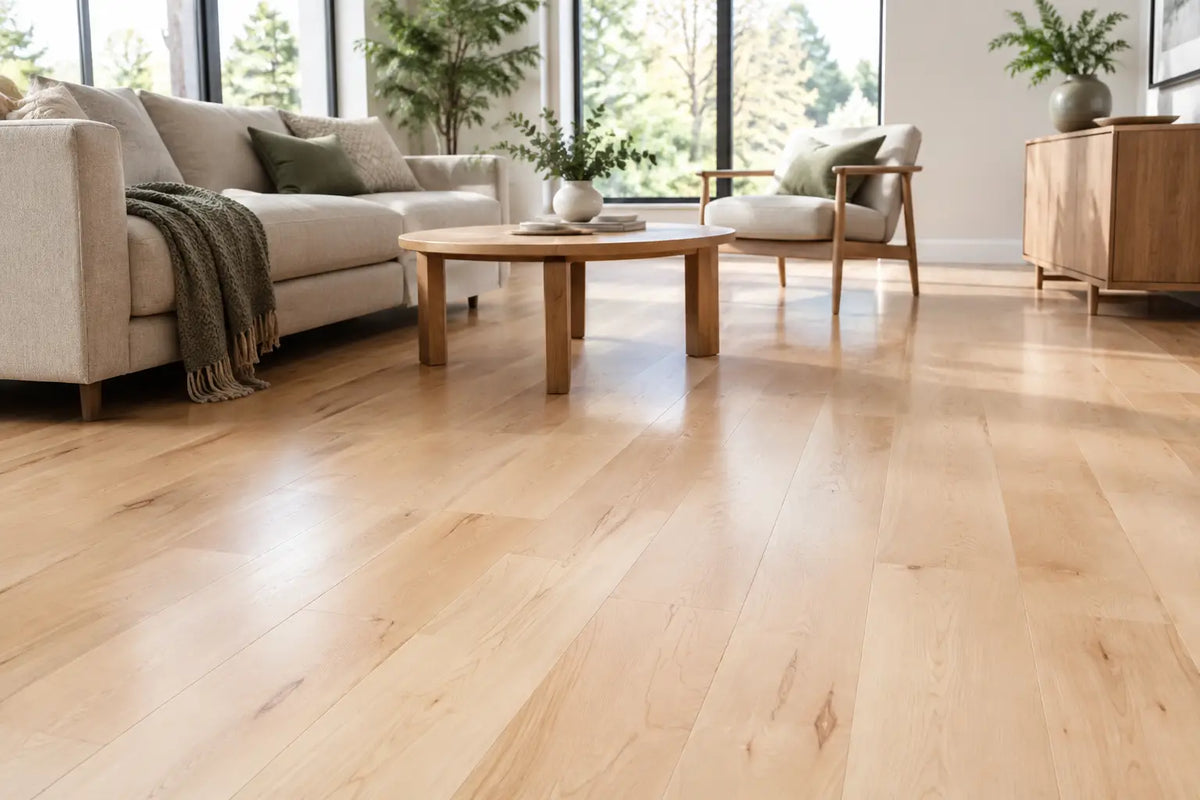
A floor can make a newly painted room feel finished - or make an expensive renovation feel slightly off. Birch hardwood flooring earns attention because it sits in a useful middle ground: naturally warm, visually clean, durable enough for everyday living, and often available at a better project value than more heavily marketed hardwood species.
For homeowners comparing real wood floors, the question is not whether birch is attractive. It is whether its grain, color variation, construction, and durability fit the way the room will actually be used. That is where a little product knowledge prevents a costly mismatch.
What Birch Hardwood Flooring Looks Like
Birch has a smooth, fine grain that gives hardwood flooring a more uniform appearance than strongly grained species. Its natural tones typically range from creamy pale wood to light tan and warm brown, sometimes with mineral streaks or subtle darker character. The result can feel understated and refined rather than busy.
That appearance gives birch flexibility. In a natural or light stain, it works especially well with bright contemporary interiors, relaxed transitional spaces, and Scandinavian-inspired rooms. Medium brown finishes bring more warmth without the dramatic grain movement some homeowners want to avoid. A darker finish can create a more formal look, although it may also make dust, pet hair, and minor surface marks easier to notice.
Birch accepts a range of finishes, but it does not always absorb stain as evenly as every wood species. That is not a defect. It simply means the exact look can vary from one product line to another. When shopping, judge the actual finished board rather than choosing based only on the species name.
How Durable Is Birch for Everyday Use?
Birch is a hardwood, but not every hardwood performs identically. It is generally a practical choice for bedrooms, living rooms, dining rooms, home offices, and hallways with normal household traffic. A quality finish, the board construction, and good care can matter as much as the species itself in day-to-day performance.
For an active household, be realistic about expectations. High heels, moving furniture, grit tracked in from outdoors, and large dogs can mark nearly any wood floor over time. Birch is not the choice to make if the goal is a floor that never shows wear. It is a good choice if you appreciate real wood, want a polished but approachable look, and are comfortable with the natural patina that develops through use.
The finish deserves close attention. A prefinished birch floor has its protective coating applied at the factory, which can simplify installation and deliver a consistent appearance from board to board. Texture also affects how a floor lives. Smooth boards show the wood clearly, while lightly textured or hand-scraped looks can make small everyday marks less noticeable.
For rentals, flips, or high-turnover projects, birch can be a smart fit when the finish and installation plan match the property. It offers a recognizable hardwood upgrade that can elevate the presentation of a home without automatically pushing the project toward the cost of premium designer species.
Solid or Engineered Birch: The Construction Matters
The phrase birch hardwood flooring can describe more than one construction. That distinction is essential before you order.
Solid birch hardwood is made from a single piece of wood. It is commonly chosen for traditional wood-floor installations in dry, climate-controlled interior areas. Depending on the product and its wear layer, solid flooring may offer refinishing potential in the future. It also responds more directly to changes in indoor humidity, so proper acclimation and installation conditions are important.
Engineered birch hardwood has a genuine birch wear layer over a layered wood core. It provides the authentic appearance of birch while offering greater dimensional stability in many applications. This can make it a strong option for remodels, wider-plank looks, and rooms where seasonal humidity changes are a concern. Refinishing capability varies by product, particularly by wear-layer thickness, so it should be verified before purchase.
Neither construction is automatically better. The right one depends on your subfloor, room conditions, desired plank width, installation method, and long-term plans for the property. A first-quality closeout can be an exceptional value in either format, but construction should always come before price in the decision process.
Where Birch Works Best
Birch performs beautifully in the dry, lived-in spaces where homeowners want warmth underfoot and a finished, permanent feel. It is often a natural choice for main living areas, bedrooms, dining rooms, offices, and upstairs spaces.
Use more caution in rooms exposed to standing water or frequent splashes. Wood flooring is not the right material for every wet-area application, regardless of species. Entry areas also require a practical plan for mats and regular cleaning, especially in homes where rain, mud, or abrasive grit comes in daily.
Color affects the practical side of ownership, too. Very dark birch can look striking, but it tends to reveal dust and fine scratches more readily. Very pale finishes can make a smaller home feel open and calm, though they may show dark debris. Mid-tone birch often provides the easiest balance for busy households because it hides the small visual evidence of daily life better than either extreme.
Why Birch Can Be a Strong Value Purchase
A beautiful hardwood floor does not have to be selected by species prestige alone. Birch offers a clean, versatile wood look that can support a high-end design without requiring the same budget as every popular hardwood option. When a first-quality overstock, discontinued line, end-of-run, or factory-closeout opportunity becomes available, the value can be even more compelling.
The key is understanding what liquidation means. A factory-closeout product may be priced advantageously because inventory is being cleared, a collection is changing, or a manufacturer has excess production. That does not mean the flooring is inferior. First-quality closeout flooring can offer the same construction, finish, and design standards originally intended for retail sale, with the savings coming from sourcing rather than compromised quality.
There is a trade-off: closeout inventory can be limited. If you find a birch floor that suits your project, confirm the available quantity early and buy enough for the full job. Include a reasonable overage for cuts, layout, and future repair needs. Matching material may not be available later once a closeout lot is gone.
What to Check Before Ordering Birch Flooring
Start with the product specifications, not just the color. Confirm whether the floor is solid or engineered, the plank dimensions, finish type, edge detail, recommended installation method, and the conditions for which it is intended. These details influence both the installed appearance and the total project cost.
Next, think through the room. A wide birch plank can make an open living area feel expansive, while a narrower board may suit a traditional home or smaller rooms. Consider adjacent flooring, cabinet finishes, wall color, and natural light. Birch can shift noticeably from cool to warm depending on its stain and the lighting around it.
Finally, plan quantities carefully. Measure each space, account for closets and transitions, and add the appropriate waste factor for the layout. Complex rooms, diagonal installations, and projects with many cuts typically require more material than simple rectangular rooms. Ordering enough from the same lot helps keep color and milling consistent.
At Factory Flooring Liquidators, shoppers can compare first-quality hardwood opportunities with knowledgeable guidance, online convenience, and nationwide delivery. DFW customers can also see flooring in person at the showroom, which is especially helpful when deciding how a birch finish will read in real light.
Keeping Birch Hardwood Looking Its Best
Routine care is simple but worthwhile. Use walk-off mats at exterior doors, felt protection under furniture, and a soft broom or vacuum setting designed for hard surfaces. Clean spills promptly and use cleaning products approved for the floor's finish. Avoid soaking the floor or using harsh cleaners that can leave residue or affect the protective coating.
Expect a real wood floor to gain character. Small changes from sunlight, normal wear, and everyday use are part of what makes hardwood feel established rather than manufactured. If you want a perfectly uniform surface with no natural variation, a different flooring category may better match your expectations.
The best birch floor is the one that fits your room, routine, and budget as confidently as it fits your design. Compare the actual boards, verify construction and available quantity, and choose a first-quality opportunity that gives your project room to look finished for years to come.