
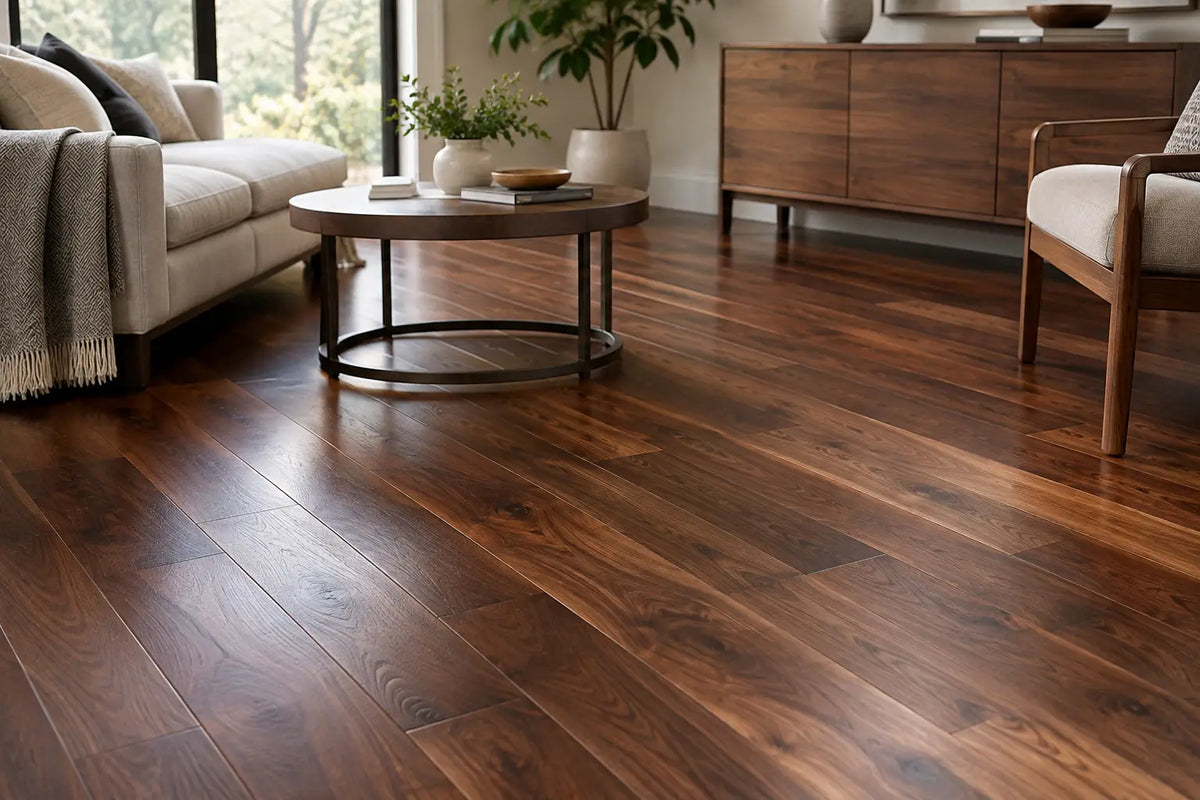
Walnut flooring changes the feel of a room before the furniture ever arrives. Its naturally deep brown tones, flowing grain, and occasional lighter streaks make it a standout choice for homeowners who want warmth without a busy or overly rustic look. It can feel tailored in a contemporary home, traditional in a formal dining room, and inviting in an open-concept renovation.
The right walnut floor is not simply a color decision, though. Board construction, finish, room conditions, daily traffic, and available inventory all matter. Understanding those details helps you invest in a first-quality floor that looks right on day one and continues to fit the way your home is used.
What Makes Walnut Flooring Different?
American walnut is valued for color variation that looks natural rather than manufactured. Boards may range from medium brown and cocoa to deep chocolate, with grain patterns that can be straight, wavy, or softly curled. This movement gives a floor personality, especially across larger spaces where uniform flooring can sometimes look flat.
Walnut also tends to work well with a wide range of interior finishes. It complements cream walls, warm white cabinetry, black metal accents, natural stone, and brass hardware. In a home with abundant daylight, its color can bring useful visual balance to bright rooms. In lower-light spaces, choosing a less-dark walnut finish or a wider plank with more visible grain can keep the floor from feeling too heavy.
Expect variation. Walnut is not the choice for a perfectly consistent, one-color appearance. That variation is part of its appeal, but it is worth viewing the actual product before committing to a whole-home installation. A small sample helps, while a showroom visit can make it easier to see how boards relate across a larger area.
Solid vs. Engineered Walnut Flooring
Both solid and engineered wood can offer a genuine walnut surface. The best choice depends on where the floor will be installed, your subfloor, and how much natural movement the room experiences through the year.
Solid Walnut Hardwood
Solid hardwood is milled from one piece of wood throughout the board. It offers traditional construction and can often be refinished over its lifetime, depending on the product and the condition of the floor. For above-grade living rooms, bedrooms, dining rooms, and other dry areas with stable indoor conditions, solid walnut can be an excellent long-term choice.
Its trade-off is movement. Wood naturally expands and contracts as humidity changes. Proper acclimation, moisture testing, and installation methods are essential, particularly in Texas homes that move between air-conditioned interiors and humid outdoor conditions. Solid hardwood may not be the practical choice for below-grade spaces or areas where moisture is a recurring concern.
Engineered Walnut Flooring
Engineered walnut flooring pairs a real walnut wear layer with a layered core designed for added stability. It delivers the natural beauty and grain of walnut while providing a more versatile construction for many renovation projects.
Depending on the product, engineered hardwood may be suitable for installations where solid wood is less ideal, including certain below-grade applications. Wear-layer thickness varies, so ask about the specific product if future refinishing is a priority. A quality engineered floor is not a lesser version of hardwood - it is a different construction built for different project needs.
For busy households, the finish and plank specifications may matter more than choosing solid over engineered. A durable factory finish, a realistic expectation of maintenance, and a floor suited to the room will do more for long-term satisfaction than a label alone.
Where Walnut Works Best
Walnut is especially effective in spaces where appearance leads the decision: primary bedrooms, home offices, dining rooms, living rooms, and formal entry areas. It gives these rooms a sense of permanence without requiring elaborate design choices around it.
For a whole-home project, consider how walnut will connect with adjoining rooms. Darker floors can create a polished, cohesive look, but they also establish a strong visual foundation. Light walls, thoughtful lighting, and variation in textiles can prevent the space from feeling overly dark.
Kitchens require a more personal decision. Walnut can look exceptional there, but kitchens receive dropped utensils, chair movement, water splashes, and constant foot traffic. If you appreciate the lived-in character that develops with real wood, walnut can be a rewarding choice. If every small mark will be frustrating, reserve it for lower-impact rooms or select a product with a finish and texture that better disguises daily wear.
Durability: Set the Right Expectations
Walnut is generally softer than some popular domestic hardwoods. That does not make it unsuitable for an active household. It means dents, scuffs, and impressions can show sooner in high-traffic areas, especially with pets, active children, heavy furniture, or hard-soled shoes.
Many homeowners choose walnut precisely because it ages with character. Small marks can become part of an authentic hardwood patina rather than a defect to erase. Others prefer a floor that hides impact better. Neither preference is wrong, but being honest about it before purchase prevents disappointment later.
A few everyday habits make a meaningful difference:
- Use protective pads under furniture and avoid dragging heavy pieces across the floor.
- Place mats at exterior doors and rugs in high-traffic zones, using products compatible with hardwood finishes.
- Clean up water promptly and follow the flooring manufacturer's approved cleaning guidance.
- Keep pet nails trimmed and use a soft broom or hardwood-safe vacuum attachment for routine cleanup.
Choosing the Right Walnut Color and Plank Style
Walnut can appear dramatically different from one collection to another. Some floors lean espresso-dark and formal. Others show lighter brown, gray-brown, or caramel undertones that feel more relaxed. The finish sheen also changes the effect: lower-sheen finishes generally soften reflected light and can make routine dust less noticeable than glossier surfaces.
Plank width deserves equal attention. Wider boards show off walnut's grain and often create a more open, premium look. They can be particularly compelling in living rooms and open plans. Narrower planks may better suit traditional architecture, smaller rooms, or a more classic hardwood pattern.
Before ordering, look at the floor in the actual lighting of your home. A walnut tone that feels rich in a showroom can read differently under cool LEDs or near a sunny window. Request a sample when available, review applicable shipping details, and look at it beside cabinets, paint, upholstery, and existing trim. For DFW shoppers, seeing larger boards in a showroom can make the color and variation easier to judge.
Finding First-Quality Walnut at a Better Value
Walnut is often viewed as a premium hardwood, and its appearance supports that reputation. But a well-planned project does not require paying solely for a current showroom collection or a standard retail supply chain.
Factory-closeout, discontinued, end-of-run, overstock, and special-buy inventory can create an opportunity to purchase first-quality walnut flooring at exceptional value. The reason for the opportunity is sourcing and inventory position, not necessarily a compromise in product quality. A discontinued color, for example, may be exactly right for a remodel even if a manufacturer has moved on to a new collection.
There is one practical consideration: closeout inventory can be limited. Confirm that enough material is available for your project, including a reasonable overage for cuts, layout, and future needs. If you are flooring multiple connected rooms, buying the complete quantity at once helps protect consistency in color, construction, and lot availability.
At Factory Flooring Liquidators, customers can compare first-quality flooring opportunities with knowledgeable guidance rather than trying to interpret product specifications alone. For homeowners ordering nationwide, clear product information and delivery planning are just as important as the deal itself.
Plan Before You Order
Measure each room carefully and calculate the actual flooring area before selecting a product. Then add the appropriate overage based on room shape, installation pattern, and the number of angled cuts or transitions involved. A simple rectangular bedroom needs less than a layout with hallways, closets, islands, or multiple doorways.
Also confirm the product's approved installation method, subfloor requirements, trim needs, and lead time before finalizing the order. Wood flooring is a finish material, not a last-minute purchase. Early planning gives you time to coordinate paint, cabinetry, furniture delivery, and the installer’s schedule around the flooring.
Walnut flooring is a confident choice when you want real wood with depth, natural variation, and a refined look that does not depend on passing trends. Choose the construction and finish that fit your rooms, plan for its honest wear characteristics, and buy enough of the product you love while the right first-quality opportunity is available.