
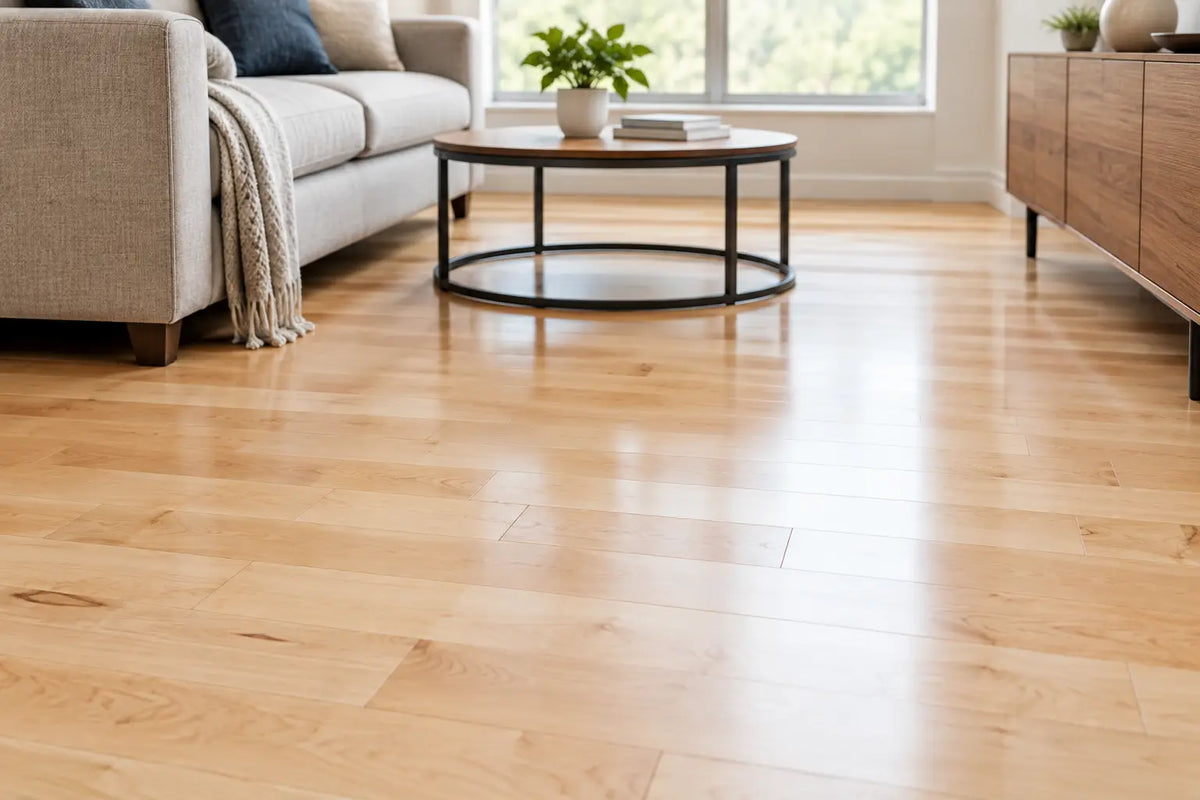
Maple hardwood flooring has a clean, refined look that can make a room feel brighter without looking overly rustic. Its naturally smooth grain, pale base color, and everyday durability make it a strong choice for homeowners who want real wood floors with a more tailored appearance. The right maple floor can work equally well in a contemporary Dallas renovation, a traditional family home, or a polished investment-property update.
The key is understanding what maple does especially well, where it requires more careful selection, and how to compare a closeout opportunity without sacrificing the details that matter. First-quality factory-closeout flooring can offer exceptional value, but every product has its own grade, construction, finish, dimensions, and available quantity. A smart purchase begins with the complete picture.
Why Homeowners Choose Maple Hardwood Flooring
Maple is known for its subtle grain pattern. Compared with species that have dramatic knots, open grain, or pronounced mineral streaks, maple tends to look more uniform and calm. That makes it a natural fit for homeowners who want the floor to support the overall design rather than become the room's busiest visual feature.
Its color typically ranges from creamy white and light blond to soft golden-brown, with occasional natural variations. Over time, maple can warm slightly as it is exposed to light. This is normal for natural hardwood and worth considering when matching cabinetry, stair parts, trim, or an existing floor in another room.
Maple is also a hard domestic wood species. In an active household, that can be an advantage for living rooms, bedrooms, hallways, and dining areas. Hardness helps a floor stand up to ordinary foot traffic, but it does not make any hardwood immune to dents, scratches, or moisture damage. Large dogs, high heels, moving furniture, and tracked-in grit can mark even a durable floor.
For many projects, the biggest appeal is visual: maple offers real hardwood character without a heavily distressed or heavily grained look. If your design calls for clean-lined furniture, light walls, warm neutrals, or a modern kitchen, it can create a polished foundation.
Maple's Look Depends on Grade and Finish
Not all maple floors look alike. The word "maple" identifies the species, but the grade and finish shape what you will actually see after installation.
A clearer maple grade generally has a more consistent color and fewer visible character marks. It is often chosen for formal spaces, minimalist interiors, and projects where a quiet, uniform appearance matters. Character-grade maple may show more color variation, mineral streaking, small knots, or natural markings. Those features are not defects when they are part of the stated grade. They simply create a more expressive floor.
Finish changes the effect just as much. A natural or light finish preserves maple's pale appearance and works well when you want an airy room. A medium brown finish can add warmth and help the floor coordinate with deeper cabinetry or furniture. Gray-toned finishes can feel current, though they should be viewed in the actual room because maple's warm undertones may influence how the color reads.
Maple can be more challenging to stain evenly than some other hardwood species. That matters most if you plan to finish unfinished maple on site or expect a custom stain match. For many homeowners, a prefinished maple product is the more predictable route because the color and protective finish are established at the factory. Always view product images, specifications, and samples in context rather than choosing by a small online swatch alone.
Consider the plank width carefully
Narrow maple planks create a classic, detailed pattern and can suit homes with traditional proportions. Wider planks show more of the wood's natural color movement and often give a space a more open, current feel. Neither is automatically better.
A wide plank may be especially appealing in an open-concept living area, while a narrower width can make sense when matching an established hardwood layout or working with a more traditional style. The best choice is the one that fits the room, adjacent finishes, and the product inventory available for your project.
Solid or Engineered Maple: Choose for the Room
Maple hardwood flooring is available in solid and engineered construction. Both can be first-quality choices. The right option depends on where the floor will be installed, the conditions of the space, and the product's installation requirements.
Solid maple is made from a single piece of hardwood. It offers the traditional feel many homeowners expect from a hardwood floor and is commonly used over appropriate above-grade wood subfloors. It can be a good fit for main-level living areas, bedrooms, and other spaces with stable indoor conditions.
Engineered maple has a real maple wear layer over a layered wood core. This construction is designed for improved dimensional stability as humidity changes. Depending on the specific product and installation instructions, engineered hardwood can offer more flexibility for projects over concrete or in areas where solid hardwood may not be the preferred choice.
Construction alone should not decide the purchase. Review the product's approved installation methods, wear-layer details when provided, plank dimensions, and recommended applications. A contractor, remodeler, or experienced flooring specialist can help confirm whether a product is appropriate for your subfloor and room conditions before you order.
Where Maple Works Best, and Where to Be Careful
Maple is an excellent candidate for dry interior living spaces where you want long-term style and the unmistakable feel of real wood. Bedrooms, formal dining rooms, home offices, hallways, and living rooms are common choices. It can also elevate a well-planned renovation for a rental or resale property, particularly when the goal is a clean, broadly appealing finish.
Like other hardwood floors, maple is not the right answer for every location. Standing water and repeated moisture exposure can damage wood flooring. Entryways need thoughtful protection from wet shoes and grit. Kitchens can work for homeowners who understand the maintenance commitment, wipe up spills promptly, and accept that active spaces may show wear over time.
If your project involves a lower-level space, a concrete slab, or an area with fluctuating conditions, do not assume every maple product will perform the same way. Start with the manufacturer's application guidance for the exact floor under consideration. This step protects both the appearance of the floor and the budget behind the project.
How to Shop a Maple Closeout Without Missing the Details
Factory-closeout and liquidation inventory can be one of the best ways to buy first-quality maple at a compelling value. A manufacturer may have overstock, discontinued a color, completed an end-of-run production cycle, or released a special-buy opportunity. The reason for the price is often inventory sourcing, not a lower product standard.
That said, closeout flooring rewards decisiveness and careful planning. Availability can change, and a discontinued collection may not be replenished once the available inventory is sold. Before placing an order, confirm the total quantity needed, including a reasonable allowance for cuts, layout, and future repair material. Your installer can help calculate the right amount for the specific layout.
Also confirm that all cartons come from a compatible production lot when appearance consistency is important. Natural wood will always vary from board to board, but buying enough material at one time helps you manage the overall look. If you expect to need matching flooring later, it is wise to retain a few extra cartons when inventory permits.
For online buyers, product specifications matter as much as the photographs. Look at the construction, thickness, plank width and length range, surface texture, edge detail, finish, and installation method. Ask questions before ordering if any detail is unclear. For customers who can visit the DFW showroom, seeing maple in person is especially useful because lighting can change how its undertones appear.
Plan for a Floor That Still Looks Good Years From Now
Maple's smoother grain is part of its appeal, but it can make surface scratches more noticeable in certain lighting. A lower-sheen finish often disguises everyday marks better than a high-gloss finish. Area rugs at exterior doors, protective pads under furniture, and routine sweeping go a long way toward preserving the finish.
Color selection deserves the same long-term thinking. Very light maple can feel fresh and flexible, but it may show dark debris more readily. Very dark stains can create contrast with dust and may make scratches easier to spot. Mid-tone and low-sheen options often strike a practical balance for busy households, rental properties, and homes with pets.
The best maple floor is not simply the lightest, widest, or lowest-priced option. It is the one that fits the room, the subfloor, the lifestyle, and the amount of material available for the full project. When a first-quality maple closeout checks those boxes, it can be a particularly smart way to bring lasting hardwood style into the home.