
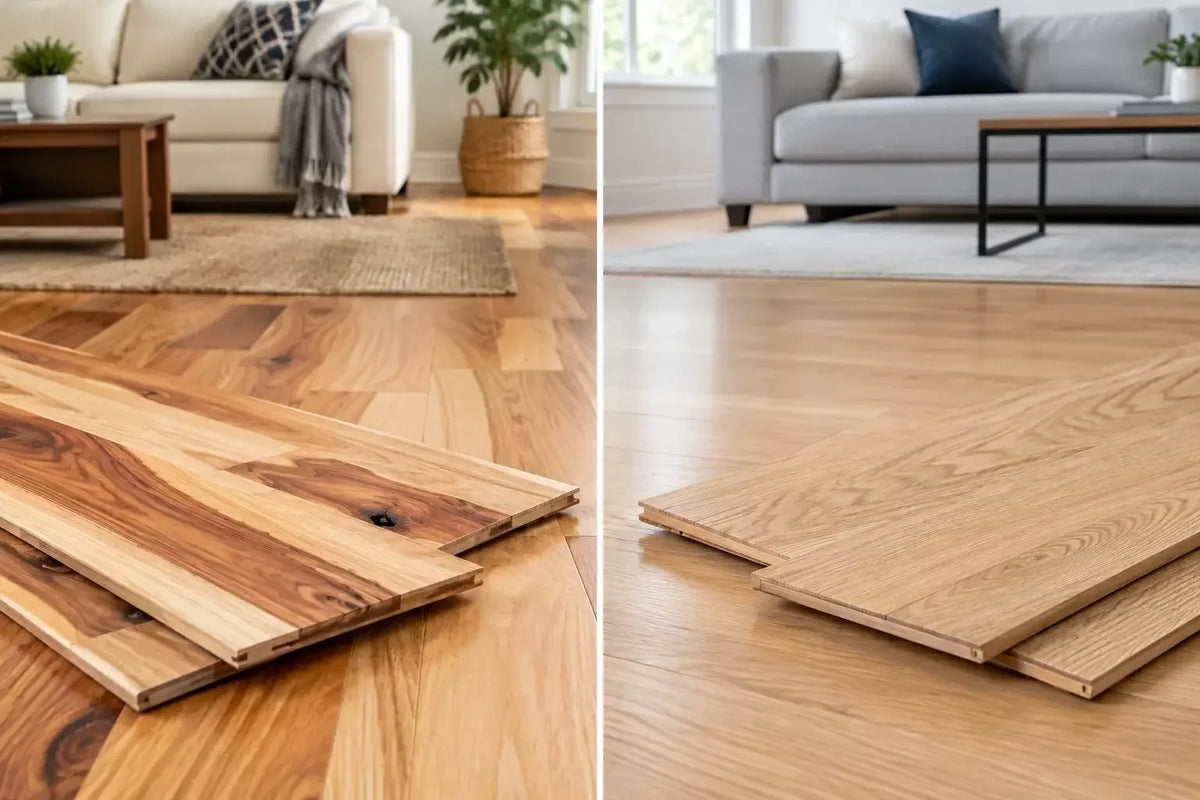
A hardwood floor can look completely different once it covers 800 square feet instead of a single display board. That is why the choice between hickory flooring vs oak floors deserves more than a quick look at color. Both are proven, first-quality hardwood options, but they create distinctly different results in durability, grain movement, finish, and overall character.
For many homeowners, oak is the flexible, familiar choice that works with almost any design direction. Hickory is the bolder option, prized for dramatic grain and serious hardness. The better fit comes down to your household, your preferred look, and how much natural variation you want to see every day.
Hickory Flooring vs Oak Floors at a Glance
Hickory is generally harder than both red oak and white oak. That makes it a strong contender for busy homes with active kids, dogs, or frequent foot traffic. Its density can help it resist everyday dents, although no real wood floor is immune to damage from dropped objects, grit, or moving furniture.
Oak is still a durable hardwood flooring standard for a reason. It has a balanced combination of strength, workability, and classic appearance. It is widely used in homes across the country, and its grain accepts stains especially well. White oak typically has a tighter, more subtle grain and a slightly harder surface than red oak, while red oak tends to show warmer undertones and a more pronounced open grain.
The visual difference is often the deciding factor. Hickory naturally carries more color variation within and between boards. A single floor may include creamy blondes, warm browns, tan, and occasional deeper mineral streaks. Oak is usually more consistent, especially when selected in a uniform grade or finished in a single stain color.
Durability: Is Hickory Actually Better?
If durability means resistance to dents from normal household use, hickory has an advantage. It is one of the hardest domestic hardwoods commonly used for flooring. That extra hardness is valuable in entry areas, family rooms, kitchens, and homes where the floor gets daily use.
But hardness is not the entire durability story. The finish on the flooring, the thickness of the wear layer on an engineered product, the installation quality, and basic maintenance all influence long-term performance. A well-finished oak floor that is properly maintained can serve a home beautifully for decades. Conversely, hickory can still scratch if abrasive dirt is tracked in or if furniture legs are not protected.
Hickory's density also creates a practical trade-off. It can be more demanding to mill and install than oak, particularly with solid hardwood. Professional planning matters, as does choosing a product suited to your subfloor and room conditions. For spaces where moisture can be a concern, an engineered hardwood construction may offer more dimensional stability than solid wood, whether you choose hickory or oak.
Grain and Color: The Biggest Style Difference
Choose hickory when you want the floor to have a visible personality. Its grain can be busy, expressive, and naturally varied, making it especially appealing in rustic, farmhouse, transitional, and character-rich interiors. Wider hickory planks can make that variation a feature rather than a distraction.
That variation is not for everyone. In a small room, a very active hickory floor can compete with heavily patterned countertops, dramatic cabinetry, or bold furniture. It often looks best when other major finishes are allowed to stay relatively calm.
Oak offers more design range. White oak is a frequent choice for modern, Scandinavian-inspired, coastal, and transitional spaces because it can look refined in natural, neutral, and light finishes. Red oak brings traditional warmth and can be an excellent choice for homes with existing red oak trim or cabinetry. Because oak takes stain well, it provides more flexibility when a homeowner is trying to match a particular palette.
Neither wood has to be limited to one style. A clean, matte hickory can feel contemporary, while white oak with a rich stain can feel traditional. Still, the wood's natural grain remains visible beneath the finish, so it is smart to view full boards and not make the decision from a tiny swatch alone.
Cost and Value for a Hardwood Project
Pricing varies by construction, plank width, grade, finish, brand, and available inventory. Hickory may cost more than some oak options because of its hardness, milling requirements, and distinctive appearance. However, oak is not automatically the lower-cost option. Premium wide-plank, long-length, or designer-finished oak can carry a higher price than many hickory selections.
The strongest value is not simply the lowest price per square foot. It is a first-quality floor that fits the project, performs as expected, and supports the finished look you want. Buying too much flooring is also an avoidable cost, so calculate room measurements carefully and include a reasonable waste allowance based on the layout and installation method.
Factory-closeout, end-of-run, overstock, and special-buy opportunities can make premium hardwood more attainable without suggesting lower quality. At Factory Flooring Liquidators, changing inventory can give homeowners, investors, and contractors access to first-quality hickory and oak flooring at exceptional value. When a closeout style fits your project, confirm available quantities early, especially for large rooms or whole-home renovations.
Maintenance: What Each Floor Needs
Hickory and oak have similar daily care needs. Sweep or vacuum with a hard-floor setting to remove grit, use a manufacturer-appropriate hardwood cleaner, and wipe spills promptly. Entry mats and protective pads beneath furniture legs go a long way toward preserving the finish.
A floor's color and grain can change how much routine wear you notice. Hickory's natural variation can help disguise small marks and everyday debris. Oak with a strong grain pattern can also be forgiving, while very dark, smooth, or high-gloss finishes may reveal dust and scratches more readily regardless of species.
Sunlight deserves consideration as well. Wood naturally changes tone over time, and rugs or furniture can create uneven exposure. Rotate area rugs occasionally and use window coverings when direct sunlight is intense. This is good practice for either species and helps the floor age more evenly.
Which Rooms Favor Hickory or Oak?
Hickory is a compelling option for open living spaces, hallways, kitchens, and busy family areas where durability and visual character matter. It can also suit rental and investment properties when the chosen color works for a broad range of tenants and the product is appropriate for the property's expected traffic.
Oak is an easy fit for living rooms, bedrooms, dining rooms, and whole-home projects where visual continuity is the goal. Its range of colors and finishes makes it particularly useful when coordinating with existing cabinets, stairs, or adjacent flooring.
For below-grade spaces or rooms with changing humidity, do not choose based on species alone. Review whether solid or engineered hardwood is appropriate for the application, follow product installation requirements, and consider the room's real conditions. Hardwood is not the right choice for every moisture-prone area, even when the product itself is high quality.
How to Make the Final Choice
Start with the look you want before focusing only on hardness. If you prefer calm, consistent color and broad design flexibility, oak is likely the better match. If you want natural contrast, striking grain, and a harder surface for a highly active household, hickory may be worth the added visual commitment.
Then compare actual product boards in the room where they will be installed. Look at them in morning light, evening light, and beside cabinets, paint, and fabrics. A DFW showroom visit can make this comparison easier for local shoppers, while online buyers can use product details, room visualization tools, and knowledgeable flooring guidance to narrow the options confidently.
The right hardwood should feel intentional after the renovation dust settles. Whether that means the quiet versatility of oak or the unmistakable character of hickory, choosing a first-quality floor that suits your home is the value that lasts.