
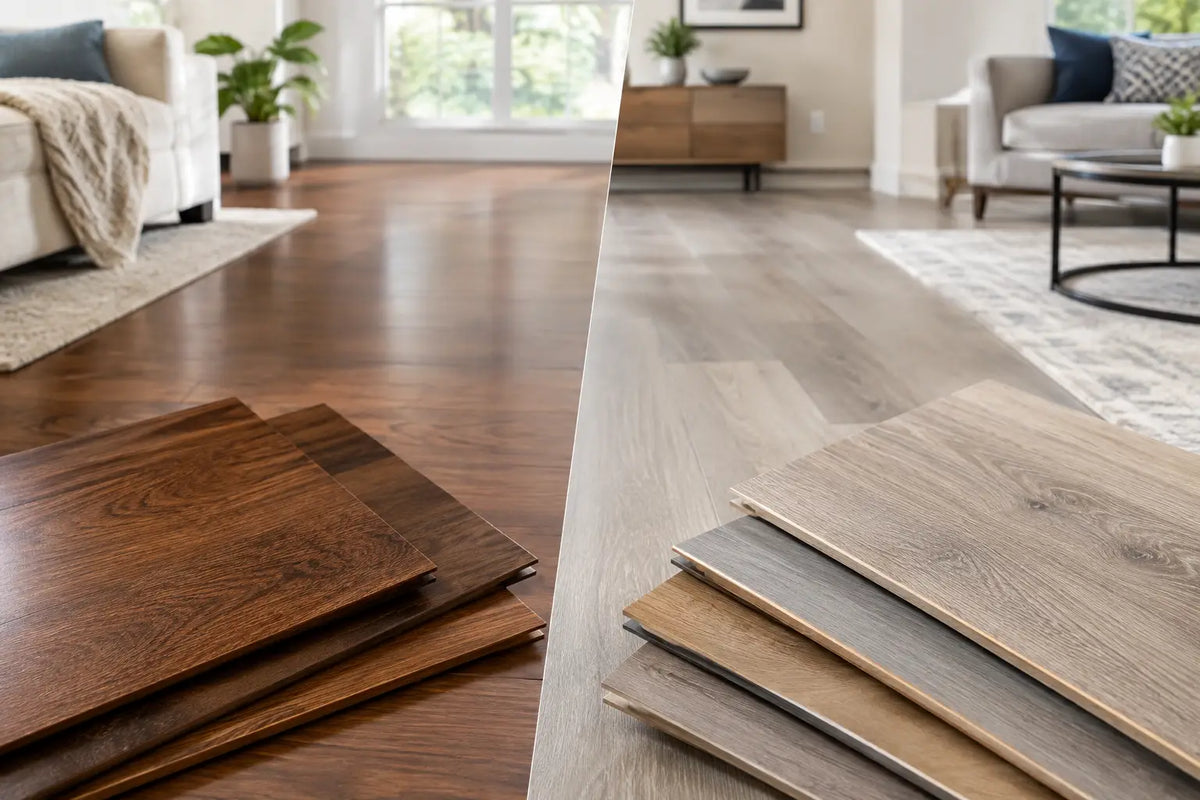
A Bruce Floors vs Mohawk Floors comparison is rarely settled by the brand name alone. The better choice comes down to the specific collection, the room it will serve, and whether its construction fits your household. A beautiful floor that is wrong for a busy entry, a rental turnover, or a moisture-prone kitchen can become an expensive compromise.
Both brands offer recognizable options across popular hard-surface flooring categories. For homeowners, renovators, and property professionals, the practical goal is to compare the product in front of you - its wear layer or finish, core, installation system, water-resistance rating, visual character, and available quantity - rather than assume every floor under one label performs the same way.
Bruce Floors vs Mohawk Floors: Start With Construction
The first question is not which brand looks better. It is whether you are comparing solid hardwood, engineered hardwood, laminate, or luxury vinyl flooring. These materials behave differently, even when the surface visuals are similar.
Bruce is widely associated with wood flooring, so many shoppers begin there when they want the warmth, grain variation, and long-term appeal of real hardwood. Solid hardwood can be an excellent choice for appropriate above-grade spaces, especially when a project calls for a traditional wood floor that can add character over time. Engineered hardwood brings the real-wood surface homeowners want with a layered construction that may better suit certain installation conditions.
Mohawk collections often give shoppers a broad range of hard-surface looks, including wood-look waterproof flooring and laminate alongside wood options. That breadth can be useful when you are trying to carry a coordinated style from a living area into a kitchen, hallway, or other active space where easier moisture management matters.
Neither approach automatically wins. If authentic wood is the nonnegotiable feature, compare hardwood species, plank width, finish, and construction carefully. If practical water resistance and straightforward maintenance are higher priorities, compare the individual waterproof or laminate products instead.
Appearance: Natural Wood Character or Consistent Wood Look?
Real hardwood has natural variation. Knots, mineral streaks, grain movement, and shade differences are part of the material, not defects. Bruce hardwood may appeal to buyers who want that authentic variation to be visible throughout the room. It can work especially well in dining rooms, living rooms, bedrooms, and renovations where the floor should feel established rather than manufactured.
Wood-look flooring, including luxury vinyl and laminate, gives you more control over the visual direction of a project. Many collections offer wide planks, low-gloss finishes, clean oak visuals, and colors that work with current cabinets and paint selections. This can be helpful for rental properties, flips, and whole-home updates where a consistent look across multiple rooms is a priority.
Do not judge a floor from one online image. Look at the plank dimensions, repeat pattern, texture, sheen, and color variation. A warm brown that feels relaxed in a bright showroom can read much darker in a north-facing room. Before ordering, use room visualization tools where available and review product photos in several lighting conditions.
Water Resistance and Daily Wear
Kitchens, entries, mudrooms, laundry areas, and homes with pets demand more than a good-looking surface. They require a floor suited to water exposure, tracked-in grit, dropped items, and regular cleaning.
Solid hardwood is generally best reserved for spaces where standing moisture is not an everyday concern. Engineered hardwood can be a smart middle ground, but water performance varies by product. Always follow the product's stated installation and care requirements rather than treating engineered wood as automatically waterproof.
Waterproof luxury vinyl flooring is often the more practical option for active households and investment properties because it is designed to handle routine spills more comfortably than traditional wood flooring. Laminate can also be a strong value choice, although its water-resistance level depends on the individual product and how well the floor is installed and maintained.
For a Bruce Floors vs Mohawk Floors decision in a high-traffic room, focus on the exact product specifications. Ask how the edges are protected, whether the product is rated for the intended room, and what the manufacturer says about spills. A brand comparison is helpful, but product-level details prevent costly assumptions.
Installation Can Change the Best Choice
Installation conditions can narrow your options quickly. Subfloor type, room location, existing floor height, transitions, and whether the project is above, on, or below grade all matter. A flooring professional can help you confirm which constructions are appropriate before materials arrive.
Floating click-lock floors can be attractive for renovation projects because they may simplify installation and avoid some of the commitment of a glued-down floor. Glue-down or nail-down hardwood options can offer a more traditional finished feel, but they require the right substrate and installation plan. A floor that looks like a bargain can lose value if the installation method does not fit the job.
This matters for contractors and property owners working on schedules. Confirm the square footage, add a sensible waste allowance for cuts and layout, and account for matching trims and transition pieces. If a closeout collection is the right fit, purchase enough material to complete the project and retain a few extra planks for future repairs, since discontinued inventory may not be replenished.
Value Is More Than the Price Per Square Foot
A lower material price is meaningful, but total project value includes durability for the application, installation requirements, maintenance expectations, and the chance that you will want to replace the floor sooner than planned. The right floor for a formal living room may not be the right floor for a pet-friendly rental, even if both are attractive at first glance.
Factory-closeout and liquidation sourcing can create a particularly strong opportunity when first-quality Bruce or Mohawk flooring is available. Overstock, end-of-run, special-buy, and discontinued inventory can offer premium materials at exceptional value because of how the products were sourced, not because they are inferior quality. The key is to confirm that the available quantity, matching accessories, and product specifications align with your project before you commit.
For a whole-home renovation, buying a first-quality closeout can free up budget for underlayment, installation, trim work, or other improvements. For investors and flippers, it can make it possible to select a more convincing visual or better-suited construction without losing sight of the project budget. Inventory changes, so availability should always be verified before finalizing plans.
How to Compare the Specific Floors You Are Considering
Bring the comparison down to the product level. Whether you are shopping online nationwide or visiting a DFW showroom, these questions will clarify which option fits your project:
- What material and core construction are you comparing?
- Is the product appropriate for the room and moisture conditions?
- What installation method does the subfloor support?
- How will the color, texture, and plank width work with the rest of the home?
- Is enough first-quality inventory available for the project, including a practical overage?
It is also worth comparing maintenance honestly. Hardwood rewards careful cleaning and prompt spill cleanup. Waterproof vinyl is often easier for households that want a more forgiving daily routine. Laminate can deliver an appealing wood look at a strong value, but should still be selected with its room-use requirements in mind.
Which Brand Is the Better Fit?
Choose the specific Bruce floor when its real-wood character, construction, and installation requirements match the space. Choose the specific Mohawk floor when its design, water-management features, construction, and available quantity better support the way the room will be used. In many cases, the strongest answer is not a blanket brand preference but the floor that checks every practical box for your home or property.
A knowledgeable flooring specialist can help you compare the details that photos and brand names cannot show: texture, thickness, finish, edge profile, transition needs, and whether a closeout opportunity makes sense for the full scope of your project. The best flooring purchase is one that feels right underfoot, performs where it is installed, and delivers first-quality value long after the renovation is finished.