
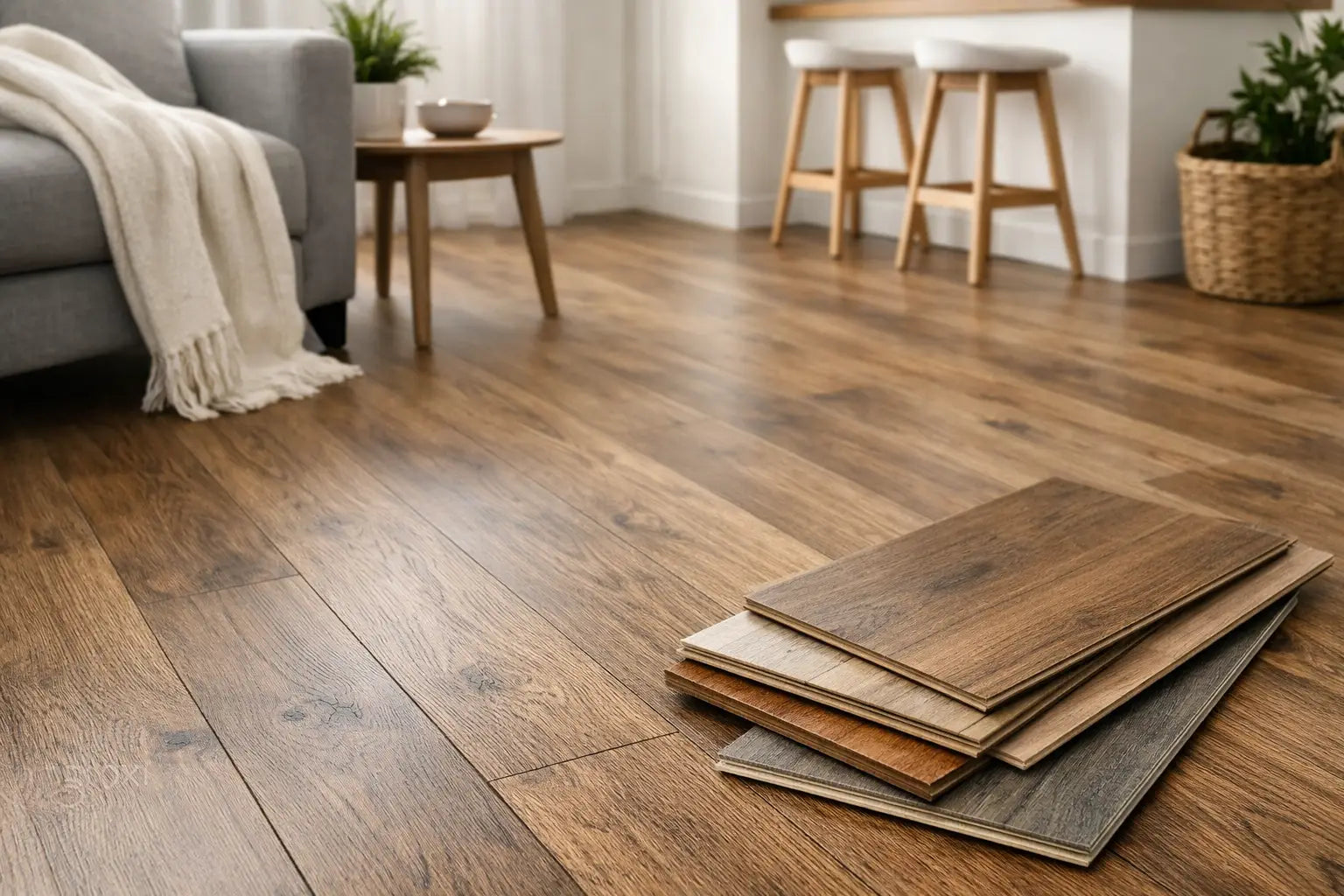
A wood-look floor can change the entire feel of a room, but a hardwood quote can quickly consume a renovation budget. The cheapest flooring that looks like real wood is usually laminate or luxury vinyl, not solid hardwood. The right choice depends on where it is going, how much traffic it will handle, and whether moisture is part of the equation.
The good news is that budget-friendly no longer has to mean obviously fake. Better printing, textured surfaces, beveled edges, and wider plank formats have made today’s wood-look laminate and vinyl far more convincing than the products many homeowners remember. When you buy first-quality flooring at liquidation pricing, you can often step up in style and durability without stepping up to showroom-level costs.
What Is the Cheapest Flooring That Looks Like Real Wood?
For most dry, low- to moderate-traffic rooms, laminate flooring is often the lowest-cost option that can still deliver a realistic wood appearance. It is made with a dense core and a printed decorative layer protected by a wear layer. Quality laminate can replicate oak, hickory, maple, walnut, and weathered wood looks at a fraction of hardwood’s material cost.
For kitchens, bathrooms, basements, laundry rooms, rentals, and homes with pets, luxury vinyl plank, often called LVP, is frequently the smarter value. It may cost a little more than entry-level laminate, but its water resistance can prevent an inexpensive floor from becoming an expensive replacement job.
Peel-and-stick vinyl and sheet vinyl can be cheaper than both, but they are not usually the best answer when realistic appearance and long-term value matter. Their thinner construction, limited texture, and less substantial feel can give away the budget choice. For a floor that looks like wood and supports a strong resale, rental, or everyday-living result, laminate and LVP are the categories worth comparing first.
Laminate: The Lowest Upfront Cost for Dry Rooms
Laminate earns its place in budget remodels because it gives buyers a lot of visual impact per square foot. It is especially practical for bedrooms, living rooms, hallways, dining areas, and finished spaces where standing water is unlikely.
A better laminate plank has details that make a difference from across the room and underfoot. Look for an embossed-in-register texture, where the grain texture follows the printed wood pattern, along with low-sheen finish and beveled edges. These features reduce the flat, plastic-like look associated with older laminate floors.
Durability matters as much as color. A thicker plank typically feels more solid, and a stronger wear rating helps in busy households and investment properties. Laminate resists scratches well, making it a competitive choice for active homes, but it is not automatically waterproof. Even water-resistant products have installation and exposure limits. Spills should be cleaned promptly, and areas prone to leaks need a flooring category built for moisture.
If installation costs are part of your decision, click-lock laminate can be a budget advantage. Many products float over a properly prepared subfloor, reducing labor compared with nail-down hardwood. That said, a cheap installation shortcut can ruin a good deal. Uneven subfloors, missing underlayment requirements, or poor expansion gaps can lead to movement, noise, and damaged joints.
Luxury Vinyl Plank: Best Value Where Water Is a Concern
Luxury vinyl plank costs more than some basic laminate, but it often provides better value in real-life conditions. Most LVP products are waterproof at the surface, which makes them a strong fit for kitchens, bathrooms, basements, entryways, and rental properties where accidents and moisture are more likely.
The most convincing wood-look vinyl has a textured finish, natural color variation, and a plank width that suits the room. Avoid overly glossy surfaces and repetitive print patterns. If every fifth plank looks identical, the floor will look less natural once it covers a large open area.
LVP also feels quieter and warmer underfoot than many hard surfaces. That can matter in upstairs rooms, condos, and family homes. Its softer feel is a benefit for comfort, although it can also be more vulnerable to dents from very heavy furniture or sharp-point loads. Use furniture pads, and check the product’s guidance for appliances, rolling chairs, and direct sunlight.
There are two common LVP constructions. Rigid-core products, such as SPC and WPC, offer a stable click-lock format that can handle minor subfloor imperfections better than thinner flexible vinyl. Glue-down vinyl can be an excellent commercial or rental choice, especially where easy plank-by-plank replacement matters, but it demands careful subfloor preparation and professional-quality adhesive work.
Why Hardwood Is Not Always the Better Deal
Real hardwood has lasting appeal, and in the right home it can be worth the investment. It can be refinished, has natural variation, and remains a premium feature for buyers who want authentic wood. But it carries higher material, installation, and maintenance costs. It is also not ideal for every room or every lifestyle.
Solid hardwood can expand and contract with humidity, scratch under heavy use, and react badly to standing water. Engineered hardwood improves stability and can cost less than solid wood, but it still generally sits above laminate and vinyl in total project cost.
For a house flip, a rental refresh, a basement upgrade, or a whole-home renovation with a firm budget, the goal is not simply to buy the lowest-priced box. The goal is to get a floor that looks premium, installs correctly, and holds up long enough to protect your investment. That is why a discounted first-quality laminate or LVP can outperform a bargain-grade hardwood purchase.
How to Make Budget Wood-Look Flooring Look More Expensive
The product matters, but selection and installation determine whether the finished floor looks convincing. Start with color. Mid-tone oaks, natural warm browns, and muted greige shades tend to hide dust and everyday wear better than very dark espresso or pale gray floors. They also give a room a more timeless look than an aggressively trendy finish.
Choose a plank size that works with the space. Wider planks can make open rooms feel more current, while standard widths are often a practical, affordable choice for smaller bedrooms and rentals. A mixed-length visual pattern adds realism, even when the planks are manufactured in a uniform format.
Pay attention to transitions, baseboards, and door trim. These finishing details can make a value-priced floor look intentional rather than temporary. Matching or well-coordinated trim, clean cuts around door jambs, and properly placed transition pieces protect the installation and improve the final presentation.
Before ordering, get the room measurement right and include extra material for cuts, layout, and future repairs. The exact overage depends on the room shape and installation pattern, but a simple rectangular room needs less than a room with closets, angles, or multiple doorways. Ordering too little can create delays or leave you trying to match a discontinued dye lot later.
Where Smart Buyers Find Better Flooring Value
Big-box pricing is not always the lowest price, and low price is not always a true deal. Some inexpensive flooring is made to hit a price point with thinner construction, limited warranties, or less convincing visuals. A better strategy is to look for first-quality inventory sold below traditional retail markup.
Factory Flooring Liquidators gives homeowners, contractors, and property investors access to premium hard-surface flooring at liquidation prices, with nationwide delivery and expert help when product details need a closer look. Comparing plank thickness, wear layer, water performance, and installation requirements side by side makes it easier to buy for the room instead of buying based on a single price tag.
A room visualizer is also worth using before you commit. Flooring covers a large surface area, so a color that looks great in a small sample can feel too dark, too cool, or too busy once it fills the room. Visualizing a few options can prevent a costly second guess.
The Best Budget Choice for Your Project
Choose laminate when you want the lowest upfront cost, a hard-wearing surface, and convincing wood style in dry living spaces. Choose luxury vinyl plank when water resistance, easy cleanup, and all-purpose durability are higher priorities. Consider engineered hardwood only when real wood is essential to the project and the budget has room for it.
The best floor is not the one with the smallest sticker price. It is the one that gives your space a believable wood look, fits the conditions of the room, and delivers first-quality performance at a price that leaves room in the budget for the rest of the project.