
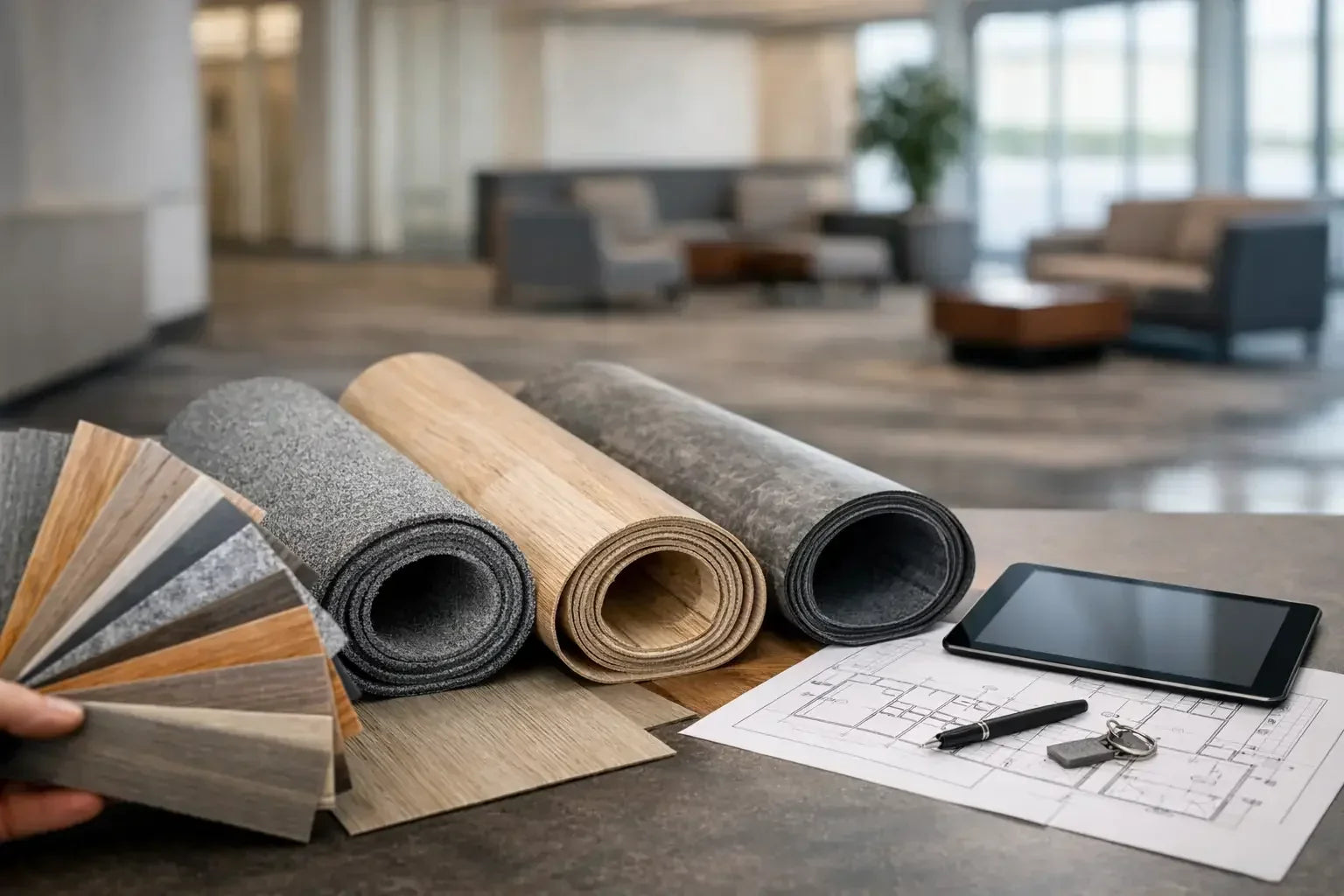
A commercial floor can look polished on opening day and still be the wrong purchase if it cannot handle the traffic, cleaning routine, and replacement needs of the space. This commercial flooring buying guide helps property owners, contractors, investors, and business buyers narrow the choices before price becomes the deciding factor. The right floor is one that supports the daily use of the property while delivering first-quality appearance and long-term value.
For many commercial projects, the best opportunity is not simply choosing the least expensive material. It is finding a first-quality product with the right performance profile at a factory-closeout, overstock, discontinued, or special-buy price. That can create meaningful budget room without settling for inferior flooring, provided the product is available in the quantity your project requires.
Start With How the Space Is Actually Used
Commercial flooring decisions should begin with real conditions, not a sample board alone. A private office with a small staff has very different demands than a busy retail entry, a rental turnover unit, or a common area that sees constant foot traffic. Consider how many people use the space, what they track in from outdoors, whether rolling chairs or carts are common, and how often the floor will be cleaned.
Moisture exposure deserves the same attention. Entry areas, break rooms, restrooms, ground-level spaces, and properties where spills are routine often call for waterproof flooring. In lower-traffic professional spaces, appearance and acoustics may carry more weight. There is no single best commercial floor for every application. The strongest choice matches the product to the conditions it will face every day.
It also helps to separate customer-facing areas from back-of-house areas. A lobby or showroom may need a premium visual impact, while a storage room or rental unit may prioritize easy care and efficient replacement. Using one product throughout can simplify purchasing, but mixing products by zone can be a smarter investment when the spaces have different demands.
Commercial Flooring Buying Guide: Compare Core Options
Hard-surface commercial flooring can offer the durability and cleanability many business properties need, but each category has a different balance of appearance, maintenance, water resistance, and upfront cost.
Luxury Vinyl and Waterproof Flooring
Luxury vinyl flooring is a practical fit for many commercial environments because it offers a wide range of wood and stone looks with easy day-to-day care. Waterproof options are especially worth considering where spills, wet shoes, or regular mopping are part of normal operations. They can work well in offices, retail spaces, rental properties, hospitality-style common areas, and renovation projects where dependable performance matters.
When comparing luxury vinyl, look beyond color. Review the product construction, wear layer, installation method, and manufacturer guidance for the intended commercial use. A thicker wear layer can be relevant in higher-traffic areas, but it is only one part of the decision. The floor still needs a properly prepared subfloor and a maintenance routine that fits the property.
Laminate Flooring
Laminate can deliver a convincing hardwood visual at a compelling value, making it appealing for offices, rental updates, and commercial spaces with controlled moisture conditions. Its surface is designed for everyday wear, and the right style can make a dated space feel current without consuming the entire renovation budget.
The trade-off is that laminate is not the automatic choice for every wet-prone location. Review the product's water-resistance specifications carefully and match them to the room. For a dry office suite or a low-maintenance rental refresh, laminate may be an efficient purchase. For spaces with frequent moisture exposure, waterproof flooring is usually the more appropriate category to compare first.
Hardwood Flooring
Hardwood brings a natural, premium look that can elevate professional offices, boutiques, executive spaces, and high-end renovation projects. It is a material chosen as much for character as for function. Grain variation, plank width, stain color, and finish all affect how the finished space feels.
However, hardwood needs an application where its care requirements make sense. It may not be the practical choice for a heavily wet entry or a space subjected to repeated spills. Commercial buyers should also think about how the floor will age. Natural wood develops character over time, which is part of its appeal for some projects and less desirable for others seeking a highly uniform look.
Buy for Traffic, Not Just Square Footage
Square footage tells you how much flooring to order. Traffic tells you what flooring you should order. A small café-style retail space can receive more wear than a much larger office, while a rental unit may need a surface that is simple to clean and attractive to the next tenant.
Ask practical questions before choosing a style: Will customers enter directly from outdoors? Will chairs roll across the floor? Are pets, kids, deliveries, carts, or frequent cleanings part of the environment? Does the business need a quiet underfoot feel, or is durability the priority? These details often reveal whether a beautiful option is also a workable one.
For investment properties, replacement planning matters too. Choosing a versatile, readily appealing color can make future turnovers easier. Very distinctive visuals can be right for a branded commercial setting, but neutral wood tones and clean contemporary finishes usually give owners more flexibility if the use of the property changes.
Plan the Quantity Before You Fall in Love With a Closeout
Factory-closeout flooring can be an outstanding value because the savings come from sourcing opportunities, not from compromised quality. Many closeout products are first-quality overstock, end-of-run inventory, discontinued styles, or special buys from established manufacturers. The key is to plan carefully before purchasing.
Measure each area, account for closets and transitions where applicable, and discuss an appropriate overage with your flooring professional or installer. The exact amount depends on the room layout, plank direction, cuts, and installation pattern. A rectangular office may require less extra material than a space with many doorways, angles, or built-ins.
Commercial buyers should confirm that the available inventory covers the complete project before finalizing color selections. If you expect phased construction, future expansion, or potential repair needs, consider whether ordering additional material now is sensible. Closeout inventory can be limited because it is tied to a specific overstock or discontinued run. That is a real advantage when the quantity works for your project, but it also makes accurate planning essential.
Evaluate the Full Project Cost
A lower flooring price is valuable, but the purchase decision should include the full scope of the project. Budget for preparation, underlayment or required accessories, transitions, trim, delivery, and installation labor if you are using an installer. A product that appears less expensive per square foot may not be the better overall value if it requires materials or preparation that another option does not.
This is also where product suitability protects the budget. Selecting a floor that is not designed for the conditions of the room can lead to avoidable replacement costs. Review product details, care expectations, and installation requirements before ordering. If a specification is unclear, ask for guidance rather than assuming two similar-looking products will perform the same way.
For multi-unit properties and commercial renovations, standardizing on one or two approved flooring looks can simplify future purchasing and maintenance. Still, do not force a product into every room just for consistency. Waterproof flooring in wet-prone areas and a different hard-surface option in dry spaces may be the more practical combination.
Make Appearance Work for the Business
Flooring is one of the largest visible surfaces in a commercial setting. Lighter tones can make compact offices and retail spaces feel more open, while medium shades often balance warmth with everyday practicality. Darker floors can create a dramatic, premium look, but they may show dust and debris more readily in active environments.
Requesting samples and using room visualization tools can reduce uncertainty before placing a larger order. Look at the color under the space's actual lighting, including daylight and overhead lighting. Consider adjacent finishes such as cabinetry, paint, counters, shelving, and furniture. A flooring sample that looks perfect under showroom lights can read differently inside the finished property.
For buyers in Dallas-Fort Worth, visiting a showroom can make it easier to compare textures, plank formats, and colors in person. Nationwide customers can still make confident decisions by reviewing product details closely, confirming current availability, and planning delivery around the construction schedule.
A Smarter Way to Source Commercial Flooring
Commercial flooring does not have to mean paying premium pricing for a generic solution. Factory Flooring Liquidators helps buyers access first-quality hardwood, luxury vinyl, waterproof flooring, laminate, and other hard-surface options through value-focused factory-closeout sourcing. The opportunity is especially strong for owners and professionals who know their project quantities, understand their application, and are ready to act when the right inventory is available.
Bring the project requirements into the decision early: traffic, moisture, maintenance, appearance, quantity, and timeline. Once those are clear, a first-quality closeout can become more than a good deal. It can be the flooring purchase that keeps the project on budget while making the space feel ready for business.