
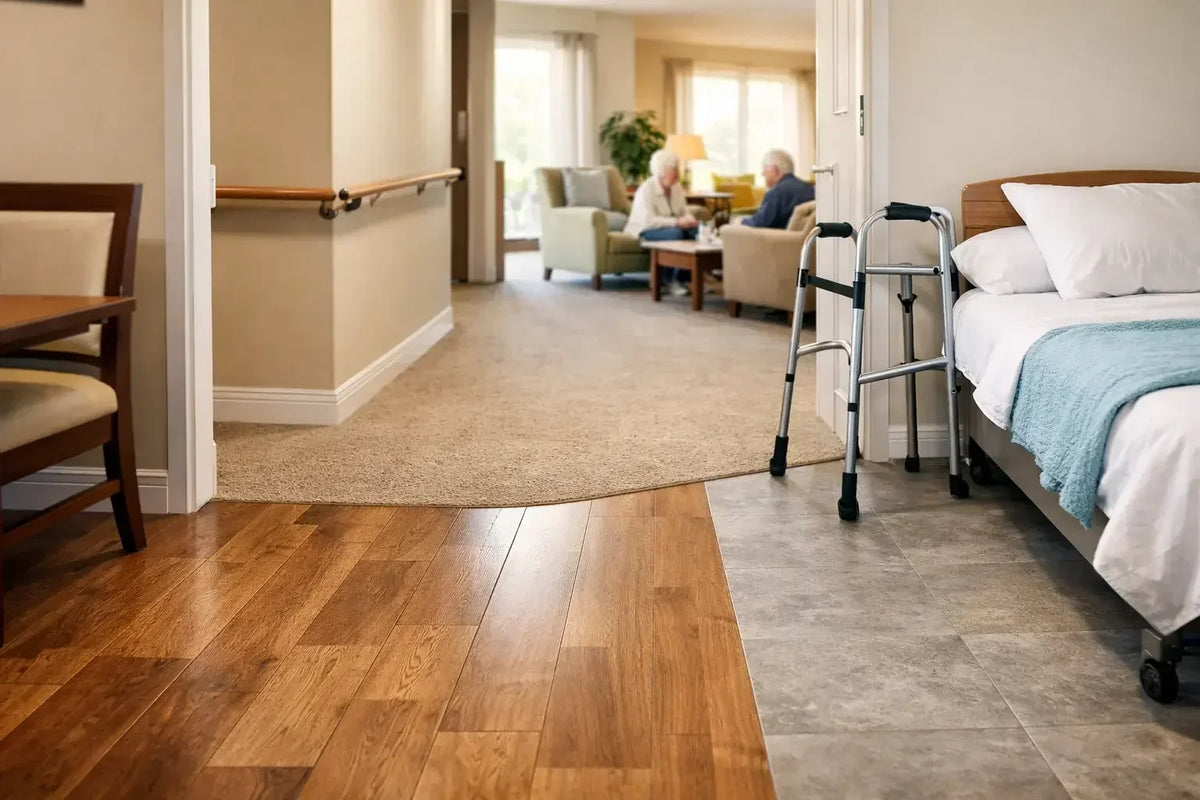
A floor in an assisted living setting has to handle far more than foot traffic. It may see rolling carts, frequent cleaning, dropped items, mobility devices, changing residents, and common areas that need to look welcoming from morning through evening. When comparing flooring options for a homecare living assisted living facility, the right choice is usually the one that balances daily practicality with a residential, well-finished appearance.
For owners, property managers, builders, and renovators, flooring is also a budget decision with a long view. A first-quality closeout floor can create meaningful room in the project budget without accepting lower-grade material. The key is choosing a product whose wear layer, construction, visual style, and maintenance needs fit the specific spaces being updated.
What Assisted Living Flooring Needs to Do
There is no single best floor for every assisted living property. A private suite, community dining room, entry area, and administrative office can have very different demands. Still, most successful flooring selections begin with the same practical priorities: dependable durability, simple cleaning, moisture resistance where it matters, a stable underfoot feel, and a design that feels more like a home than an institution.
Visual consistency is worth considering early. Using one coordinated flooring family through suites, corridors, and gathering areas can make a property feel larger and more intentional. At the same time, it can make sense to select a more water-resistant product for spaces exposed to frequent spills or routine wet cleaning.
Before ordering, confirm the manufacturer’s application guidance, installation requirements, and cleaning recommendations. Those details matter as much as the surface color, particularly in larger projects where replacement and downtime can be disruptive.
Flooring Options for Homecare and Assisted Living Facilities
Waterproof luxury vinyl flooring
Luxury vinyl is often a practical starting point for assisted living and homecare environments. Waterproof vinyl options are designed for locations where spills, tracked-in moisture, and routine cleaning are part of normal operations. They are available in wood-look visuals that bring warmth to resident suites, hallways, lounges, and dining spaces without requiring the same maintenance approach as natural hardwood.
For higher-use areas, look beyond color and focus on product construction. Wear-layer thickness, texture, plank size, locking system, and approved installation method all influence long-term performance. A low-gloss or textured visual can also be a more forgiving choice in active spaces than a highly polished, uniform surface.
Vinyl is not automatically the answer for every room. Subfloor condition, existing moisture concerns, transitions, and the facility’s cleaning products should all be reviewed before selecting a particular product. But for projects that need water resistance, straightforward maintenance, and broad design flexibility, it is a strong category to compare first.
Laminate flooring
Modern laminate can offer a convincing hardwood appearance at an attractive project cost, making it especially useful for private rooms, offices, and lower-moisture common areas. It can be a smart choice when a property needs an updated, cohesive look across a large number of square feet and budget discipline is a major priority.
The trade-off is that laminate is not the same as waterproof vinyl. Water-resistant laminate products may be suitable for everyday household-style spills when installed and maintained correctly, but standing water and repeated wet exposure call for more caution. Review the product’s stated water-resistance limits instead of assuming all laminate performs the same way.
Laminate also rewards careful installation planning. A level, properly prepared subfloor and correct expansion allowances help the floor perform as intended. For a facility renovation, these details are best settled before materials arrive and installation schedules are set.
Hardwood flooring
Hardwood brings a natural character that is difficult to duplicate. In the right areas, it can elevate a boutique assisted living community, a residential-style common room, executive office, or private living area. Its variation, grain, and warmth can help a large property feel less standardized.
However, hardwood is a selective choice for this application. It is generally better suited to controlled, lower-moisture spaces than areas exposed to frequent spills, entryway moisture, or intensive cleaning routines. It also requires a maintenance plan that respects the finish and the wood itself.
That does not make hardwood impractical. It means placement matters. Pairing hardwood in feature spaces with waterproof vinyl in high-moisture or high-traffic zones can create a polished result while matching each material to its job.
Choose by Room, Not Just by Product
A facility-wide flooring purchase is easier to manage when the project is divided into zones. Private suites often prioritize a calm residential look, cleaning convenience, and a comfortable visual transition into the bathroom area. Waterproof vinyl is frequently a practical contender here, while laminate may fit rooms with lower moisture exposure.
Hallways and common rooms need a surface that holds up to sustained traffic and keeps the property visually unified. Wider planks and light-to-medium wood tones can make long corridors feel less narrow, while overly dark colors may show dust or scuffs more readily. A realistic wood visual with moderate variation often provides the most forgiving day-to-day appearance.
Dining areas, activity rooms, and similar gathering spaces call for special attention to cleaning routines and spill exposure. Waterproof flooring generally deserves priority in these locations. Entry areas need the same thoughtful approach, especially where weather and outdoor debris can be carried inside.
Details That Can Prevent Expensive Mistakes
A beautiful floor can still become a poor project choice if the specification is incomplete. Start by confirming how the product will be installed and whether the subfloor is appropriate. Floating, glue-down, and nail-down installations have different requirements, costs, and repair considerations.
Transitions deserve attention as well. Where floors meet doorways, bathrooms, or adjoining surfaces, the final layout should be planned for safe, clean movement between spaces. Product thickness can affect doors, trim, and transition pieces, so it is wise to evaluate the full system rather than the plank alone.
Color samples should be viewed under the property’s actual lighting whenever possible. A warm oak visual can read very differently under daylight, soft residential lamps, and bright overhead fixtures. Room visualization tools and physical samples can help stakeholders compare options before committing to a large order.
For projects with specific operational or code requirements, confirm them with the appropriate project professionals and local authorities. Flooring product specifications should support the facility plan, not be selected in isolation.
Make Closeout Inventory Work for the Project
Factory-closeout flooring can be a particularly strong fit for renovations, investor-owned properties, and multi-room updates. Closeout, overstock, discontinued, and end-of-run opportunities can provide access to first-quality hardwood, laminate, luxury vinyl, and waterproof flooring at exceptional value because of how the material was sourced, not because it is inferior.
The planning consideration is inventory. When a closeout visual is a good fit, verify that enough material is available for the project and include a reasonable quantity for cuts, layout needs, and future touchups. Larger facilities may benefit from reserving material once the selection and measurements are finalized, since changing inventory is part of the closeout opportunity.
This approach works best when the project team is decisive about color, quantity, and installation timeline. It can turn a constrained renovation budget into a more polished flooring specification without compromising on first-quality materials.
A Practical Buying Process for Larger Flooring Projects
Begin with accurate measurements and separate the project by room type. Then narrow the product category based on moisture exposure, traffic, maintenance expectations, and desired appearance. Only after those priorities are clear should price become the final comparison point.
For Dallas-Fort Worth customers, a showroom visit can make it easier to compare textures, plank formats, and colors in person. For projects elsewhere in the United States, detailed product information, samples when available, and nationwide delivery make it possible to plan with confidence from a distance. Factory Flooring Liquidators can help buyers compare first-quality options and identify closeout opportunities that suit the scope of the project.
The most successful assisted living flooring projects do not chase one material for every square foot. They match waterproof performance, visual warmth, realistic maintenance needs, and available value to each area of the property - creating spaces that look considered, feel residential, and are easier to manage day after day.