
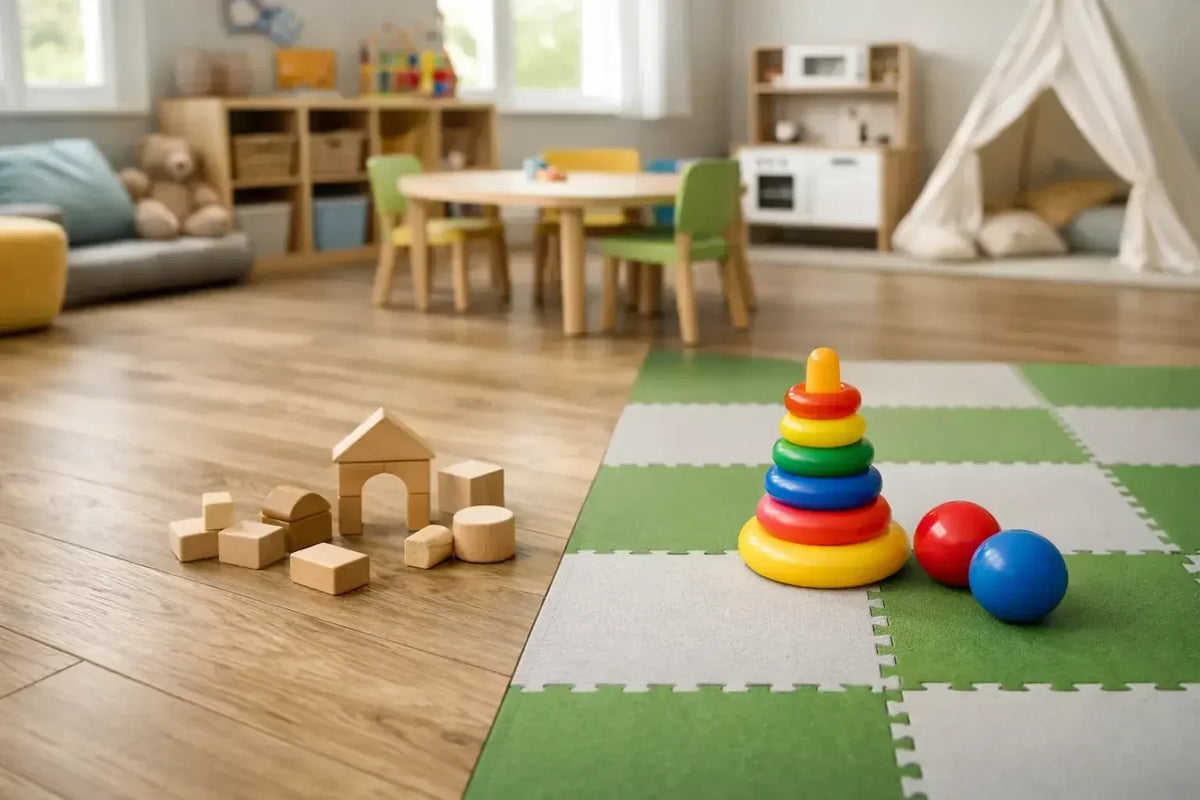
A daycare floor handles a different kind of traffic than a typical family room. It sees dropped snacks, art supplies, frequent cleaning, rolling toys, active play, chair movement, and parents coming through the door in wet shoes. The best flooring options for daycares need to look welcoming while making daily cleanup, long-term maintenance, and replacement planning more manageable.
For many daycare owners, property managers, and investors, luxury vinyl flooring is the practical starting point. It offers the wood-look or tile-look style families expect, along with moisture resistance and easier care than many natural materials. But the right decision still depends on the room, the subfloor, the expected traffic, and whether the facility is operating in a leased space, a converted home, or a purpose-built center.
What Daycare Flooring Needs to Handle
Appearance matters, but it should not be the first filter. A floor that photographs beautifully can become a costly choice if it shows every scratch, requires delicate cleaning, or does not hold up around sink areas and entryways.
Start with everyday conditions. Daycare flooring should be easy to clean with the methods approved by its manufacturer, able to handle routine moisture exposure, and durable enough for concentrated activity in playrooms, hallways, and entrances. A texture or finish that helps disguise small scuffs and crumbs can also make the space look better between cleanings.
Safety deserves careful attention as well. Select products designed for the intended commercial or high-traffic application, and review the manufacturer’s installation and performance information. Flooring alone does not prevent slips or falls. Proper transition pieces, dry entry mats, prompt spill cleanup, and a level installation all play a role.
Acoustics are another real-world consideration. A hard surface floor makes cleanup straightforward, but it can also make a busy room sound louder. In spaces where noise control is a priority, the underlayment permitted by the flooring manufacturer and the use of movable furnishings can influence the feel of the room. Do not choose an underlayment simply for cushioning without confirming it is compatible with the product and installation method.
Luxury Vinyl: A Leading Daycare Flooring Choice
Luxury vinyl plank and luxury vinyl tile are often strong flooring options for daycares because they balance durability, cleanability, and design flexibility. Many styles realistically capture the look of wood or stone without requiring the maintenance routine associated with natural hardwood.
Waterproof luxury vinyl is especially useful for classrooms, snack areas, restrooms, and entry zones where spills are part of the schedule. The surface is generally easy to wipe clean, and a quality visual can help a daycare feel polished rather than institutional. Wood-look planks can create a warm, residential atmosphere in a home-based daycare, while tile-look visuals can suit a larger center or multipurpose facility.
Not every luxury vinyl product is built for the same workload. Pay attention to the product’s wear layer, overall construction, locking system or glue-down format, approved installation areas, and warranty terms. A daycare with dozens of children and frequent commercial cleaning has different needs than a small in-home program.
Glue-down luxury vinyl can be worth considering in high-traffic commercial settings because it creates a firmly adhered surface and can make a future repair more targeted. Floating click-lock vinyl can be a practical option for certain renovations because it may simplify installation over an appropriate subfloor. The best format depends on the condition of the existing floor, moisture conditions, traffic level, and the installer’s recommendations.
Laminate Flooring: Good Value in the Right Rooms
Laminate flooring can offer attractive wood visuals and strong scratch resistance at a compelling project cost. It can be a smart choice for offices, reception areas, staff rooms, or low-moisture classroom spaces where a durable hard surface is needed without stretching the renovation budget.
The key trade-off is water exposure. Some laminate products offer meaningful water resistance, and some are marketed for waterproof performance, but the specific product instructions matter. Seams, edges, installation details, standing water, and cleaning practices can all affect results. A floor that works well in a dry office may not be the best fit beside a classroom sink or a busy exterior door.
If laminate is part of the plan, choose a product rated and installed for the intended use, follow the approved cleaning guidance, and build a realistic moisture-management routine. Entry mats and immediate attention to spills are worthwhile protections. For daycare areas where water events are frequent, luxury vinyl is often the more forgiving option.
Hardwood: Beautiful, but Usually a Selective Choice
First-quality hardwood flooring gives a space a premium, established look that can elevate an entry, administrative office, or carefully managed common area. It can be an appealing choice in an upscale home-based daycare where the goal is to preserve the character of the property.
Still, hardwood requires more consideration in active childcare rooms. It can be marked by dragging furniture, impacted by moisture, and more demanding to maintain than waterproof flooring. Refinishing may be possible over the life of certain hardwood floors, but that does not make it automatically practical for a space that must remain open and functional.
Use hardwood where its appearance and long-term value truly justify the added care. For high-spill activity rooms, frequent cleaning zones, and entrances, a waterproof hard-surface option is usually the more practical investment.
Plan by Room Instead of Choosing One Floor Automatically
A daycare does not have to use the same flooring everywhere. Choosing by room can improve performance and keep the budget focused where it matters most. Luxury vinyl may make sense in active classrooms, eating areas, hallways, and restrooms, while laminate or hardwood could be considered for drier, lower-impact administrative spaces.
That approach also helps with design. Related wood tones or coordinated color families can create a consistent look even when two different products are used. Medium-tone visuals with natural variation are often easier to live with than very dark or very pale solid-looking floors, which may reveal dust, scratches, and small marks more readily.
Before ordering, measure each room separately and account for closets, hallways, doorways, and reasonable cutting waste. Confirm whether the flooring will run continuously between rooms or stop at transitions. A professional installer can help identify subfloor preparation needs before materials arrive, which is far less expensive than discovering them after a project starts.
How to Buy Daycare Flooring With Confidence
The best value is not simply the lowest material cost. It is the product that fits the application, installs correctly, performs through daily use, and avoids premature replacement. Compare products based on total project needs: durability, water performance, maintenance requirements, installation method, visual style, available quantity, and delivery timing.
Factory-closeout and special-buy inventory can create a valuable opportunity for daycare renovations, rental-property conversions, and commercial refreshes. The advantage comes from sourcing first-quality overstock, discontinued lines, end-of-run inventory, and factory closeouts at exceptional value. Because these opportunities can involve changing inventory, it is wise to confirm that enough material is available for the project, including extra cartons for future repairs when appropriate.
For a DFW daycare project, seeing flooring in person can make color, texture, and thickness easier to evaluate. For buyers elsewhere in the U.S., detailed product information, samples when available, and nationwide delivery make it possible to plan with confidence from a distance. Factory Flooring Liquidators can help shoppers compare first-quality luxury vinyl, waterproof flooring, laminate, and hardwood choices based on the demands of the space rather than a one-size-fits-all recommendation.
A daycare floor has to earn its place every day. Choose the surface that makes cleanup easier, supports the rooms that see the most activity, and gives your facility a polished look without asking your budget to work harder than it should.