
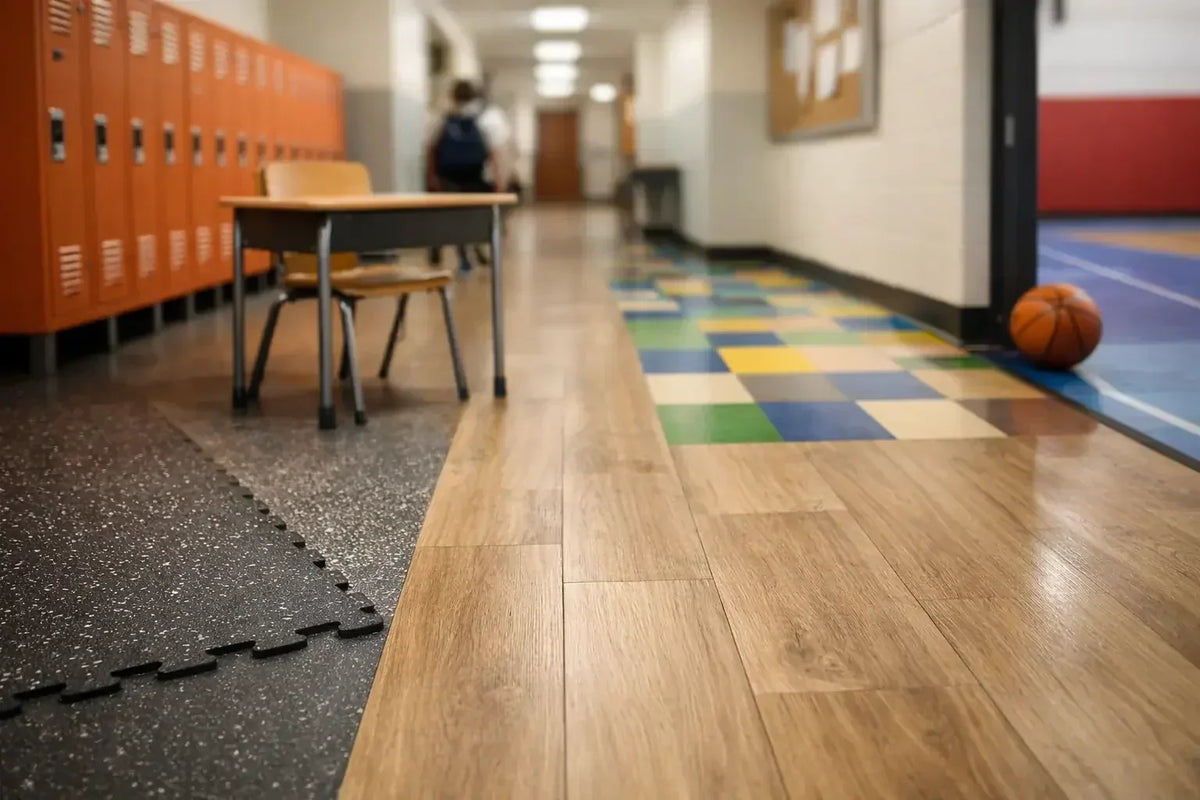
A school floor may see hundreds of footsteps before lunch, then rolling carts, dropped water bottles, chair movement, and an after-hours cleaning routine. That is why flooring options for schools should be selected by how each space is actually used, not by appearance alone. The right hard-surface floor can help a classroom, corridor, office, or multipurpose area look polished while keeping maintenance, replacement risk, and project costs in better balance.
For facility teams, contractors, property owners, and private-school decision-makers, the best choice usually comes down to four questions: How much traffic will the room receive? Is moisture likely? How quickly must the area be cleaned? And does the budget need to cover a large footprint? Luxury vinyl, waterproof flooring, laminate, and hardwood all have a place, but they do not solve the same problems.
Start With the Room, Not the Sample
A flooring sample can look excellent under showroom lighting and still be the wrong fit for a busy school. Begin by separating the project into zones. Entry areas, corridors, classrooms, administrative offices, libraries, cafeterias, and activity rooms experience different levels of wear and different kinds of messes.
High-traffic circulation areas need a surface that handles repeated foot traffic and routine cleaning without demanding constant attention. Spaces near exterior doors need more moisture tolerance. Offices and libraries may give you more freedom to prioritize warmth, visual character, or a residential feel. In a renovation, it can be smarter to use more than one floor type than to force one product across every room.
The amount of downtime matters, too. A school may only have a narrow installation window during a break, summer renovation, or phased project. Confirm product availability, lead times, required square footage, and the installation plan before building a specification around a particular color.
Luxury Vinyl for Busy, Flexible Spaces
Luxury vinyl plank and tile are often practical flooring options for schools because they combine visual versatility with day-to-day durability. Many designs create the look of wood or stone while providing a surface that is generally easier to maintain than natural hardwood in active areas.
Luxury vinyl can make sense in classrooms, administrative suites, libraries, staff rooms, corridors, and other spaces where a clean, professional appearance matters. It is also useful when a project needs a consistent look across several areas without the cost or maintenance expectations of hardwood.
Not every luxury vinyl product is built for the same level of traffic. Review the product's construction, wear layer, installation method, and stated application guidance. For a larger school project, those details are more meaningful than a color name or a trend-forward visual. Choose a design that can tolerate everyday use and still work with the building's long-term maintenance approach.
Waterproof Flooring for Entries and Spill-Prone Areas
Waterproof flooring is especially worth considering where wet shoes, drink spills, frequent cleaning, or outdoor access are part of normal operations. Entry zones, break areas, nurse-adjacent spaces, and rooms near sinks are common examples.
Waterproof does not mean every part of the installation is automatically protected from every moisture condition. Subfloor preparation, expansion requirements, edge details, and installation instructions still matter. The benefit is improved confidence around surface spills and routine moisture exposure, not permission to overlook site conditions.
For schools that want a wood-look floor in practical spaces, waterproof luxury vinyl can offer a strong middle ground. It delivers a familiar, welcoming visual while reducing concern about the occasional spill or wet-weather traffic.
Laminate Can Deliver Value in the Right Setting
Laminate flooring is a compelling option when appearance, budget control, and scratch resistance are key priorities. Modern laminate styles can provide convincing wood visuals and a durable surface for offices, libraries, classrooms, and other relatively dry areas.
Its best use depends on the product and the room. Laminate is not automatically the first choice for areas with recurring moisture exposure or heavy wet mopping. If a school is considering laminate, select a product appropriate for the planned use and make cleaning procedures part of the decision. A strong product in an unsuitable location can create avoidable problems.
For broad renovations, first-quality laminate obtained through factory-closeout, overstock, discontinued, or special-buy sourcing can stretch the flooring budget further. The value comes from the sourcing opportunity, not from accepting lower-grade material. Inventory can change with closeout flooring, so projects with a firm color requirement or a future expansion plan should confirm that enough material is available, including a sensible amount for repairs.
Hardwood Creates a Distinctive Finish, With More Responsibility
Hardwood flooring brings depth, warmth, and a level of visual character that is difficult to duplicate. It can be an excellent choice for private-school offices, reception spaces, executive areas, libraries, historic renovations, or community-facing rooms where the floor contributes to the overall impression.
The trade-off is practical. Hardwood needs more care around moisture, dents, and high-abuse traffic than waterproof flooring or many luxury vinyl products. It may not be the efficient choice for a busy entrance or a room where spills and heavy equipment are routine. But in the right area, hardwood can be a premium, enduring design decision rather than an unnecessary maintenance burden.
Engineered hardwood may be particularly useful when a project wants real wood construction with added dimensional stability. As with any school-flooring purchase, verify the product's specifications and installation requirements before selecting it for a commercial or institutional setting.
How to Compare Flooring Options for Schools
The most successful selections do not chase one universal winner. They match a material to the demands of the space. When comparing products, focus on the conditions the floor will face after installation:
- Traffic pattern: A corridor carrying students between every class period needs a different level of wear resistance than a small counseling office.
- Moisture exposure: Rainy-day entry traffic, drink spills, sinks, and cleaning routines should guide where waterproof performance is most valuable.
- Maintenance capacity: Choose a floor the custodial team can clean and care for using realistic daily procedures.
- Visual goals: Wood-look luxury vinyl, laminate, and waterproof floors offer different interpretations of color, grain, and texture. Hardwood provides natural variation that many projects value.
- Budget and quantity: Large projects can benefit from closeout opportunities, but available inventory must align with the total square footage, waste factor, and repair material needs.
Do not overlook transitions, trim, adhesives or underlayment where applicable, and furniture movement. These are small line items compared with the entire project, yet they affect the finished appearance and long-term performance.
Buy for Long-Term Value, Not Just Initial Cost
The lowest material cost is not always the lowest project cost. A floor that is difficult to maintain, poorly suited to moisture, or too delicate for a high-traffic zone can create replacement and disruption costs later. Conversely, paying for a premium feature in a quiet office may not add meaningful value.
A practical approach is to assign the budget where it matters most. Use highly durable, moisture-conscious flooring in exposed zones, then consider value-oriented first-quality products for lower-demand rooms. This allows a school to keep the overall design coordinated without treating every area as if it has the same risk profile.
Factory-closeout and liquidation inventory can be a particularly smart fit for renovations, private-school updates, charter-school projects, and commercial refreshes with a defined scope. Factory Flooring Liquidators sources first-quality overstock, end-of-run, discontinued, and special-buy flooring, giving buyers access to exceptional value without positioning closeout material as inferior. The key is planning early enough to verify the product, quantity, and visual consistency needed for the project.
Before You Finalize a School Flooring Order
Request or review complete product information, then measure carefully. Add an appropriate waste factor based on the room layout, plank direction, cuts, and future repair strategy. If multiple rooms will receive the same floor, total the project before deciding whether available inventory is sufficient.
Samples and room visualization can help narrow color choices, especially when the floor must coordinate with painted walls, casework, school colors, or existing finishes. A light floor can make smaller spaces feel more open, while medium tones often help conceal routine dust and everyday traffic. Very dark visuals can look dramatic, but they may show scuffs and debris more readily in busy spaces.
Also discuss installation timing with the installer or project lead. Flooring performance begins with the right product, but it also depends on acclimation where required, proper subfloor conditions, and following manufacturer instructions. A well-planned install protects the value of the material you choose.
A good school floor should make the building easier to run, not harder to maintain. Choose the surface that fits each room's real demands, secure first-quality materials while the right inventory is available, and give the project enough planning time to get the details right.