
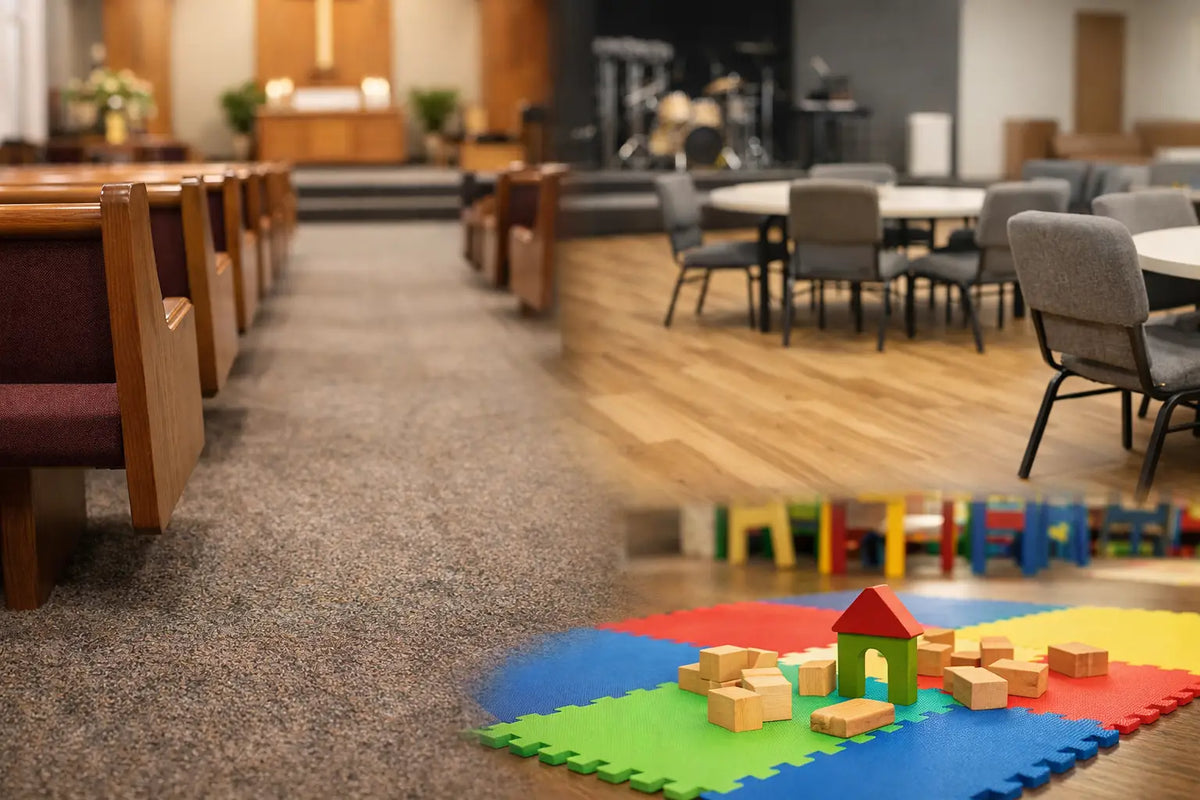
A church floor has to handle more than Sunday morning. It may see worship services, weddings, funerals, weekday offices, children’s programs, fellowship meals, and community events - often with different needs under one roof. The right flooring options for churches balance a welcoming appearance with practical durability, manageable maintenance, and a budget that supports the larger mission.
Hard-surface flooring is a strong fit for many church renovations because it creates a clean, lasting foundation across high-use areas. The best material is rarely the same for every room, though. A sanctuary may call for the warmth and permanence of hardwood, while a busy entry, classroom wing, or fellowship space may benefit more from waterproof luxury vinyl.
Start With How Each Church Space Is Used
Square footage matters, but traffic patterns matter more. Before selecting a color or plank width, identify who uses each space, how often it is used, and what the floor will encounter. A main entrance may receive rain, dust, and heavy foot traffic. A children’s area needs a surface that handles frequent cleanup. A fellowship hall may need to transition from weekday activities to large gatherings without looking worn out.
Also consider the character of the building. A historic sanctuary, a contemporary worship center, and a multipurpose campus do not need to make the same flooring decision. Matching the product to the room prevents a common renovation mistake: choosing one beautiful material for every area, then expecting it to perform equally well everywhere.
For a large project, plan the flooring by zones rather than trying to solve the entire building with a single product. This can create a more practical budget while giving each room the performance and appearance it needs.
Flooring Options for Churches: The Best Hard-Surface Fits
Hardwood for sanctuaries, platforms, and formal gathering areas
Hardwood brings natural character that works especially well in sanctuaries, chapels, reception areas, and offices. Its grain variation and depth can make a worship space feel grounded and intentional, whether the design direction is traditional, rustic, or more refined.
This choice works best in dry, climate-controlled areas where the church wants a premium, long-term look. Hardwood requires appropriate care and thoughtful planning around moisture exposure, so it is generally better suited to worship areas and interior gathering spaces than entrances that regularly receive wet shoes or utility rooms. The specific construction, finish, and installation requirements should guide the final selection.
For churches renovating on a defined capital budget, first-quality hardwood from overstock, discontinued, or factory-closeout inventory can be a smart opportunity. A closeout can make a higher-grade look more attainable without suggesting that the material is second quality. The key is confirming that enough inventory is available for the project, including an appropriate allowance for cuts and future needs.
Waterproof luxury vinyl for high-activity areas
Waterproof luxury vinyl is often one of the most versatile choices for church buildings. It can provide a wood-look design while standing up well to active entryways, classrooms, nurseries, fellowship areas, staff spaces, and many other rooms where spills and frequent cleanup are part of normal use.
Luxury vinyl can be especially practical for churches that want one consistent visual style across several high-traffic spaces. It is generally easier to maintain than natural wood and offers a broad range of colors, plank widths, and textures. That makes it easier to coordinate a fresh renovation with existing wall colors, seating, millwork, and architectural details.
Not every waterproof vinyl product is identical. Evaluate the wear layer, locking system, core construction, attached pad if included, and manufacturer installation guidance. In a commercial-style setting with large groups, those details affect how the floor performs over time.
Laminate for value-conscious dry spaces
Laminate can be an appealing option for offices, classrooms, hallways, and other dry interior areas where a church wants a durable wood-look floor at a value-focused price point. Current laminate visuals can deliver convincing texture and color without requiring the investment associated with many hardwood selections.
Its best use depends on the product and the room conditions. Some laminate products offer meaningful water resistance, but a waterproof luxury vinyl floor is usually the simpler choice for spaces where standing water, frequent spills, or wet foot traffic are realistic concerns. For dry, busy rooms, however, laminate can provide excellent project value and a finished appearance that feels more elevated than a basic renovation.
Choose for Acoustics, Maintenance, and Transitions
Hard-surface flooring changes how sound moves through a room. That is worth discussing early for sanctuaries, worship spaces, and large gathering rooms with amplified music or spoken-word programming. Flooring is only one part of the acoustical picture, but it can influence how live a space feels. Consider the existing ceiling height, wall finishes, seating layout, and sound system before making a final choice based only on appearance.
Maintenance should be equally practical. Church facilities are often cared for by a mix of staff, volunteers, and cleaning teams. A floor with simple routine care requirements can reduce confusion and help preserve its finish. Ask for the recommended cleaning approach, what products to avoid, and how the manufacturer addresses routine wear before purchase.
Transitions deserve attention when different flooring types meet. A sanctuary may flow into a waterproof vinyl lobby, or hardwood may meet laminate in an office corridor. Well-planned transitions help spaces look intentional, accommodate differences in floor height, and create a polished result throughout the building.
Plan the Quantity Before You Fall in Love With a Closeout
Changing inventory is part of the advantage of factory-closeout flooring. Churches, builders, and property managers can find first-quality products with exceptional value because the savings come from how the inventory is sourced - including overstock, special buys, discontinued lines, and end-of-run material.
That opportunity also calls for disciplined planning. Measure each room carefully, account for closets and stages where applicable, and include a reasonable overage for cuts, layout, and product direction. The exact amount depends on the room shape, plank size, installation pattern, and installer recommendations. Large open spaces may require less extra material than rooms with many angles and doorways.
For a phased renovation, verify that the available quantity supports the full phase before finalizing the design. If future matching material is important, a church may choose to purchase additional cartons when inventory permits. This is not about creating pressure - it is simply a practical reality of closeout and discontinued flooring opportunities.
Make the Design Feel Welcoming, Not Overdone
Flooring should support the experience of the space rather than compete with it. Mid-tone wood visuals often work well in high-traffic churches because they can bring warmth while being more forgiving of everyday dust and minor debris than very dark or very light floors. Natural oak-inspired colors, soft browns, and balanced neutral tones also provide flexibility when walls, furnishings, or seasonal décor change.
Consider the scale of the room. Wider planks can give a large fellowship hall or open lobby a more current, expansive feel. More traditional plank proportions may suit historic or formal spaces. Samples and room visualization tools can help decision-makers compare color direction before committing across a large area.
For Dallas-Fort Worth churches, a showroom visit can make it easier to compare texture, color, and construction in person. For projects elsewhere in the United States, product guidance, samples where available, and nationwide delivery make it possible to plan with the same confidence.
A church renovation is a visible investment in the people who gather there. Choose flooring that fits the real demands of each room, confirm the product details before ordering, and look for first-quality closeout opportunities that put more of the project budget toward a floor built to serve the space well.