
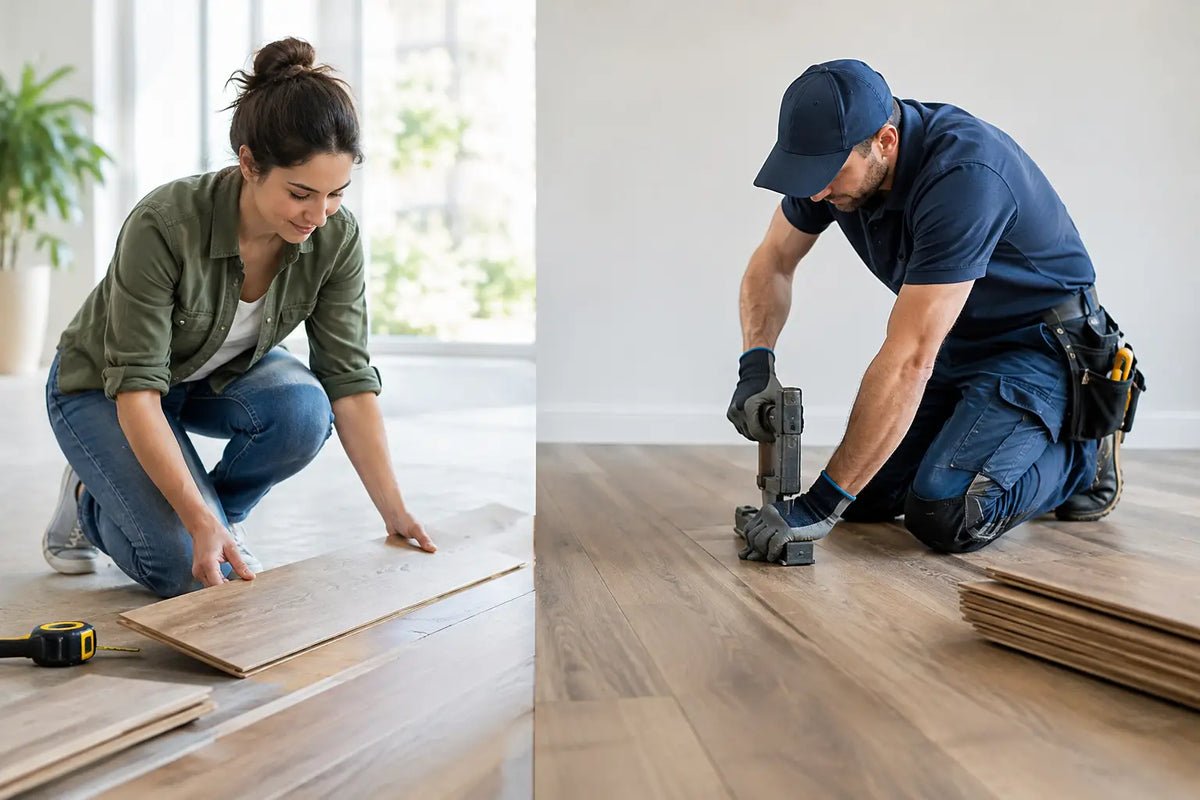
A floor can look like a straightforward weekend project until the old material comes up, the subfloor needs attention, and the final row lands against a doorway. When comparing diy vs professional costs for flooring, the carton price is only one part of the decision. The smarter comparison accounts for preparation, tools, wasted material, your time, and the cost of correcting an avoidable mistake.
For some homeowners, DIY installation is a practical way to stretch a remodeling budget. For others, professional installation protects a larger investment, especially with hardwood, complicated layouts, or a tight move-in schedule. The right answer depends on the product, the room, and how much certainty you need from the finished result.
What DIY Flooring Really Costs
DIY can reduce the labor portion of a flooring project, but it does not make installation free. Before choosing a do-it-yourself route, build a budget that goes beyond flooring square footage.
Start with materials. You will need the flooring itself, plus underlayment or moisture protection when the product and installation method call for it. Depending on the room, you may also need trim, transitions, stair-nose pieces, reducers, adhesive, fasteners, patching compound, and new baseboards or quarter round. These finishing pieces are easy to overlook when you are focused on the cost per square foot, yet they strongly affect both the budget and the completed appearance.
Tools are the next consideration. Floating luxury vinyl and laminate installations may require relatively basic measuring, cutting, tapping, and spacing tools. Hardwood and glue-down flooring can demand more specialized equipment and more experience using it. Renting or buying tools may still make sense for a large project, but it should be included in the real DIY total.
Then there is material overage. Every flooring project needs extra product for cuts, pattern matching, and future repairs. Rooms with angled walls, islands, closets, stairs, or multiple doorways generally need more than a simple rectangular room. Ordering too little can create a frustrating delay, particularly with closeout, discontinued, or special-buy inventory that may not be available later.
Time is another expense, even when it does not appear on an invoice. A first-time installer may spend several evenings preparing a room, watching product-specific installation guidance, making cuts, and handling transitions. If a project means delaying a move, pausing a rental turn, or living without access to a key room, the value of a faster professional job becomes more tangible.
DIY vs Professional Costs: The Factors That Change the Math
A professional installer adds labor expense, but that cost often includes speed, experienced layout decisions, and a clearer path through unexpected conditions. The value is not simply that someone else does the work. It is that a trained crew is more likely to spot an issue before it becomes visible across an entire room.
Subfloor condition
Flooring needs a clean, dry, and suitably flat surface. Minor preparation may be manageable for an experienced DIYer, but extensive leveling, repairs, or moisture-related concerns can change the scope quickly. Installing attractive new flooring over an unprepared surface can lead to movement, gaps, noise, or premature wear.
Professional installation can be especially worthwhile when you do not know what is beneath the existing floor. Removing carpet, tile, or old flooring sometimes reveals adhesive residue, uneven areas, damaged sections, or transitions that require a plan. A realistic budget leaves room for discoveries instead of assuming the surface is ready.
Flooring type and installation method
Luxury vinyl plank and many laminate floors are popular DIY candidates because click-lock systems can be approachable in open, square rooms. That does not mean every installation is simple. Long runs, detailed cuts, uneven walls, and transition planning still matter.
Hardwood deserves a more cautious calculation. Its installation method, acclimation requirements, layout, fastening or adhesive needs, and finishing details can demand more specialized knowledge. A premium hardwood floor purchased at a factory-closeout value is still a premium material worth installing correctly. Saving on product sourcing should not automatically mean taking unnecessary risks with the installation.
Waterproof flooring can be a strong choice for active households, kitchens, laundry areas, and investment properties, but waterproof surface performance does not eliminate the need for proper perimeter spacing, underlayment selection, and subfloor preparation. Product instructions should guide the installation plan.
Room layout and detail work
An empty rectangular bedroom is very different from a kitchen with cabinets, an island, appliances, multiple doorways, and several transitions. Hallways, stairs, fireplaces, curved walls, and diagonal layouts add cutting and planning time. These details are where professional experience can prevent uneven lines and awkward finish work.
If you are installing throughout a whole home, consistency between rooms matters as much as the work inside each room. Professionals can help plan direction, transitions, and expansion gaps so the floor reads as one coordinated project rather than a series of separate installations.
Waste, repairs, and replacement material
The cheapest installation is not always the lowest-cost outcome. A miscut plank, damaged locking edge, or poor layout can increase waste quickly. In a closeout purchase, replacement cartons may be limited because the inventory opportunity is tied to overstock, discontinued runs, or factory special buys.
That is not a reason to avoid exceptional-value inventory. It is a reason to order accurately, confirm your layout before opening cartons, and retain a small amount of product for future repairs. First-quality closeout flooring gives buyers access to attractive materials at a strong value, but availability can change as inventory sells through.
When DIY Makes Good Financial Sense
DIY is often a sensible choice when the room is small or uncomplicated, the subfloor is known to be in good condition, and the flooring system is designed for a straightforward installation. It also works well for homeowners who have completed similar projects, own the needed tools, and have enough schedule flexibility to work carefully.
A guest room, straightforward bedroom, or simple rental refresh may be a good place to take on installation yourself. The potential savings are most meaningful when you can avoid costly learning-curve mistakes. Product selection helps here: choosing a floor that matches your skill level can be as important as choosing a color you like.
Before buying, measure each room carefully and include closets, hallways, and connecting areas. Review the product specifications, installation requirements, and recommended accessories. A room visualization tool can help you narrow down the look, but measurements and installation planning are what protect the budget.
When Professional Installation Is Worth It
Professional installation is often the stronger value when the project involves high-end hardwood, large open spaces, multiple rooms, complicated cuts, stairs, or uncertain subfloor conditions. It can also be the right decision when a renovation schedule is tight or the floor is part of a property sale, rental turnover, or commercial update where delays have real costs.
For investors and property managers, installation should be evaluated as part of total project performance. A durable, first-quality flooring product at a liquidation price can improve the budget, while professional installation may reduce downtime and help maintain a consistent finish across units. The right mix is not always the lowest upfront labor number. It is the combination that supports the property’s timeline, appearance, and maintenance needs.
Local customers in the Dallas-Fort Worth area can also benefit from seeing products in person before making a final decision. A showroom visit can clarify texture, plank size, color variation, and accessory needs. Buyers nationwide can still plan confidently by reviewing detailed product information and confirming quantities before delivery.
A Better Way to Compare Flooring Budgets
Instead of asking only, “Can I install this myself?” ask, “What will this project cost if everything goes right, and what could it cost if it does not?” That question leads to a more useful comparison.
Build two totals. For DIY, include flooring, overage, underlayment, trim, transitions, tools, preparation materials, disposal, delivery, and your expected time. For professional installation, include the same product and accessory costs along with labor and any likely preparation work. If one option leaves little room for unexpected conditions, it may not be the safer value.
It also helps to separate the flooring purchase from the installation decision. Factory-closeout sourcing can make first-quality hardwood, luxury vinyl, waterproof flooring, and laminate more accessible without asking you to settle for inferior material. You can choose a product that fits your design and performance needs first, then decide whether DIY or professional labor gives that product the best chance to perform well.
The best flooring budget is one that leaves you confident at the finish line. Bring accurate room dimensions, photos of transitions or problem areas, and your project timeline into the buying process. A little planning upfront can help you capture real value in the material while choosing an installation path that makes sense for your home, skills, and schedule.