
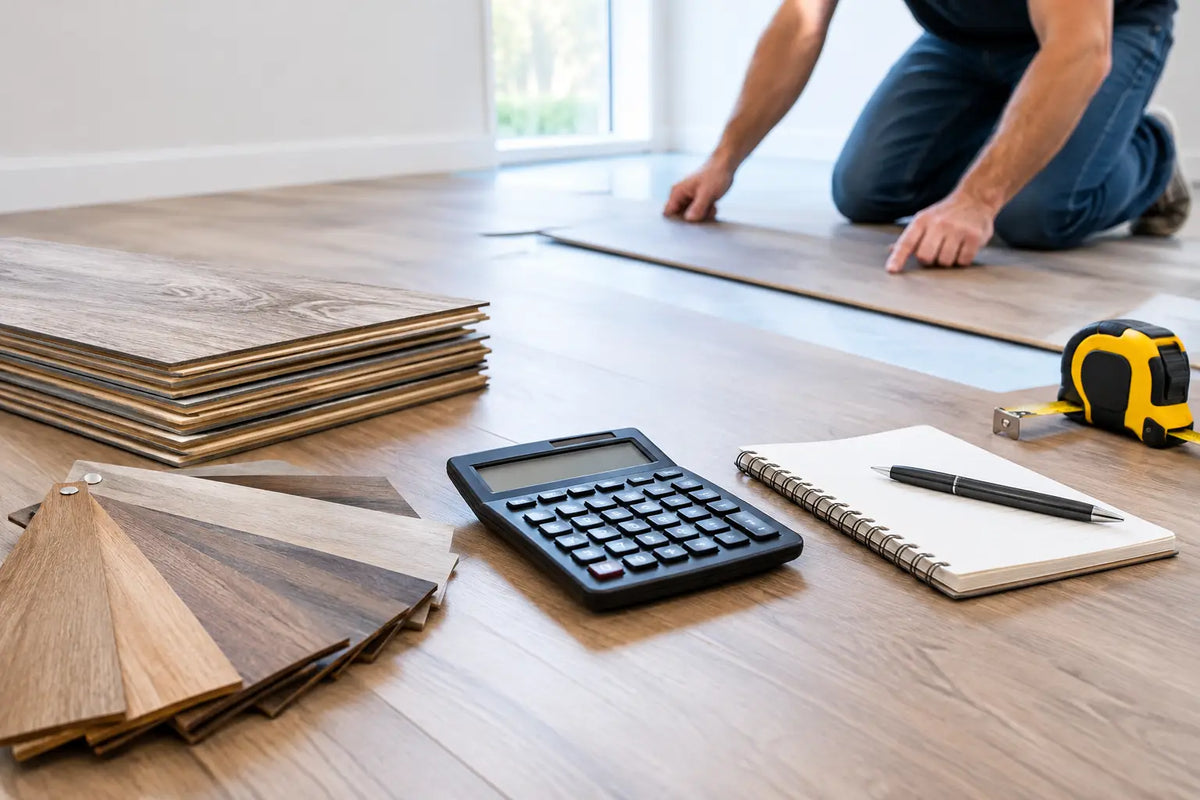
A flooring installation cost breakdown should do more than give you a number per square foot. It should show where the money actually goes, which decisions affect the total, and where choosing first-quality closeout flooring can create real project value. Whether you are updating one room, renovating a Dallas-Fort Worth home, or purchasing flooring for a rental property across the country, a clear budget helps you buy with confidence instead of reacting to surprises.
The total is rarely just the price of the floor itself. Materials, installation method, subfloor condition, trim, delivery, waste allowance, and room layout all matter. The smart approach is to compare the complete project cost while choosing a floor that fits how the space will be used.
What Is Included in a Flooring Installation Cost Breakdown?
Most flooring projects have four core cost areas: the flooring product, supporting materials, labor, and site preparation. Some projects are straightforward. A clean, open room with a level subfloor and simple luxury vinyl installation may need little more than the product, underlayment if required, and professional installation. Others involve removing old flooring, correcting uneven areas, moving furniture, or working around stairs and built-ins.
Looking at each category separately makes it easier to compare options honestly. A lower-priced product can become less economical if it needs significant prep or specialized installation. On the other hand, a premium first-quality hardwood or waterproof floor purchased through a factory-closeout opportunity may leave more room in the budget for the installation details that protect the finished result.
1. Flooring Material
Material is the most visible part of the budget, but it is not the only factor. Hardwood, luxury vinyl, waterproof flooring, and laminate each have different construction, visual appeal, installation requirements, and performance strengths.
Hardwood can bring natural character and lasting style to living areas, bedrooms, and higher-end renovations. It may require more attention to subfloor conditions and installation methods than a click-lock product. Luxury vinyl and waterproof flooring are popular for active households, kitchens, laundry areas, and investment properties because they combine practical performance with a wide range of wood and stone visuals. Laminate can be an attractive, value-conscious choice for dry areas where scratch resistance and a clean finished look are priorities.
The purchase price should be evaluated alongside the product's intended use. For a rental, the best choice may be a durable floor that is easy to replace in phases. For a primary residence, a homeowner may place more value on a particular color, texture, or hardwood construction. First-quality overstock, discontinued, end-of-run, and special-buy inventory can make higher-grade looks more attainable without treating quality as a compromise.
2. Quantity and Waste Allowance
Flooring is ordered by coverage area, but the room measurement is not always the final quantity. Installers typically need additional material for cuts, angles, closets, transitions, and pattern matching. A square room may require a modest allowance, while a home with hallways, bay windows, diagonal layouts, multiple closets, or stair details can require more.
This is where accurate measurements protect the budget. Ordering too little can delay the project, especially when a closeout color or style has limited remaining inventory. Ordering far too much ties up money in unused cartons. Confirm the net square footage, the recommended waste factor for the product and layout, and whether the material will be installed in more than one area.
3. Installation Labor
Labor can vary based on flooring type, installation method, room access, and local market conditions. Floating click-lock floors are generally different from glue-down applications or nail-down hardwood. A simple, empty rectangular room takes less time than a furnished home with many doorways, cabinets, floor vents, and detailed trim work.
Labor estimates should clearly state what is included. Ask whether the scope covers layout, cuts, fastening or adhesive, transitions, basic cleanup, and disposal of installation debris. If you are hiring your own installer, share the exact product specifications before work begins. That gives the installer a chance to confirm compatible underlayment, moisture requirements, acclimation needs where applicable, and the right installation approach.
The lowest labor quote is not automatically the best project value. Flooring is a finish surface that people see and use every day. Clear communication, correct preparation, and attention to manufacturer installation instructions are worth prioritizing.
4. Subfloor Preparation and Existing Flooring Removal
Subfloor preparation is one of the most common reasons a flooring budget changes after work starts. New flooring needs a suitable surface beneath it. Depending on the project, that may mean addressing unevenness, removing adhesive residue, repairing damaged sections, or correcting areas that do not meet the product's installation requirements.
Existing flooring removal can also affect the total. Carpet, old laminate, vinyl, tile, and hardwood each present different conditions. Do not assume a new floor can be installed directly over an existing surface without confirming the product requirements and the condition below it.
A transparent estimate separates expected prep from possible additional repairs discovered after removal. That distinction helps homeowners and property managers set a realistic contingency rather than treating every change as an unexpected expense.
Costs That Are Easy to Miss
A complete flooring installation cost breakdown should account for the finishing pieces that make a room look complete. These may include underlayment, moisture barriers, adhesives, fasteners, transition pieces, reducers, stair noses, baseboards, quarter round, and trim touch-ups. Not every project needs every item, but leaving them out of the initial plan can make an attractive material price look misleadingly low.
Furniture moving, appliance handling, toilet removal and reset, or work around cabinetry may also need to be coordinated separately. Before purchasing, walk through the room and note anything that touches the floor line. This is especially useful for kitchen updates, bathrooms, laundry rooms, and occupied rental properties where timing matters.
Delivery deserves a place in the budget as well. Flooring is heavy, and the delivery plan should fit the quantity, location, and access conditions of the project. Customers who visit a DFW showroom can discuss their project in person, while nationwide buyers can plan product delivery around their renovation schedule.
How to Control Flooring Costs Without Cutting Quality
The strongest savings strategy is not simply choosing the least expensive floor. It is choosing a first-quality product that suits the room, buying the right amount, and avoiding preventable installation changes. Factory-closeout sourcing can be particularly useful here. The value comes from how inventory is acquired - including overstock, discontinued lines, and special buys - not from selling inferior flooring.
Start by narrowing the category based on the room. A waterproof option may make sense where spills, pets, or frequent traffic are part of daily life. A hardwood look may be the priority in a formal living space or whole-home renovation. Once the category is right, compare actual product details: thickness, wear layer or finish, locking system, texture, color variation, and installation requirements.
Then plan the project in the right order. Measure first, select the floor, confirm available inventory, review needed accessories, and obtain an installation scope that matches the product. If a particular closeout style is a strong fit, confirm the quantity needed early. Closeout inventory can change, and buying enough material at the start is often wiser than expecting the same product to be available later.
A Better Way to Compare Flooring Quotes
When reviewing quotes, place the product price, accessory costs, labor, preparation, removal, and delivery in separate lines. This makes it easier to see whether two estimates are truly comparable. One proposal may include trim and removal while another lists only basic installation. Neither is automatically wrong, but the totals mean different things.
For investors, flippers, and property managers, this approach also makes repeat projects easier to budget. You can identify which costs stay relatively consistent and which depend on each property's condition. For homeowners, it prevents the disappointment of falling in love with a floor before accounting for everything needed to install it properly.
The right flooring project balances initial spend, appearance, durability, and the practical demands of the space. A clear budget gives you room to choose confidently, and first-quality factory-closeout flooring can help you put more of that budget toward a finished floor you will feel good about every day.