
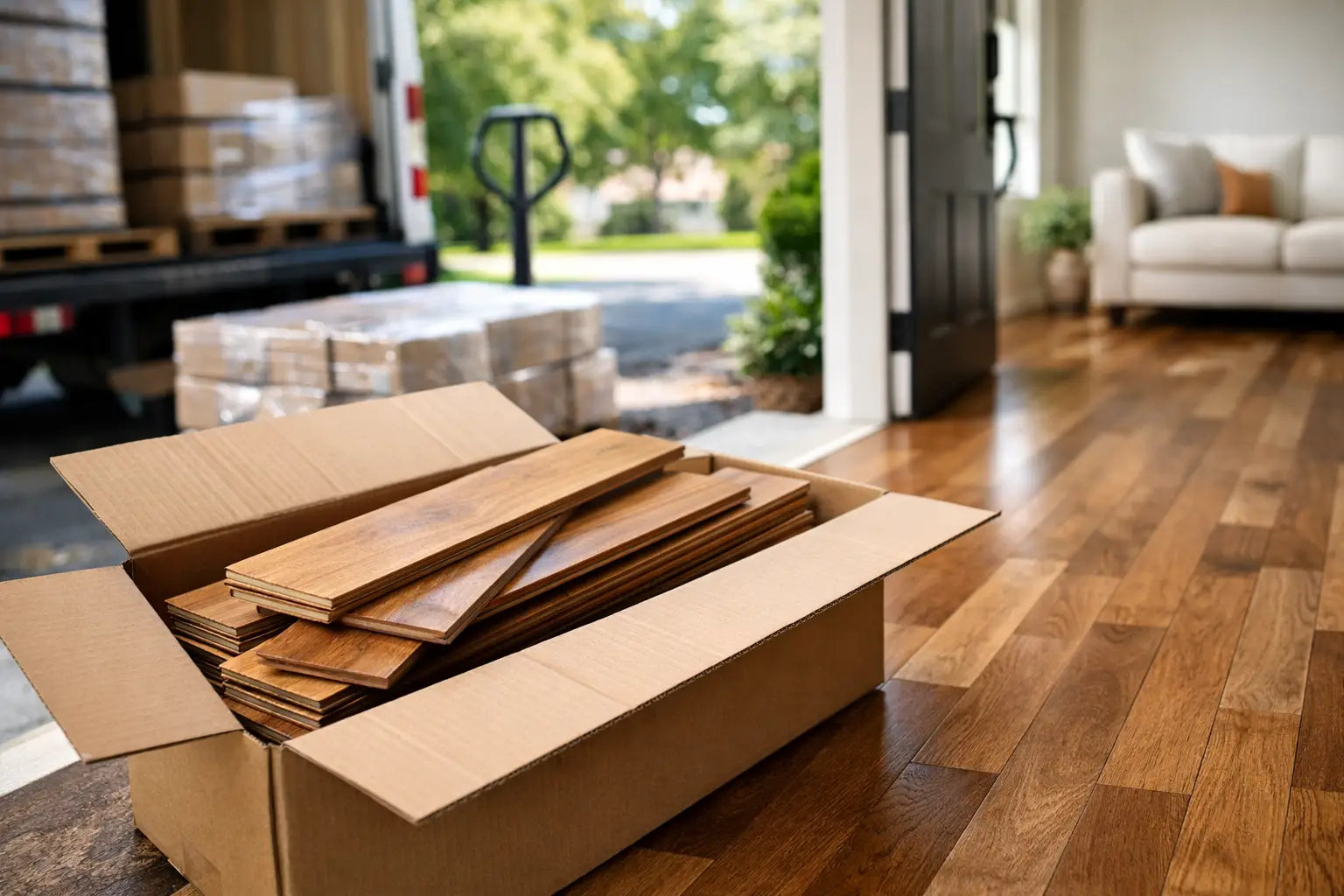
A premium hardwood floor should not require a premium showroom markup or a dozen trips across town. With hardwood flooring shipped directly to home, homeowners, contractors, and property investors can compare first-quality options online, secure liquidation pricing, and have the material delivered where the work is happening. The savings can be significant, but a smart purchase starts with knowing exactly what to order and what delivery looks like.
Why Buy Hardwood Flooring Shipped Directly to Home?
Traditional flooring shopping often adds cost at every step. Showroom overhead, warehousing, local delivery routes, and multiple layers of distribution can all find their way into the final price. Direct-to-consumer flooring changes that equation by giving buyers access to premium materials without the usual retail buildup.
That matters whether you are updating a living room in Dallas, renovating a rental several states away, or ordering material for a whole-house project. Nationwide delivery makes it possible to shop beyond the limited selection at a nearby store. Instead of settling for whatever happens to be in stock locally, you can focus on the floor that fits the room, the budget, and the expected wear.
The biggest advantage is not simply convenience. It is being able to put more of your budget into a first-quality hardwood product rather than paying inflated prices for a lower-grade alternative. Liquidation pricing can make a wider plank, a better finish, or a more desirable species realistic for projects that once seemed out of reach.
Know What You Are Ordering Before It Ships
Buying flooring online is a high-value decision, not an impulse purchase. Product details matter because hardwood is a natural material with real variations in grain, tone, knots, and character. A floor that looks clean and uniform on a screen may not be the best choice for a busy family room or a rustic renovation, just as a heavily textured floor may not suit a sleek, modern interior.
Start with the construction. Solid hardwood is milled from one piece of wood and can be refinished multiple times over its life. It is a classic choice for above-grade spaces where humidity stays relatively stable. Engineered hardwood has a real hardwood surface layer over a layered core. Its construction generally provides better dimensional stability, making it a practical choice for many homes, wider planks, and installations where changing moisture levels are a concern.
Neither option automatically wins. Solid hardwood can be the right long-term choice for the proper environment. Engineered hardwood can deliver the same authentic wood surface with added flexibility for modern homes. The right answer depends on the installation area, subfloor, climate, plank width, and your plans for the property.
Match the Species and Finish to Real Life
Oak remains a favorite because it is durable, versatile, and available in a broad range of stains and looks. Hickory offers pronounced grain and strong natural character, making it a good fit for homes that need a tougher-looking floor. Maple has a smoother, more refined grain, while walnut brings rich color and a more dramatic appearance.
Finish matters as much as species. A matte or low-gloss finish can make everyday dust and small surface marks less noticeable than a high-gloss look. Wire-brushed and hand-scraped textures add visual depth and can be forgiving in active spaces. Smooth planks create a polished appearance, but they tend to show wear more readily in homes with pets, children, or heavy foot traffic.
Use a room visualizer when available to narrow down color and plank style before ordering. It will not replace viewing a real sample in your home, where daylight and existing paint colors affect the result, but it can prevent obvious mismatches early in the process.
Measure Once, Then Add the Right Waste Factor
The most expensive flooring order is often the one that comes up short. Measure each section of the room separately, including closets, hallways, and transitions that will receive the same product. Multiply length by width to get the square footage, then add the areas together.
After that, add an overage allowance for cuts, layout, defects removed during installation, and future repairs. For a straightforward room with a simple layout, 5% to 10% is common. Rooms with diagonal installation, angled walls, multiple doorways, stair details, or a lot of built-ins may need more. Wider planks and products with random lengths can also affect how efficiently the material is used.
Do not order only the exact square footage of the room. Hardwood is sold by the carton, so round up to full cartons after calculating your waste factor. Keeping one unopened carton for future repair work can be a practical move, especially when the flooring is a liquidation deal and the same lot may not be available later.
Include the Pieces That Complete the Installation
A hardwood floor is more than the planks. Confirm whether you also need underlayment, adhesive, moisture barrier, fasteners, stair noses, reducers, T-molding, quarter round, or baseboards. The exact list depends on the product and installation method, but overlooking these items can delay a project even when the flooring itself arrives on time.
If you are working with an installer, ask for the full material list before placing the order. If you are handling the project yourself, expert support can help confirm product compatibility and installation requirements. That small check can protect a much larger investment.
What Home Delivery Actually Looks Like
Hardwood flooring is heavy. A full order for several rooms can arrive on a pallet by freight carrier rather than in a small parcel delivery truck. In many cases, delivery is curbside, meaning the carrier brings the shipment to the end of the driveway or an accessible curbside location, not through the front door or into a second-floor room.
Before delivery day, make a plan for moving cartons from the drop-off point to a dry, protected area inside. Clear a path, arrange help if needed, and make sure the driveway or access point can accommodate a freight truck. Apartment buildings, gated communities, narrow roads, steep driveways, and rural locations can require additional coordination.
Inspect the shipment as soon as it arrives. Check the pallet, cartons, carton count, and visible condition before signing the delivery receipt. If there is apparent damage, note it clearly with the carrier and take photos. A few damaged cartons may not affect the full order, but documenting the condition at delivery makes resolving an issue far easier.
Let the Flooring Acclimate Before Installation
Once the flooring is indoors, the job is not ready for installation that afternoon. Hardwood needs time to adjust to the conditions of the home. The exact acclimation process depends on whether the product is solid or engineered, its width, the local climate, and the manufacturer requirements.
Keep the material in the installation area or in conditions that closely match it. The home should be enclosed, climate controlled, and at normal living temperature and humidity. Do not leave cartons in a garage, on a porch, or in an unfinished space and assume they are ready because they have been delivered.
A qualified installer should also check subfloor moisture and flatness before starting. Hardwood problems blamed on the product are often installation or moisture issues: a wet subfloor, an uneven surface, inadequate expansion space, or the wrong adhesive. Saving money on first-quality flooring is the goal. Cutting corners on preparation is not.
How to Shop for Value Without Buying a Compromise
A low price alone does not make hardwood a good deal. Compare construction, wear layer for engineered products, plank dimensions, finish type, grade, warranty details, and total square footage per carton. Be cautious with vague product descriptions that do not clearly explain what you are receiving.
First-quality liquidation flooring is different from buying damaged, discontinued, or second-grade material without enough information. The opportunity is to get premium hard surface flooring at an aggressive price while still knowing the product specifications and receiving practical purchase support.
Factory Flooring Liquidators is built for buyers who want that balance: quality materials, transparent value, nationwide delivery, and help selecting a floor that makes sense for the project. Whether you are replacing dated flooring before listing a home or choosing a forever floor for your own space, the objective is the same - buy better without paying more than necessary.
A Better Way to Bring Hardwood Home
The best hardwood purchase is one that looks right after installation, performs well for years, and leaves room in the budget for the rest of the renovation. Order enough material, prepare for freight delivery, follow acclimation guidance, and choose a product based on how the space will actually be used. When those details are handled upfront, having premium hardwood delivered directly to your home becomes a practical advantage, not a gamble.