
One flooring quote can make this decision feel easy for about five seconds. Then reality kicks in. You want something that looks great, holds up to real life, and does not blow up the budget. That is exactly why homeowners keep comparing hardwood vs laminate flooring - both can give you a clean, high-end look, but they perform very differently once they are in your home.
If you are remodeling a primary residence, updating a rental, or trying to get more visual impact for the money, the right choice depends on where the floor is going, how hard it will be used, and how much flexibility you want on price. There is no one-size-fits-all answer. There is, however, a smart way to compare them.
Hardwood vs Laminate Flooring: The Core Difference
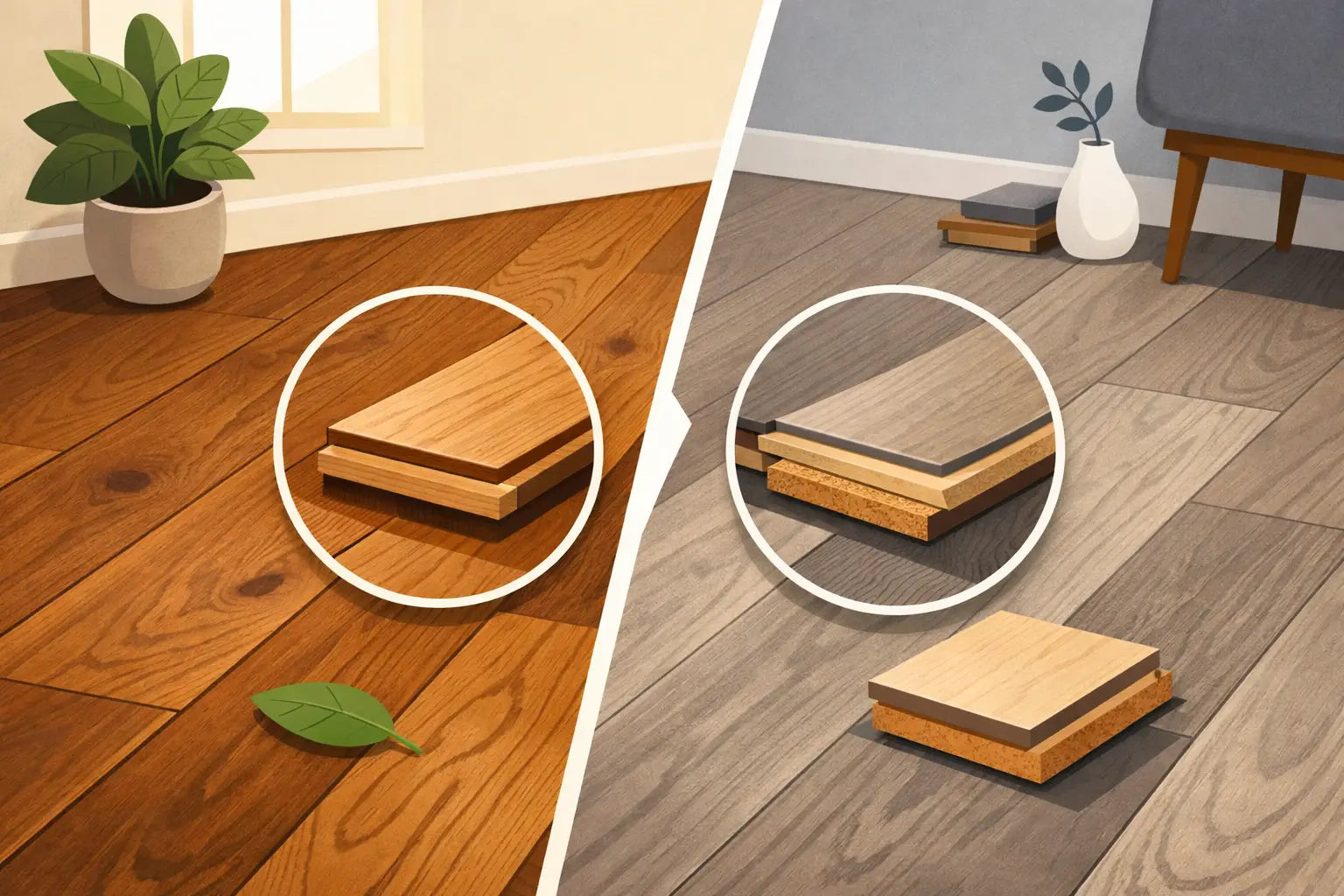
Hardwood is made from real wood. Each plank has natural grain, natural variation, and the kind of character buyers usually associate with premium finishes. Depending on the product, it may be solid hardwood or engineered hardwood, but either way, you are getting an authentic wood surface.
Laminate is a manufactured flooring product designed to replicate the look of wood. It typically has a photographic image layer, a durable wear layer, and a fiberboard core. Modern laminate has come a long way from the overly glossy, artificial-looking options people remember from years ago. A good laminate floor can look sharp, current, and surprisingly upscale, especially at liquidation pricing.
The difference matters because it affects cost, durability, moisture resistance, feel underfoot, and long-term value. Hardwood brings authenticity and resale appeal. Laminate brings affordability and everyday practicality.
Cost: Where Laminate Pulls Ahead
If budget is driving the conversation, laminate usually wins the first round. Material costs are typically lower, and installation can also be more affordable because many laminate products use a click-lock system that speeds up the job.
Hardwood costs more up front. That is the trade-off for real wood, stronger buyer perception, and a more premium finish. For some homeowners, that higher price is worth it. For others, especially in guest rooms, rentals, basements, or full-house renovations, laminate offers a stronger value play because it stretches the flooring budget farther without dropping into low-grade materials.
This is where smart sourcing changes the equation. If you can access first-quality flooring at liquidation prices, the gap between hardwood and laminate may feel less dramatic. That opens the door to better-looking products without traditional showroom markups.
Appearance: Real Wood Still Has an Edge
Hardwood has natural depth that laminate imitates but cannot fully duplicate. Grain variation, knots, texture, and color shifts are real, not printed. That gives hardwood a richer appearance, especially in open floor plans and spaces where flooring does a lot of the visual work.
That said, laminate deserves more credit than it usually gets. Better print technology, embossed textures, and wider plank formats have made many laminate options much more convincing. In busy households, many buyers are perfectly happy with a high-quality laminate because it delivers the style they want at a price that leaves room in the budget for trim, paint, or other upgrades.
If you are aiming for the most authentic premium finish, hardwood is still the stronger choice. If you want strong visual impact for less, laminate can absolutely make sense.
Durability and Daily Wear
This is where the room matters.
Laminate is often a strong pick for homes with kids, pets, and heavy foot traffic because its wear layer helps resist scratches, dents, and surface wear. It is built for day-to-day use, and many busy households appreciate that low-stress durability.
Hardwood is durable too, but it is not immune to scratches, dents, and scuffs. Pet nails, dropped objects, and furniture movement can leave marks over time. Some homeowners love that lived-in character. Others see it as damage.
If your priority is keeping the floor looking cleaner and newer with less worry, laminate often has the edge. If your priority is owning a natural material that can age gracefully and develop character, hardwood may still be the better fit.
Moisture: Be Honest About the Room
Neither hardwood nor laminate is the best flooring choice for every wet space, but hardwood is generally more sensitive to moisture. Spills that sit too long, humidity swings, or water intrusion can cause warping, swelling, or gapping.
Laminate can handle minor day-to-day messes better, but it is not waterproof by default. If water gets into the seams or reaches the core, damage can follow. That means kitchens, entryways, and homes with active families require realistic expectations and good cleanup habits.
For moisture-prone areas, many buyers end up considering other hard-surface categories entirely. But if you are set on comparing these two, laminate usually offers a little more forgiveness in everyday life, while hardwood demands more care.
Maintenance and Repairs
Laminate is easier to live with for many shoppers. Regular sweeping and occasional damp mopping usually cover basic maintenance. It does not need refinishing, and it is designed to stay presentable with straightforward care.
Hardwood also needs routine cleaning, but it asks for more protection overall. You need to watch moisture, use the right cleaning products, and take precautions with furniture pads and rugs. The upside is that some hardwood floors can be refinished, which gives them a longer life cycle and a second chance after years of wear.
That refinishing advantage is a major point in hardwood's favor. Laminate cannot usually be sanded and refinished. Once it is badly damaged, replacement is the solution.
Comfort and Sound
Hardwood tends to feel more substantial underfoot. It has a solid, premium feel that many homeowners notice immediately. It also delivers the familiar sound and texture people expect from real wood flooring.
Laminate can feel slightly harder or louder depending on the underlayment and subfloor. A good installation can improve that, but it usually does not feel exactly like hardwood.
This may not matter in every project. In a rental property or quick-turn renovation, practical performance may outweigh subtle feel differences. In a primary home where comfort and finish level are top priorities, hardwood often justifies its premium.
Resale Value and Buyer Perception
Hardwood usually carries stronger resale appeal. Buyers recognize it, trust it, and often see it as a true upgrade. In higher-end homes, that can matter a lot.
Laminate does not usually command the same response, but that does not make it a poor investment. If the alternative is old carpet, worn flooring, or delaying the remodel entirely, a quality laminate upgrade can still improve appearance and help a property show better.
This is especially true for budget-sensitive renovations, flips, and rentals. You are not always trying to impress luxury buyers. Sometimes the goal is to install attractive, durable flooring at a price point that protects margin. In that situation, laminate can be the smarter business decision.
Which One Makes More Sense for Your Project?
Choose hardwood if premium finish is the priority
If you want authentic wood, stronger resale appeal, and a floor that feels custom rather than manufactured, hardwood is hard to beat. It works especially well in living rooms, dining rooms, bedrooms, and main areas where the look and feel of real wood will be noticed every day.
Choose laminate if value and wear resistance matter most
If you need a sharp-looking floor that can handle traffic, stretch the budget, and reduce maintenance stress, laminate is a strong contender. It makes a lot of sense for active households, investment properties, and large-scale updates where cost control matters.
Think beyond the material itself
The category matters, but so does the product quality. A cheap hardwood can disappoint. A well-made laminate can outperform expectations. That is why buyers should focus on construction, finish quality, wear layer performance, and realistic room use, not just the label on the box.
The Smarter Way to Decide
The best hardwood vs laminate flooring decision usually comes down to one question: are you buying for image, durability, or budget control?
If image and authenticity lead the list, hardwood is the premium move. If durability and price efficiency matter more, laminate often delivers better overall value. And if you are shopping carefully, you may be able to get much better quality in either category than you expected, especially when first-quality flooring is available at liquidation pricing with expert support to help narrow the field.
A floor is not just a style choice. It is a cost decision, a maintenance decision, and in many homes, a daily stress decision. Pick the one that fits the way the space will actually be used, and you will feel a lot better about the investment six months after installation, not just on order day.