
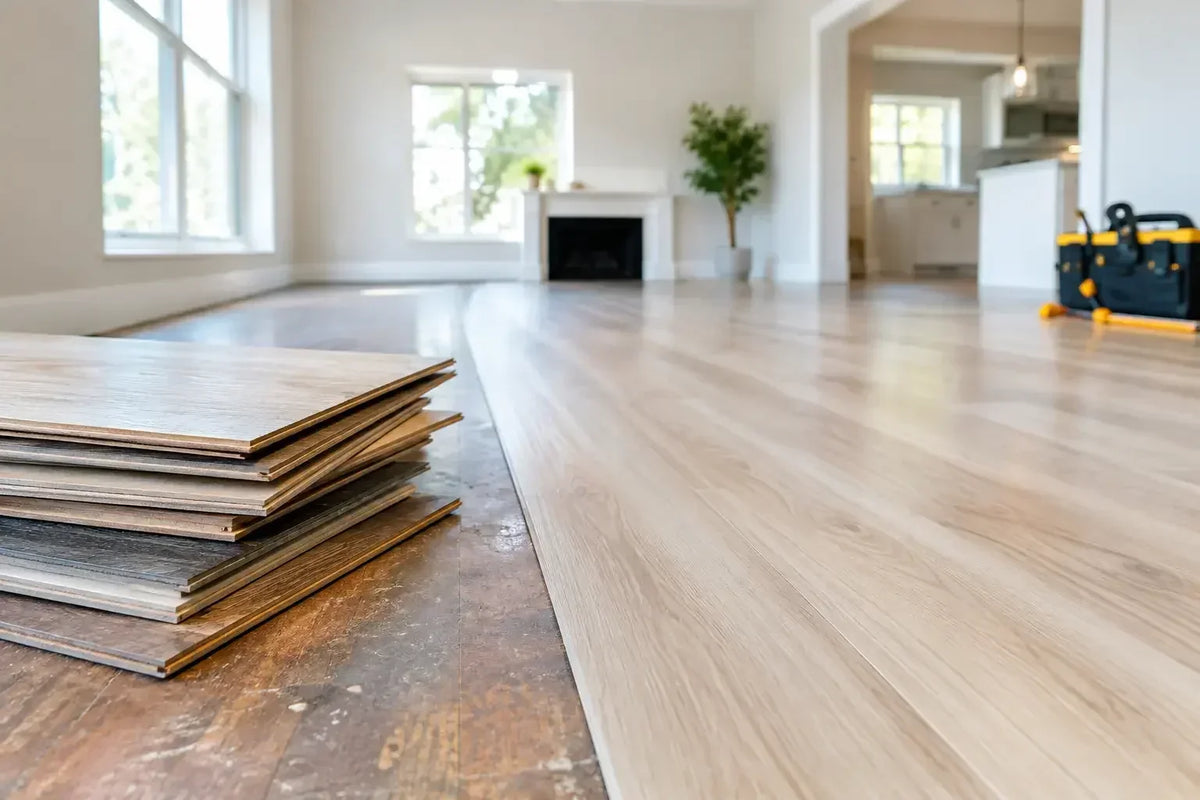
A profitable flip can lose momentum fast when the flooring looks mismatched, feels underbuilt, or absorbs too much of the renovation budget. This house flip flooring example shows how an investor can use one coordinated, first-quality floor selection to create a cleaner presentation, control material costs, and make the property easier for buyers to picture as home.
The goal is not to install the most expensive floor in every room. It is to choose a product that fits the property, handles real-life wear, photographs well, and supports the expected resale position. Factory-closeout and special-buy inventory can be especially useful here because it gives flippers access to first-quality hard-surface flooring at exceptional value when the color, quantity, and timing line up.
A House Flip Flooring Example for a Mid-Market Renovation
Consider a three-bedroom, two-bath home with an open living area, kitchen, hallway, bedrooms, and a separate laundry room. The property is clean but dated, with several flooring surfaces: worn carpet in bedrooms, aging sheet flooring in the kitchen, and an older hard surface in the living room that does not coordinate with the rest of the house.
Instead of selecting a different material for every space, the investor chooses a single waterproof luxury vinyl floor for the main living areas, kitchen, hallway, bedrooms, and laundry room. The bathrooms receive a compatible hard-surface option selected for that room’s conditions and design plan.
This approach works because the continuous visual line makes the home feel more connected. Fewer transitions reduce visual clutter, and a consistent color palette gives listing photos a more finished look. Just as important, ordering one primary flooring style simplifies quantity planning, installation coordination, and replacement material decisions.
A warm neutral oak-look color is often a practical direction for this kind of project. It can work with white, greige, or wood-tone cabinetry; it pairs easily with updated lighting and paint; and it gives future buyers room to imagine their own furniture. A very pale floor, very dark floor, or strong gray may be right for a specific home, but those choices usually require more deliberate coordination with the existing finishes.
Why Waterproof Luxury Vinyl Fits Many Flip Projects
For a broad range of house flips, waterproof luxury vinyl offers a useful balance of appearance, durability, and practical maintenance. It is designed for areas where everyday spills and moisture exposure are a concern, making it a natural candidate for kitchens, laundry rooms, entry areas, and open-concept living spaces.
The key benefit is consistency. A flipper can carry the same floor through high-visibility areas rather than stopping at the kitchen threshold or switching to carpet in every bedroom. That creates a more current look without requiring a complicated mix of products.
Waterproof flooring is not automatically the right choice for every property. A higher-end renovation with existing wood features and a buyer pool that expects natural material may justify first-quality hardwood. A rental or a lower-cost refresh may call for a carefully selected laminate, particularly in dry areas where its visual value and wear performance fit the project. The right answer depends on the home’s condition, target buyer, timeline, and expected finish level.
Start With the Buyer, Not the Product Sample
Flooring should match the home’s resale story. A modest starter home generally benefits from a clean, durable, cohesive floor that feels current without looking overly customized. A renovated family home may benefit from a waterproof product that can stand up to busy daily use. A more design-forward property may support a wider plank, natural hardwood character, or a more distinctive color if the rest of the renovation is equally considered.
Before choosing a sample, look at the parts of the property that buyers will notice together: cabinet color, countertop pattern, wall paint, fireplace materials, interior doors, and natural light. Flooring occupies a large visual area. A selection that looks great under showroom lighting can feel too yellow, too cool, or too busy once it meets the actual finishes in the house.
This is where room visualization and knowledgeable product guidance can save time. Viewing the floor in a room setting helps narrow color direction before materials are ordered, while a flooring specialist can help compare construction, wear characteristics, available quantities, and transitions for the scope of the project.
Plan Quantity Carefully Before a Closeout Opportunity Moves On
Closeout flooring can be a smart buying opportunity, but it rewards organized planning. First-quality discontinued, overstock, end-of-run, and special-buy products may have limited available inventory. That does not make them a risky choice. It means a flipper should confirm the project’s actual needs before committing to a color.
Measure every area receiving the product, then account for cuts, room layout, and the installation pattern. Long narrow spaces, angled rooms, closets, and complex floor plans often require more allowance than simple rectangular spaces. Include closets if they will receive the same flooring, and do not forget hallways, pantries, or adjacent spaces that will look better with a continuous finish.
It is also wise to think ahead about repair material. Depending on availability and project needs, retaining extra cartons can make future touchups easier. The practical decision varies by product, total square footage, and how much inventory remains. A flooring expert can help translate room measurements into an appropriate order quantity without guessing.
Where Flippers Commonly Lose Value
The biggest flooring mistake is often not choosing the wrong brand or color. It is creating a finish level that feels inconsistent. New kitchen cabinets beside visibly worn bedroom carpet can make buyers wonder what else was left unfinished. Multiple flooring colors within sight of one another can have the same effect, even when each individual product is acceptable.
Another common error is buying solely by the lowest material cost. A floor that does not suit the room, cannot be ordered in enough quantity, or clashes with the renovation design can become expensive through delays and rework. Value is not just the price per square foot. It is the relationship between first-quality product, appearance, performance, available inventory, and the amount of labor and coordination the choice requires.
Overly trendy selections can also narrow appeal. A flip does not need to be bland, but most buyers respond well to a flooring color that supports the home instead of demanding attention. Texture and plank variation can add character; extreme colors or heavily distressed visuals require more caution unless the property’s design clearly supports them.
A Practical Flooring Decision Framework
For each flip, narrow the choice by asking four questions. First, where will the flooring be installed and what moisture exposure should it handle? Second, what finish level will the expected buyer anticipate? Third, can one product create continuity across the most visible rooms? Finally, is there enough first-quality inventory available to complete the project and meet the timeline?
If the answer points to waterproof luxury vinyl, focus on a color that works with the fixed finishes and select a format appropriate for the room layout. If hardwood better fits the property’s value and design direction, make sure the investment is supported throughout the renovation, not isolated under otherwise budget-level finishes. If laminate is the stronger value choice for dry spaces, choose a design with a believable wood look and coordinate it carefully with kitchen and bath selections.
For DFW investors who want to compare full-size samples and discuss quantities in person, a showroom visit can make the decision faster. For projects elsewhere in the United States, online selection and nationwide delivery make it possible to source first-quality flooring for a flip without limiting the search to local inventory.
Make the Floor Part of the Selling Strategy
The strongest house flip flooring example is not about chasing a particular product category. It is about using flooring to make the entire renovation feel intentional. A well-chosen, consistent hard-surface floor can help a buyer move from room to room without seeing another task to add to their list.
When a first-quality closeout, overstock, or special-buy product fits the home’s style, quantity requirements, and schedule, it can be an unusually smart place to capture value. Choose the floor that supports the property’s next chapter, then give it the attention it deserves in the final walkthrough and listing photos.