
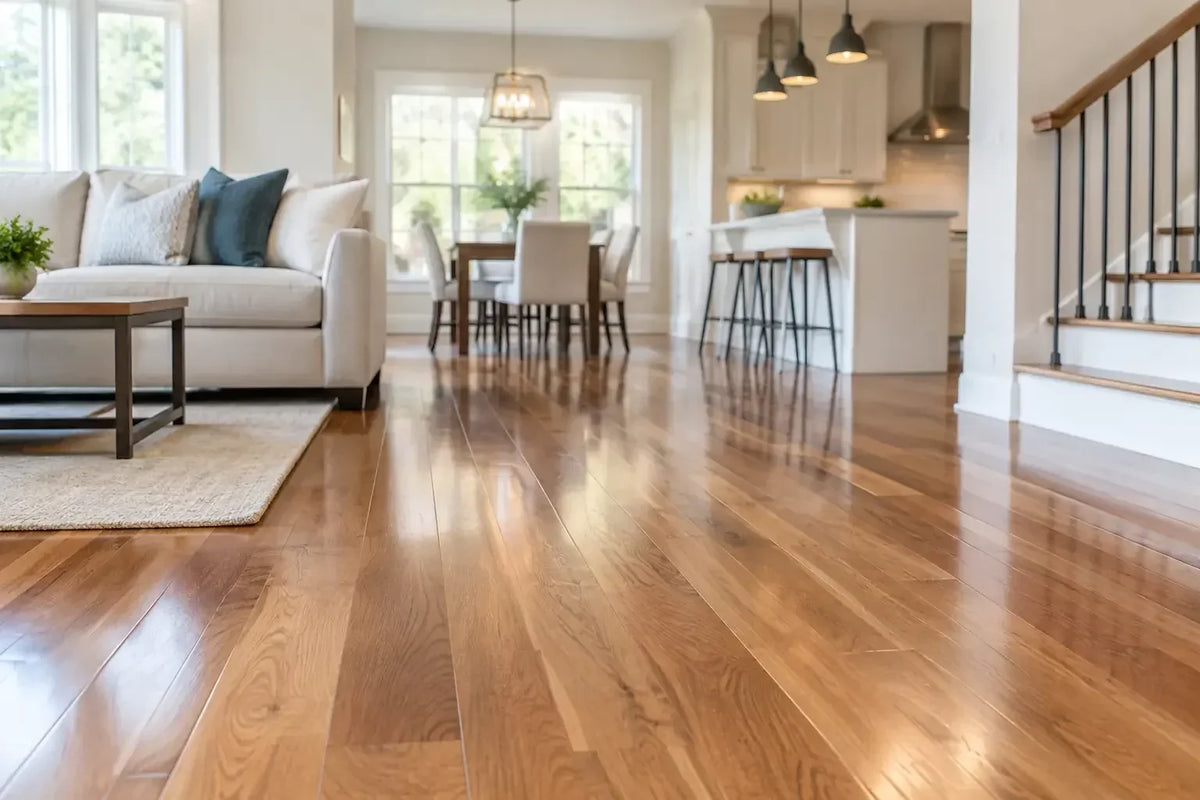
A dated floor can dominate a buyer’s first impression before they notice the new counters, fresh paint, or remodeled bath. The best hardwood flooring for resale is usually not the boldest or most expensive option. It is the floor that makes the home feel clean, current, durable, and easy for the next owner to live with.
For most homeowners, that means choosing a first-quality hardwood with a versatile color, a believable wood character, and a construction that fits the room. The goal is not to predict every buyer’s taste. It is to make a confident, broadly appealing improvement while protecting your renovation budget.
What Makes Hardwood Flooring Resale-Friendly?
Hardwood has lasting appeal because it adds natural material, visual warmth, and a sense of permanence. Still, resale value is shaped by the complete decision: species, stain color, board width, finish, installation area, and condition all matter.
The most resale-friendly selections tend to look intentional without being overly specific. A floor that is extremely gray, heavily distressed, high-gloss, or unusually dark can be exactly right for a particular design plan, but it may narrow the audience when it is time to sell. Neutral hardwood gives buyers more freedom to picture their own furniture, rugs, and wall colors in the space.
It also helps to match the flooring level to the home. A thoughtfully selected, first-quality engineered hardwood can be a strong fit for many renovations. In a higher-end home where existing floors are solid hardwood and a traditional look is expected, matching that construction and character may make more sense. Resale is rarely about following one rule. It is about choosing flooring that feels appropriate for the property and its market.
Best Hardwood Flooring for Resale: The Smart Default
If you want a dependable starting point, look at medium-tone oak in a matte or low-sheen finish. Oak remains a familiar, versatile choice, with grain that works across traditional, transitional, modern, and farmhouse-inspired interiors. It offers visible natural character without demanding a particular decorating style.
A warm natural oak, light neutral brown, or soft medium brown often provides the widest appeal. These colors help rooms feel open while doing a better job than very pale floors at disguising everyday dust and minor marks. They also work with a wider range of cabinet finishes and paint colors than strong gray or orange-toned stains.
For many homes, wider planks can create a more current, spacious appearance. Moderately wide boards are often an especially safe choice because they feel updated without looking like a short-lived trend. Very wide planks can be beautiful, particularly in larger rooms, but they should suit the scale and style of the home.
A matte finish is another practical resale feature. It creates a relaxed, natural appearance and generally makes small scratches, dust, and footprints less obvious than a glossy floor. That matters during daily life, pre-listing cleanup, and buyer showings.
Why Oak Usually Leads the Conversation
Oak has a visual familiarity that makes it easy for buyers to understand. Its grain accepts a range of stain colors well, and its character can read as either classic or current depending on the plank width and finish. White oak is often selected for its subtle grain and compatibility with lighter, more neutral stain directions. Red oak can be an excellent choice when it coordinates with existing flooring or the home’s architectural style.
The right choice is not always white oak simply because it is popular in current design. If your home has well-maintained red oak in adjoining areas, a close match may look more valuable and cohesive than replacing one room with a different species and color.
Solid vs. Engineered Hardwood for Resale
Both solid and engineered hardwood can support a high-quality renovation when the product is right for the project. The decision should be based on the space, subfloor, installation conditions, and existing flooring rather than a blanket assumption that one is always better.
Solid hardwood is a traditional choice with a single wood construction. It can be a strong option for suitable above-grade living areas and for homes where matching existing solid hardwood is important. It brings a classic feel that many buyers recognize immediately.
Engineered hardwood has a real hardwood top layer over a layered core. Its construction can make it a practical choice for projects where dimensional stability is a consideration, including certain main-level, lower-level, or concrete-slab applications. It also opens the door to a broad selection of colors, widths, and surface styles.
The resale lesson is straightforward: buyers respond to attractive, well-installed, real-wood flooring that fits the home. A first-quality engineered hardwood with a convincing appearance and a good wear layer can make far more sense than forcing solid hardwood into an unsuitable application. Product specifications should always be checked for the intended room and installation method.
Choose Color With the Whole Home in Mind
Flooring should connect rooms, not make each room feel like a separate renovation. Before choosing a color, consider the cabinets, trim, interior doors, countertop undertones, natural light, and any hardwood you plan to keep.
Light natural tones can make smaller rooms feel brighter and are particularly useful in homes with limited daylight. Medium browns bring warmth and can make an open floor plan feel grounded. Dark brown floors can look elegant, but they often show pet hair, dust, and scratches more readily. They also need enough natural or artificial light to avoid making a room feel smaller.
Gray-toned hardwood remains appropriate in some homes, especially where it supports a deliberate contemporary design. For broad resale appeal, however, a warmer neutral usually gives future buyers more decorating flexibility. Avoid choosing a floor solely because it is trending in a photo. Samples should be viewed in the actual room at different times of day.
Room Coverage Matters More Than One Perfect Room
A continuous hardwood look across connected living spaces usually makes a stronger impression than installing premium flooring in one room and leaving visibly conflicting floors nearby. Buyers notice transitions. When budget is limited, prioritize the areas that create the largest visual impact: entry spaces, living rooms, dining areas, halls, and main-level common rooms.
Bedrooms depend more on the local market, home price point, and existing layout. Continuing hardwood into bedrooms can create a cohesive result, while keeping a clean, appropriate floor in those rooms may be the practical budget decision. In investment properties and flips, consistency and condition often matter more than selecting the most elaborate species or finish.
For kitchens, laundry rooms, and other areas where moisture exposure is a concern, verify the hardwood product’s approved use and care requirements before buying. A good resale decision is one that remains attractive under the way the room is actually used.
Spend Where Buyers Can See and Feel the Difference
A higher price tag does not automatically produce better resale results. Installation quality, thoughtful transitions, realistic quantities, and a cohesive color plan can matter as much as the species on the label.
Factory-closeout, overstock, discontinued, end-of-run, and special-buy opportunities can be particularly valuable here. These are opportunities to purchase first-quality hardwood at exceptional value because of how the inventory was sourced, not because the material is inferior. The trade-off is that available quantities and coordinating trim may be limited, so planning matters.
When you find a closeout hardwood that fits your project, confirm that enough material is available for the room measurement, a reasonable waste allowance, and any future needs you want to account for. Review the matching moldings and transitions early. This approach can help homeowners, contractors, and investors put more of the budget toward a quality overall result rather than overspending on a single design label.
Avoid These Common Resale Mistakes
The biggest mistakes are usually not dramatic failures. They are decisions that make the floor harder to live with or harder for a buyer to understand.
Choosing an extreme color without considering the home’s fixed finishes is one example. Another is mixing several competing wood tones within an open sightline. A third is selecting a finish that requires more maintenance than the household can realistically provide.
Do not overlook condition either. Hardwood should be protected during the rest of the renovation, cleaned according to the manufacturer’s guidance, and repaired promptly if it is damaged. A well-chosen floor loses much of its advantage if it is scuffed, poorly transitioned, or covered in construction residue by listing day.
Shop Hardwood Like a Resale Investor
Start with the property, not a social media trend. Identify the home’s likely buyer, the rooms that need the greatest visual improvement, and the colors that already exist in the space. Then compare first-quality hardwood options by construction, finish, width, species, approved application, and available quantity.
For Dallas-Fort Worth shoppers, seeing samples in a showroom can make color and texture decisions easier. Nationwide customers can still make a confident comparison by reviewing product details carefully, ordering with accurate room measurements, and checking the visual effect of samples under their own lighting. Expert support is useful when you are balancing an open floor plan, a closeout inventory opportunity, and a firm renovation budget.
The floor most likely to help at resale is rarely the one that shouts for attention. Choose a hardwood that feels right the moment a buyer walks in: natural, well-proportioned, first-quality, and clearly chosen to serve the home for years rather than one passing trend.